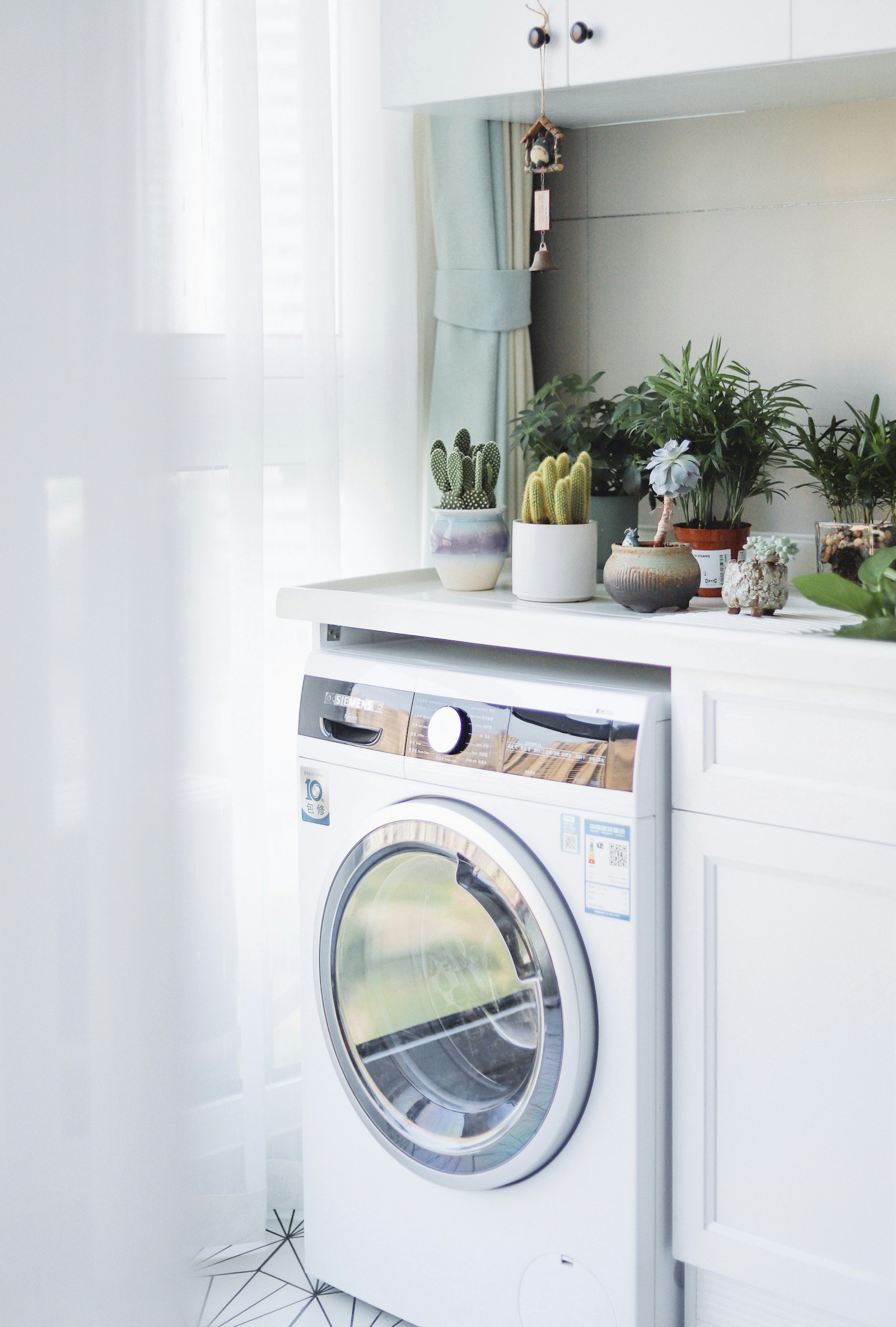
A careful whirlpool washer installation prevents the two problems that generate the most service calls on a brand-new machine: leaks and a washer that walks across the floor during spin. Most installation problems are not mechanical failures at all — they are a missed shipping bolt, an unlevel cabinet, or a drain hose pushed too far down the standpipe. Whether you are setting up a top-load WTW or a front-load WFW, getting the basics right at install time saves you a no-problem service charge later.
Before you start the whirlpool washer installation
Gather what you need and check the space first:
- Hot and cold supply valves within reach of the fill hoses.
- A standpipe drain between 39 and 96 inches high, or a laundry sink.
- A grounded outlet (front-loaders and many top-loaders are 120V; some electric units differ — check the rating plate).
- A level floor, or shims to make one.
Step-by-step installation
- Remove the shipping bolts. Front-load WFW models ship with rear transit bolts that lock the drum. If you do not remove them, the washer will bang violently and can damage itself on the first spin. Keep the bolts in case you ever move the machine.
- Connect the fill hoses. Attach hot to hot and cold to cold, with the rubber washers seated. Hand-tighten plus a quarter turn — do not over-torque.
- Set the drain hose. Insert it no more than about 4.5 inches into the standpipe and secure the supplied hose clip so it cannot pop out and siphon.
- Level the machine. Adjust the feet until the washer does not rock, then tighten the lock nuts. A level machine is the single best defense against walking and excess vibration.
- Run a test cycle with no laundry to check for leaks at every connection.
Common installation mistakes
The most frequent errors are leaving the shipping bolts in, reversing hot and cold, pushing the drain hose too deep (which causes constant draining and an F8E1 or slow-fill complaint), and skipping the level check. A washer that vibrates wildly out of the box is almost always an install issue, not a defect. If you see a fill or drain code right after setup, our guide to Whirlpool washer error codes helps you tell an install problem from a real problem.
A few finer points separate a good install from one that causes nuisance calls later. The drain hose should never be sealed airtight into the standpipe; the standpipe needs an air gap so the system cannot siphon the tub empty mid-cycle, which mimics a fill problem. Both fill hoses should have their rubber washers seated and be checked for the small mesh screen at the inlet, because a screen knocked loose during handling can restrict flow from day one. When stacking a washer and dryer, the units must be the same family and joined with the manufacturer’s stacking bracket — improvised stacking lets the washer walk and can topple the dryer. And on a wood or flexing floor, a perfectly level machine can still vibrate, so a solid base or anti-vibration pads make a real difference. Taking five extra minutes on these details prevents the leaks, walking, and phantom error codes that otherwise show up in the first week.
When to call for help
If the laundry area needs a new standpipe, a dedicated circuit, or you are stacking a washer and dryer, a professional install protects your warranty and your floor. Our experienced technicians handle leveling, stacking kits, and drain setup; you can book an installation visit. A professional install is also the safest route when the machine has to be carried up stairs or maneuvered into a tight closet, where a dropped or scraped washer can be damaged before it is ever switched on. Whirlpool publishes the official installation instructions and clearance requirements for each model at whirlpool.com, and if anything goes wrong afterward, our Whirlpool washer repair service can sort it out.