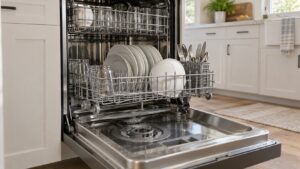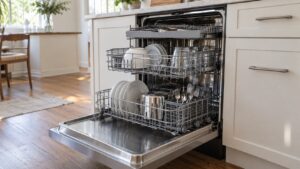
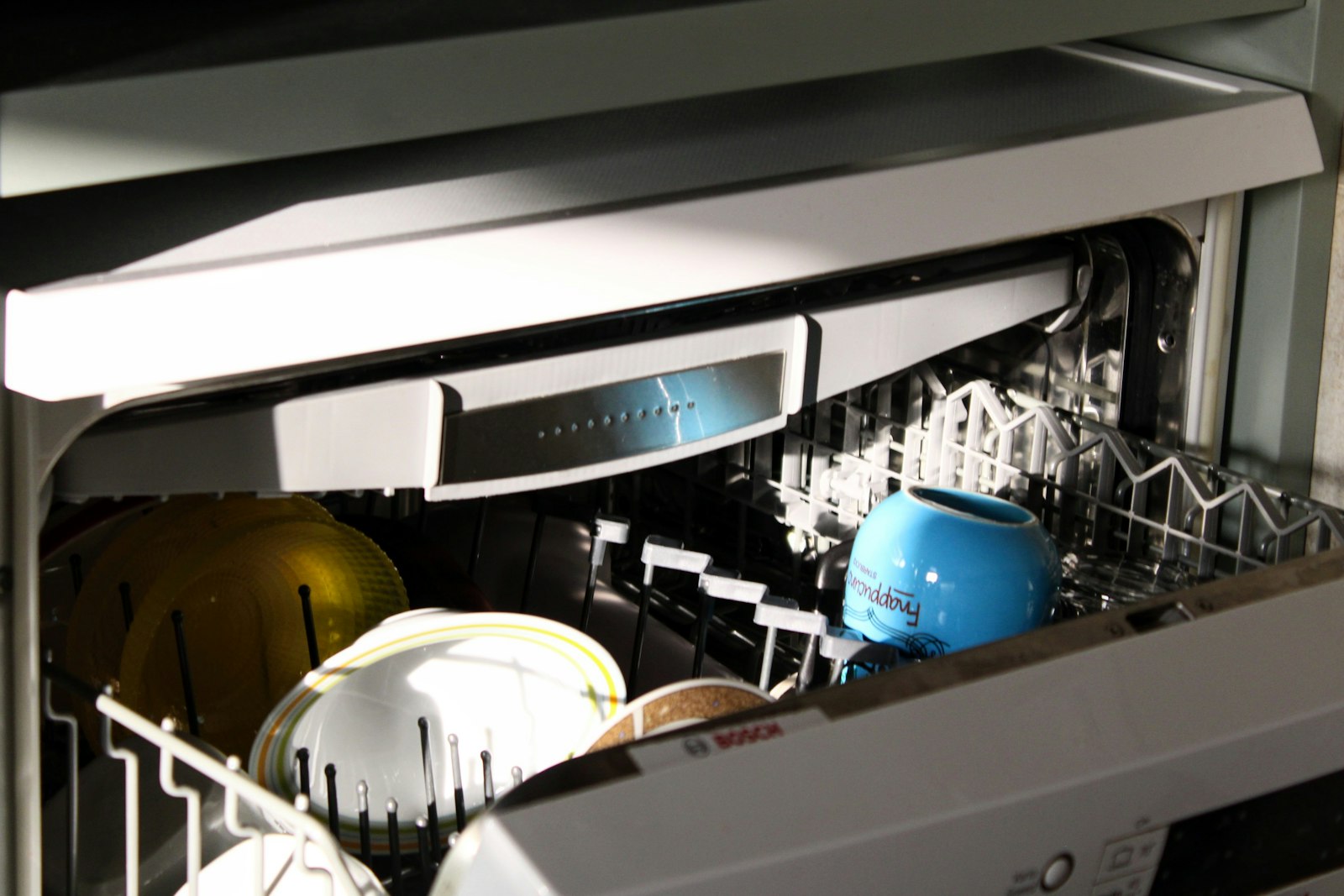
Understanding how a whirlpool dishwasher works demystifies almost every problem, because each problem maps to one of the machine's basic stages: fill, heat, wash, filter, and drain. A dishwasher does not fill like a sink — it sprays a relatively small amount of recirculated, heated water through rotating arms with surprising force, filters out the food, and drains the dirty water at the end. Once you see that loop, codes and symptoms stop being mysterious and start pointing at a specific part.
The stages behind how a whirlpool dishwasher works
- Fill. The water inlet valve lets a measured amount of water into the tub, monitored by a float and flow sensor. Too little water trips F8E1; no water trips F6E1.
- Heat. A heating element warms the water so detergent can dissolve grease; the same element (or a fan) helps dry at the end. A heating problem is F7E1.
- Wash. A wash pump drives water up through rotating spray arms that blast the dishes from below and above.
- Filter. The runoff passes through a filter that catches food so the recirculated water stays relatively clean.
- Drain. A drain pump empties the dirty water up the drain hose to your sink drain or disposal. A drain failure is F9E1.
The sensors and safeties that run the cycle
A Whirlpool dishwasher constantly checks itself. A door latch switch confirms the door is closed before it will fill (a problem is F5E1). A float and flow sensor watch the water level. A thermistor monitors temperature. And a flood float in the base detects an internal leak and triggers F6E4, running the drain pump to protect your kitchen. These sensors are why the machine reports a code instead of flooding or running cold — and they map directly to the entries in our Whirlpool dishwasher error codes reference.
Why the filter is the heart of it
Because the wash water is recirculated, the filter is doing constant work — and a clogged filter undermines the whole machine at once: dirty water sprays back on dishes, drainage slows, and the tub develops odor. That is why filter maintenance matters more than almost anything else, as covered in our guide on cleaning a Whirlpool dishwasher filter.
One detail surprises most people: a dishwasher uses far less water than washing the same dishes by hand, because it does not fill like a sink. Instead it draws only a few gallons into the bottom of the tub, then the wash pump recirculates that small amount over and over, blasting it through the spray arms and back down through the filter dozens of times in a single cycle. The water is changed only a couple of times across the whole cycle — a wash, then one or more rinses — with the dirty water pumped out between phases. This recirculating design is efficient, but it has a clear consequence: the cleanliness of the wash depends on the filter keeping that recirculated water relatively clean. If the filter is clogged, the machine is essentially rinsing dishes in dirty water, which is why so many “not cleaning” complaints trace straight back to maintenance rather than to a broken part. Understanding that the same water circulates repeatedly is the single insight that explains why the filter, the spray arms, and water temperature matter so much to the result.
Why this matters for repairs
Knowing the stages lets you reason about a problem: dishes dirty but the machine runs means a wash-side problem (spray arms, filter, or pump); dishes cold and filmy means a heat-side problem; standing water means a drain-side problem. If you would rather have an expert trace it to the stage, our skilled technicians do exactly that; you can book a diagnostic visit. Whirlpool explains its wash technologies at whirlpool.com, and our Whirlpool dishwasher repair service covers every stage of the machine.