The anti-tip bracket is a small metal part that keeps a freestanding Whirlpool range from tipping forward if weight lands on an open oven door. Our Whirlpool range installation guide calls it the single most important installation step and notes that it is often skipped. This guide explains in plain language what the bracket does, how to tell whether your range is engaged with it, what to do when it is missing, and which parts of the job belong to the installation sheet and a professional. We do not give mounting positions, because they differ by model and are printed in the installation instructions that came with your range.
What does a Whirlpool range anti-tip bracket do?
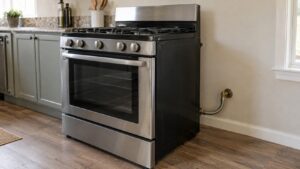
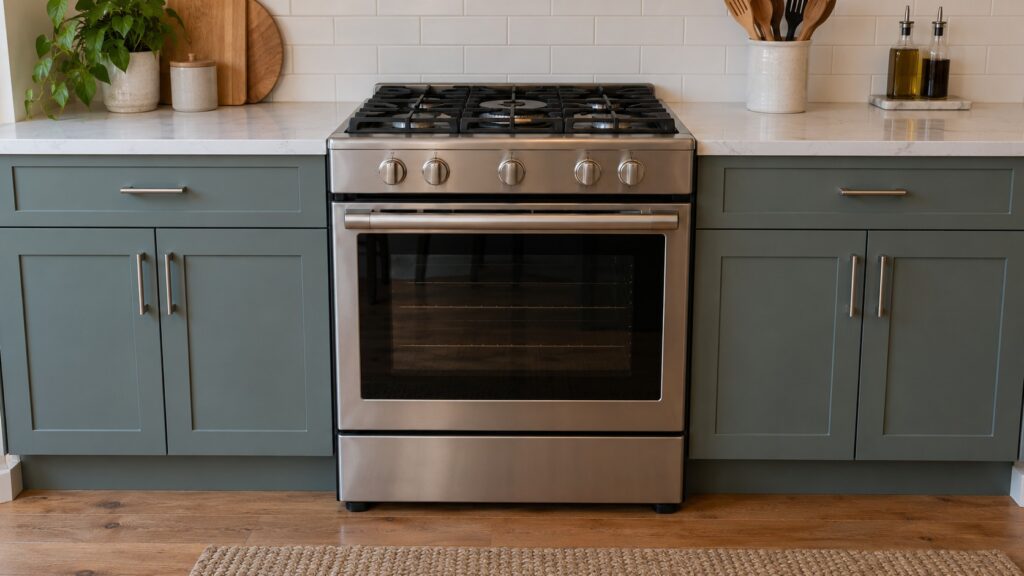
A freestanding range stands on its own feet between your cabinets. When the oven door is open it acts like a shelf. A child who climbs onto the door, a heavy roasting pan resting on it or an adult leaning on it adds weight in front of the range, and without a bracket the whole range can tip forward. The anti-tip bracket is anchored behind or beside the range and catches a rear leg or part of the body if the front begins to lift, so the range stays on the floor. That is why we treat it as a safety part and not an accessory.
The risk is greatest where there are small children, because an open oven door looks like a step. A tipped range can spill hot cookware onto a person and can pull on the connection behind it. For the model-specific shape and position of the bracket, read the installation instructions that came in the box; our model pages for ranges such as the WFE515S0J and WFG515S0J do not describe bracket positions, and we will not guess.
How can you tell if your range is engaged with the bracket?
The bracket only works when the range is actually captured by it. Our installation guide says to make sure a rear leg or the range body is captured by the bracket before you consider the job done, and to slide the range fully back so it captures the bracket. A range that has been pulled out for cleaning or service and pushed back may not be re-engaged, which is one way the protection is lost.
To check, use a flashlight to look at the rear corner where the bracket should be, without pulling the range out. If you can see a bracket and the range leg appears to sit in it or under it, that is a good sign. If you cannot see one, or the range sits well forward of where it was, treat it as not engaged and ask an installer to check it. If your range is a gas model, do not pull it out to look: moving it can strain the flexible gas connector, and the gas connection is work for a professional.
What if there is no bracket or it is not engaged?
Do not use the oven door as a step, a seat or a place to rest heavy pans, and keep children away from it until the bracket is installed or re-engaged. A missing bracket is something you can solve: brackets come with the range, in the hardware kit, and are also part of a standard installation. If you moved into a home and cannot find yours, check the installation sheet and the hardware kit if you still have them, and ask an installer to confirm the correct bracket for your model. How the bracket is fixed depends on the surface and the model, so that belongs to the installation sheet and an installer, not to a general guide like this one.
Fitting a bracket means working near the back of the range, where the power or gas connection lives. Do not touch the gas supply, the electrical cord or the outlet. If the range needs to move to reach the mounting point, leave it to an installer. Our Whirlpool range installation guide covers the full setup, including leveling and first-use checks.
Does leveling affect the bracket?
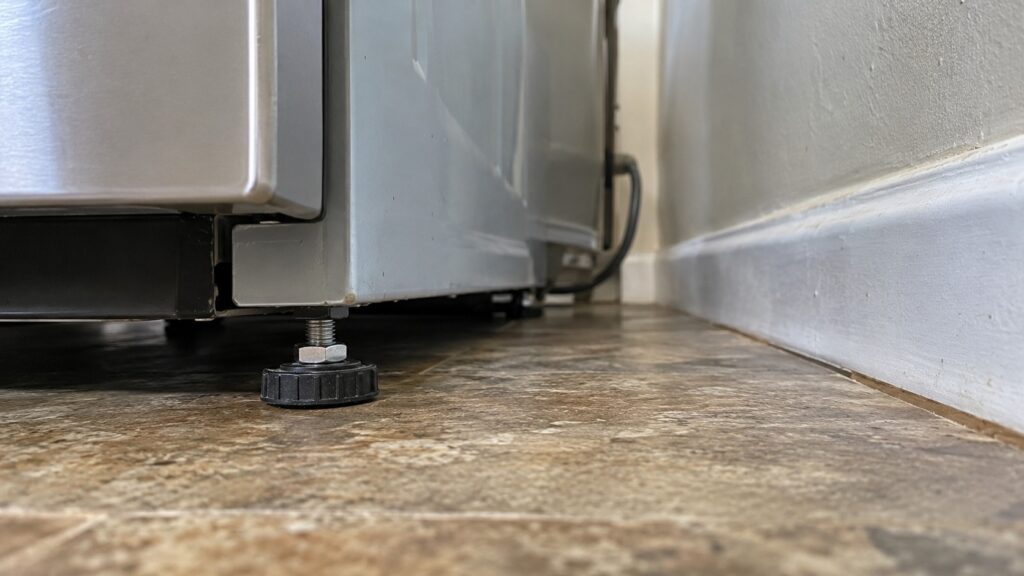
Yes. The range is leveled with its adjustable feet, and the position of the rear leg decides how it meets the bracket. If you change the height of the feet after the bracket is set, the leg may no longer sit in the bracket the way the sheet shows. Level the range first, as the installation sheet explains, then confirm the range is engaged. Do not adjust the feet while the range is hot or loaded with cookware, and never lift the range alone. If the range will not stand level, rocks on the floor or sits at an odd angle, stop and call for help.
After any move, such as cleaning behind the range or replacing the floor, repeat the checks: slide the range fully back, confirm the bracket, confirm the range is level and check that the oven door closes evenly. Our range maintenance guide lists the routine care that does not require moving the range.
When should a professional handle it?
Call a professional when the bracket is missing, when it cannot be fixed to your floor or wall with the parts supplied, when the range must be moved to reach it or when you have any doubt about the gas or electric connection. If you ever smell gas, do not turn anything on or off, do not light anything, leave the house and call the gas company or 911 from outside. We are an independent repair company. See our Whirlpool range repair page or schedule a visit, and say that you want the anti-tip bracket checked.