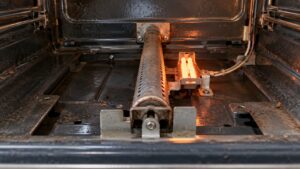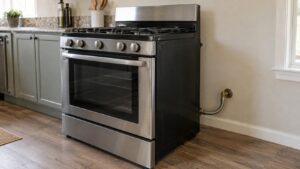

A range works hard and spends its life around spills, grease, and heat, so a little routine care keeps it heating accurately and safely. Good whirlpool range maintenance centers on keeping burners and igniters clean, protecting the control panel, and using self-clean wisely. On gas ranges like the WFG515S0J and electric ranges like the WFE515S0J, these habits prevent the most common no-heat and ignition complaints.
A whirlpool range maintenance routine
- After cooking: wipe the cooktop once it cools, before spills bake on.
- Weekly: lift gas burner caps and bases, clean them, and clear any clogged ports.
- Monthly: check that spark electrodes are clean and dry, and that the oven door gasket seals.
- As needed: run self-clean (or wipe the AquaLift® low-temp cycle) sparingly, not as routine.
Burner and igniter care
On a gas range, clean burners are the single biggest factor in reliable lighting. Grease and food clog the ports and foul the spark electrode, leading straight to the clicking-but-no-flame problem covered in our burner-won’t-light guide. Keep caps centered and dry, and never use a metal tool that can snap off in a port. On an electric range, keep the glass cooktop free of sugary spills that can pit the surface, and lift drip pans on coil models to clean underneath.
Using self-clean wisely
Self-clean reaches very high temperatures, and that heat is hard on oven components — door latches, temperature sensors, and control boards. Running it too often is a known way to shorten the life of the temperature sensor, which can later show up as an F3E1 problem. Use self-clean only when the oven really needs it, wipe up heavy spills by hand first, and let the oven fully cool and unlock before using it again. Ranges with AquaLift® use a gentler low-temperature steam clean that is kinder to parts.
Protecting the control panel
Moisture and grease under the touchpad cause stuck-key and control failures. Wipe the panel with a damp (not soaking) cloth, and avoid spraying cleaner directly onto controls. Keeping the panel clean and dry heads off many erratic-control complaints.
Catching problems early
Maintenance is a chance to spot trouble before it becomes a breakdown. A burner that is getting harder to light, an oven that seems to run hot or cold, or a door that no longer seals are all early warnings — our oven-temperature guide covers calibration and sensor checks. Acting early often keeps a minor issue from becoming a no-heat failure.
Cooktop surface and grate care
The cooking surface needs its own routine, and getting it right protects both the look and the function of the range. On a glass-ceramic electric cooktop, wipe spills only after the surface cools, and use a cooktop cream and a razor scraper made for the job rather than abrasive pads that scratch — sugary spills are the exception and should be lifted while still warm before they bond to and pit the glass. On a gas range, the cast-iron grates and burner caps can usually be washed with warm soapy water; check whether your model’s grates are dishwasher-safe before putting them in. Dry every part fully before reassembling, because moisture trapped under a cap is a leading reason a burner will not light afterward. Keep the area around the burners free of foil and spillover, which can interfere with ignition and airflow. A clean, dry, properly reassembled cooktop is the single biggest factor in reliable lighting and even heat.
When to bring in a technician
If maintenance reveals a cracked electrode, a door gasket you cannot reseat, or an oven that has drifted off temperature, an independent specialist can replace worn parts with genuine OEM components and recalibrate the oven. Labor is backed by a 30-day labor warranty and pricing starts from a trip-and-diagnostic fee depending on the diagnosis. You can schedule a tune-up or repair online. For care and cleaning instructions, see Whirlpool.