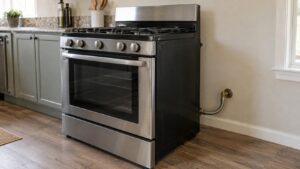
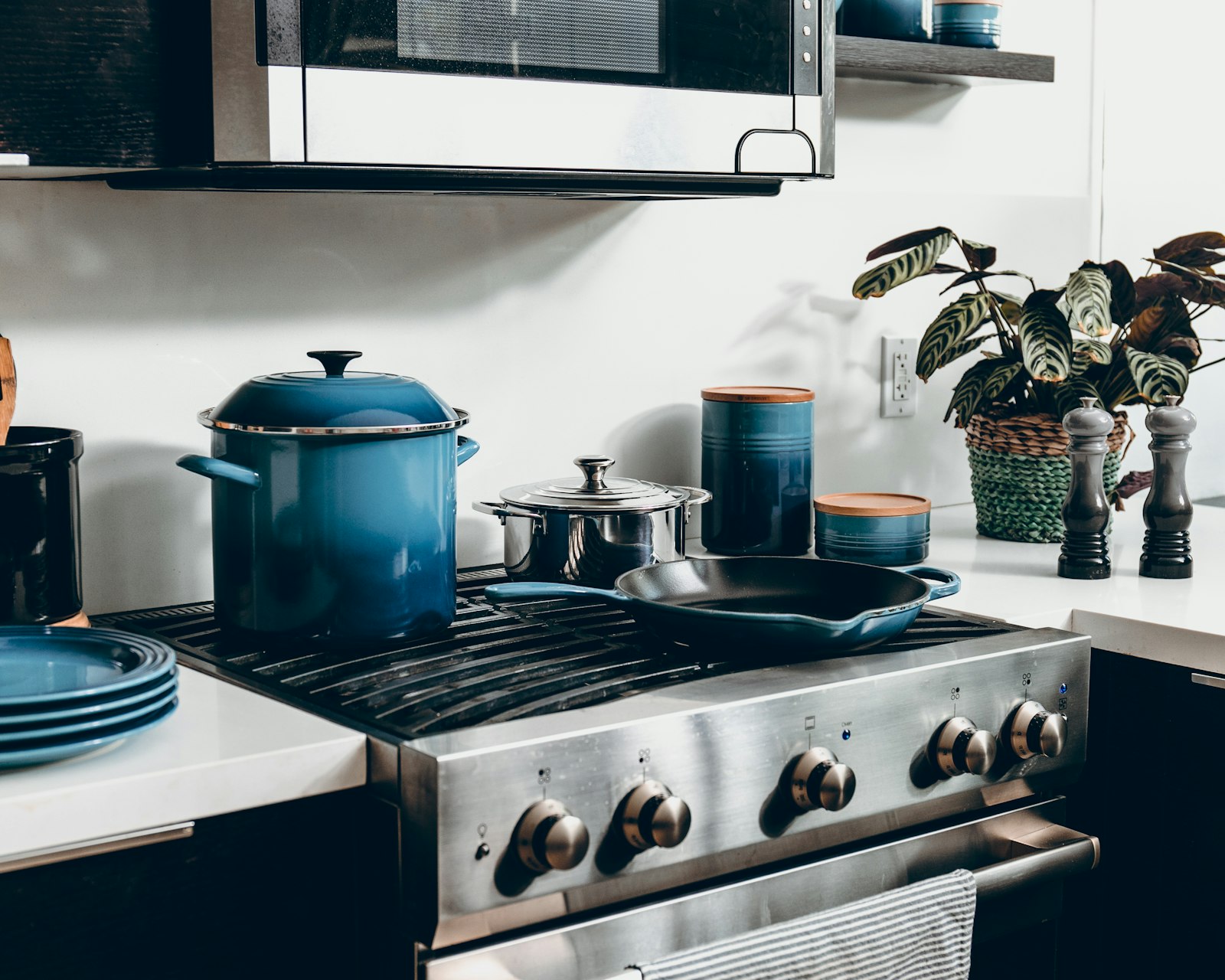
A whirlpool range gas burner will not light is a frustrating but usually fixable problem, and most causes are simple enough to handle at the stovetop. On gas ranges like the WFG515S0J and WFG550S0H, a surface burner that clicks but will not catch is almost always down to moisture, debris, or a misaligned burner cap rather than a serious problem. Work through the checks below before calling for service.
Why a whirlpool range gas burner will not light
When you turn the knob to LITE, a spark electrode beside the burner clicks to ignite the gas. If the electrode is wet (after a boil-over or cleaning), coated in grease, or cracked, the spark is weak or absent. If the burner ports are clogged with food, gas cannot reach the flame ring evenly. And if the burner cap is off-center or sitting crooked, the spark and gas do not line up. Any of these leaves you with clicking and no flame.
Steps to try first
- Make sure all burner parts are completely dry — wait after cleaning or a spill before trying again.
- Lift off the burner cap and base and clean them; clear clogged ports with a straightened paperclip, never a toothpick that can snap off.
- Reseat the cap squarely and centered on the base — a tilted cap is a very common cause.
- Check that the spark electrode is clean and not cracked; a damaged electrode needs replacing.
- Confirm the gas supply is on and that other burners light — if none light, suspect the supply or igniter module.
When one burner vs all burners is affected
If a single burner will not light while the others spark and ignite normally, the problem is local to that burner — clean the cap, base, and port. If every burner clicks but none lights, or none even clicks, suspect the spark igniter module, the gas supply, or wiring. Whirlpool may report a cooktop igniter failure as F0E1 on some ranges. A continuous clicking that will not stop even with the knobs off also points to the igniter module or a wet switch.
A safety note
If you smell gas at any point, stop immediately, do not operate any switch or spark, ventilate the room, and contact your utility from outside. Gas safety always comes before troubleshooting. Note that a surface-burner ignition problem is separate from the oven not heating — if your oven also will not heat, see our oven not-heating guide.
Reading the flame after it lights
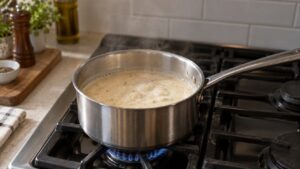
Once a burner does light, the flame itself tells you whether the burner is healthy. A correctly adjusted Whirlpool burner produces a steady, mostly blue flame with crisp cones; that means the air-to-gas mixture is right. A lazy yellow or orange flame that flickers and leaves soot signals incomplete combustion, usually from clogged ports, a misaligned cap, or a blocked air shutter — clean the burner thoroughly and reseat the cap, and the flame should return to blue. A flame that lifts off the burner or one that is uneven around the ring points the same way. Pay attention, too, if a burner that used to light instantly now takes several clicks: that creeping delay is an early warning of a fouling electrode or partially clogged ports, and cleaning it then prevents the full no-light failure later. Treating the flame as a gauge of burner health lets you catch problems while they are still a five-minute clean rather than a service call.
When to call a technician
If the burner is clean, dry, and properly seated and still will not light, or if all burners are affected, the igniter module, spark switch, or gas valve may need service — gas components are best handled by a professional. Our independent specialists service Whirlpool gas ranges with genuine OEM parts, a 30-day labor warranty, and pricing from a trip-and-diagnostic fee depending on the diagnosis. You can schedule a burner diagnosis online. For model-specific cleaning and parts guidance, see Whirlpool.