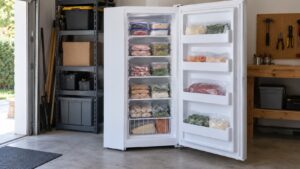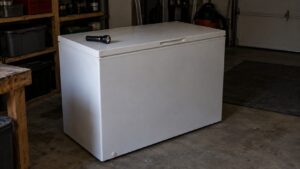
When a freezer fails, the practical question is whether to fix it or buy new — and a whirlpool freezer repair or replace decision comes down to three things: the age of the unit, which part has failed, and how the repair cost compares to a replacement. This guide gives a clear framework so you are not guessing, whether you own an upright WZF34X20DW or a chest WZC5216LW.
The whirlpool freezer repair or replace rule of thumb
A useful starting point: if the repair costs less than half the price of a comparable new freezer and the unit is under about eight years old, repair is usually the better value. If the repair is expensive and the freezer is older than ten years, replacement often makes more sense — both for cost and for the efficiency gains of a newer model.
Which part failed matters most
- Gasket, thermostat, defrost component, or fan: these are affordable, common repairs. Almost always worth fixing, even on an older unit. Our repair-cost guide shows the typical ranges.
- Control board (electronic models): moderate cost; usually worth it on a unit under eight years old.
- Compressor or sealed-system leak: the most expensive repair, and the tipping point. On an older freezer, this is the classic case where a new unit wins.
Factor in efficiency and food
A freezer runs every minute of every day, so an old, inefficient unit costs real money in electricity. A modern Whirlpool freezer uses noticeably less power, which offsets part of a replacement over its life. Also weigh the cost of lost food: a freezer that fails intermittently and keeps thawing a full load is expensive in ways a repair bill does not show.
Don’t replace over a fixable symptom
Before you write off a freezer, make sure the problem is not something simple. A unit that seems to have failed may just have dirty coils, a bad seal, or a frosted-over evaporator — all cheap fixes. Work through our not-freezing guide first; many freezers condemned as dead are running again within an hour.
The hidden cost of an intermittent freezer
One factor that tips many decisions toward replacement is reliability rather than a single big repair. A freezer that fails intermittently — cooling fine for a week, then warming for a day — is uniquely costly because each lapse can ruin a full load of food, and you may not catch it until the damage is done. If a unit has needed several repairs, or if the problem is hard to pin down and keeps returning, the value of certainty starts to outweigh the price of another fix. Newer freezers also bring better insulation and more efficient compressors, so a replacement quietly saves on the electricity an old unit burns running constantly. Weigh these against the repair: a one-time, clearly diagnosed problem on a sound unit is worth fixing, while a pattern of recurring trouble on an aging freezer that also guards valuable food is the situation where buying new is the calmer, often cheaper, long-run choice. Keep a brief record of any repairs and recurring symptoms; when you can see the pattern on paper, the repair-or-replace decision usually makes itself rather than weighing on you each time the freezer acts up.
How a diagnosis helps
The smartest path is to get an accurate diagnosis before deciding. Once you know exactly which part failed and what the repair would cost, the repair-or-replace math becomes simple. Our independent specialists diagnose standalone Whirlpool freezers, explain the failed part in plain terms, and quote parts and labor before any work begins, using genuine OEM parts with a 30-day labor warranty and pricing from a trip-and-diagnostic fee depending on the diagnosis. You can schedule a diagnosis online. To compare current models if you do decide to replace, see Whirlpool.