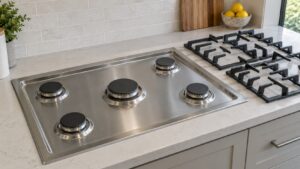
Proper whirlpool glass cooktop cleaning keeps the ceramic-glass surface clear and protects the elements underneath from heat-trapping residue that shortens their life. Whirlpool radiant and induction cooktops share the same smooth glass surface, and it responds best to a specific routine: a dedicated cream cleaner, a soft cloth, and a razor scraper held flat for stubborn spots. Used correctly, the surface stays like new for years; used wrong, it scratches permanently.
The right way to do Whirlpool glass cooktop cleaning
- Let the surface cool until the hot-surface indicator is off. Cleaning hot glass can streak it and is a burn risk.
- Wipe loose crumbs away with a damp cloth.
- Apply a small amount of cooktop cream cleaner (the kind made for ceramic glass) and work it in with a soft cloth or paper towel in small circles.
- For burnt-on spots, hold a single-edge razor scraper nearly flat to the glass — about a 30-degree angle — and gently lift the soil. Never dig in with the corner.
- Buff dry with a clean cloth so no cleaner film bakes on next time you cook.
What to avoid in Whirlpool glass cooktop cleaning
- No abrasive scouring pads, steel wool, or gritty powders — they leave fine scratches that never come out.
- No glass cleaner with ammonia as a substitute for cooktop cream; it does not lift baked-on soil and can streak.
- Never let sugary spills or melted plastic sit — clean those immediately while warm (carefully) because they can pit the glass.
- Do not slide cast-iron or rough-bottomed pans across the surface; lift them instead.
Cleaning that protects the cooktop and prevents repairs
Residue that bakes onto the glass over an element traps heat against it, and chronic overheating is a real contributor to element and sensor failure. Keeping the surface clean is genuine preventive maintenance, not just cosmetics. If a spill ever cracks the glass, stop using the cooktop and schedule a Whirlpool cooktop repair — a cracked top is both a shock hazard and a path for liquid to reach the wiring. Our Whirlpool cooktop repair overview covers glass-top replacement. We fit genuine OEM glass and parts with a 30-day labor warranty.
Tackling specific stains in Whirlpool glass cooktop cleaning
Different messes need different handling. White, cloudy spots are usually hard-water mineral deposits or a bit of cleaner film baked on — a paste of cream cleaner left to sit a minute, then buffed, lifts them. Rainbow or bluish discoloration is heat tint from a pan run dry or empty; a cooktop cream cleaner usually fades it, though severe overheating can leave a permanent stain. Metal marks, the silvery scuffs left by aluminum or stainless pan bottoms sliding on the glass, respond to cream cleaner and a non-scratch pad made for cooktops. Melted plastic or a sugary boil-over is the urgent one: while the surface is still warm (not hot), carefully scrape it off immediately with the razor held flat, because sugar and plastic can pit and permanently mark the glass if they cool and harden in place. For everyday food soil, the warm-but-cooled cream-cleaner routine handles almost everything.
Tools to keep on hand
- A bottle of ceramic-glass cooktop cream cleaner.
- A single-edge razor scraper made for cooktops.
- Soft microfiber cloths or paper towels.
- A non-scratch cooktop pad for stubborn spots — never steel wool.
A simple weekly routine
A quick cream-cleaner pass once a week, plus immediate attention to boil-overs, keeps the surface clear with almost no effort. Wipe the cooktop after it has cooled following most cooking sessions so soil never gets the chance to bake on, and keep a razor scraper within reach so sugary spills can be lifted the moment the surface is safe to touch. For the cleaner type Whirlpool recommends for your specific finish, check the care guide at whirlpool.com.