A Whirlpool refrigerator not cooling is one of the most common service calls we see, and the good news is that the cause is often something you can check yourself. On French Door models like the WRF560SMHZ and Side-by-Side units like the WRS325SDHZ, a warm fresh-food compartment usually points to restricted airflow, dirty condenser coils, or a stalled evaporator fan rather than a dead compressor. Before assuming the worst, work through the checks below in order.
Why a Whirlpool refrigerator not cooling happens
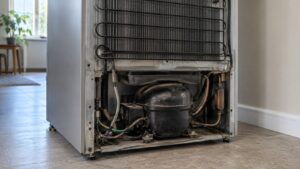
Cold air is made at the evaporator behind the freezer and pushed into the fresh-food section by the evaporator fan. Anything that blocks that path — frost on the coil, a blocked vent, a stuck damper, or a fan that has stopped — leaves the fridge warm while the freezer may stay partly cold. A second common cause is condenser coils caked in dust, which traps heat and forces the compressor to run without ever reaching temperature.
Steps to try first
- Confirm the temperature is set to 37°F (fresh food) and 0°F (freezer), and that nothing is blocking the interior air vents.
- Pull the fridge out and vacuum the condenser coils underneath or behind the unit — do this every six months.
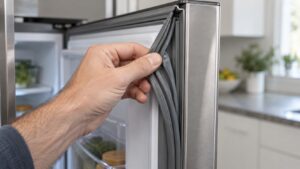
- Check the door gaskets with the dollar-bill test; a torn seal lets warm air in and overworks the system.
- Listen for the evaporator fan when the door switch is held in; silence or a grinding noise suggests ice buildup or a failed fan motor.
- If the back wall of the freezer is coated in frost, the defrost system may have failed — Whirlpool flags this with a dE alert on many models.
When the display shows an alert
Some Whirlpool models surface a problem on the panel. An SY EF evaporator-fan alert or a dE defrost alert both stop cold air from circulating. You can read the full meaning and DIY steps on our SY EF evaporator-fan code page and our dE defrost code page. A manual defrost (unplug for 24 hours with the doors open) is a useful temporary test: if cooling returns, a defrost component has failed and needs replacing.
How to prevent a no-cooling fridge
Many cooling failures are preventable. Keep the condenser coils clean — dust is the leading cause of a fridge that slowly loses its cooling power — and vacuum them every six months, or more often in homes with pets. Do not overfill the cabinet, since packing food against the rear air vents blocks the cold air the evaporator fan is trying to circulate and creates warm pockets. Leave space at the top and back of the unit for heat to escape, and keep the fridge out of direct sun and away from ovens. Inspect the door gaskets seasonally and replace any that have hardened or torn, because a poor seal makes the compressor run constantly and shortens its life. Finally, avoid leaving the doors open longer than necessary; every minute of warm-air infiltration is a minute the system has to claw back.
When to call a technician
If the coils are clean, the gaskets seal, the fan runs, and the fridge still will not hold temperature, the problem is likely in the compressor, start relay, sealed system, or main control board. A clicking sound every few minutes with both compartments warming often means a failed start relay or compressor circuit. These repairs need a meter, sealed-system tools, and experience, so this is the point to bring in a skilled technician. Our independent specialists carry genuine OEM parts and back labor with a 30-day labor warranty; pricing starts from a trip-and-diagnostic fee and depends on the diagnosis.
You can schedule a Whirlpool refrigerator diagnosis online, or read our companion guide to a leaking refrigerator if you also see water on the floor. For factory specifications and model documentation, see Whirlpool. With a methodical approach, most no-cooling problems are diagnosed in under an hour.