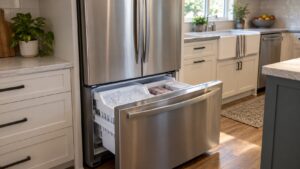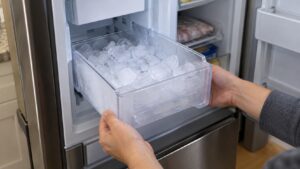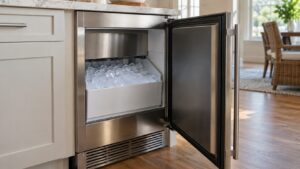

If your refrigerator still makes ice but the bin never seems full, you have a whirlpool ice maker slow ice problem rather than a dead icemaker. The in-fridge module is designed to cycle on a fixed schedule, freezing one batch at a time, so anything that slows the freeze or shorts the fill will quietly drop your daily output. Before assuming the icemaker is worn out, look at the two things that control batch speed: how much water reaches the mold, and how cold the freezer actually runs.
What causes a Whirlpool ice maker slow ice output
Low and slow production usually comes from one of these: a partially clogged EveryDrop filter or low household water pressure, so the mold underfills and you get small, thin cubes; a freezer set too warm or packed so full that air cannot circulate, stretching each freeze cycle; a fill tube partly iced over, so only a trickle reaches the mold; or a door or icemaker that keeps getting opened, since every open dumps cold air and resets the timing. Larger homes with reverse-osmosis water sometimes see slow output simply because RO systems deliver lower pressure than the inlet valve prefers.
- Small or hollow cubes point to underfilling — suspect the filter, water pressure, or inlet valve screen.
- Normal-size cubes but few of them point to a warm freezer or long freeze cycles.
- Production that stalls then catches up points to an intermittent fill tube freeze.
Steps to restore full production
- Replace the EveryDrop filter and run several dispenses; a tired filter is the single most common cause of slow ice.
- Confirm the freezer is at 0 degrees Fahrenheit and not overpacked. Leave room around the icemaker for airflow.
- Test household water pressure at a nearby faucet; very low pressure will underfill the mold.
- If you use a Fast Ice or max-ice option on your model, turn it on temporarily to rebuild the bin.
- Watch one full cycle if you can — note whether the fill looks weak or the freeze just takes too long.
When to call a technician
Habits that quietly cut your ice output
Even a healthy icemaker can seem slow if everyday use works against it. Every time the freezer door opens, cold air spills out and the next freeze cycle takes longer, so a busy household naturally sees lower output than the spec suggests. Pulling large amounts of ice for a party empties a bin that takes a full day to rebuild one batch at a time, which feels like a problem but is just normal recovery. Storing the freezer so full that air cannot circulate around the icemaker stretches every freeze, and a refrigerator squeezed into a hot garage or against a wall with no breathing room runs warmer than its dial says. None of these are repairs — they are usage patterns worth knowing before you assume the module is failing.
- Turn on Fast Ice or a max-ice option, if your model has one, before events that need a lot of ice.
- Give the bin a full 24 hours to recover after heavy use before judging output.
- Leave breathing room around the icemaker and keep the freezer between two-thirds and three-quarters full for the best airflow.
If the filter is fresh, the freezer is cold, and the cubes are still small or scarce, a weak water inlet valve or a failing icemaker thermostat may be limiting each batch. These are diagnosed by checking fill volume and timing, which is straightforward for a technician with the right tools. Our independent service can confirm whether the module is underperforming or the refrigerator is simply running warm. Book a diagnostic visit and we will measure the fill and freeze cycle rather than guess. To keep output high long term, follow our cleaning and filter schedule, and if you are unsure whether the unit is worth maintaining, compare it against current models and EveryDrop part numbers at whirlpool.com. Most slow-ice complaints clear up with a new filter and a colder freezer, and the rest are a quick parts swap.