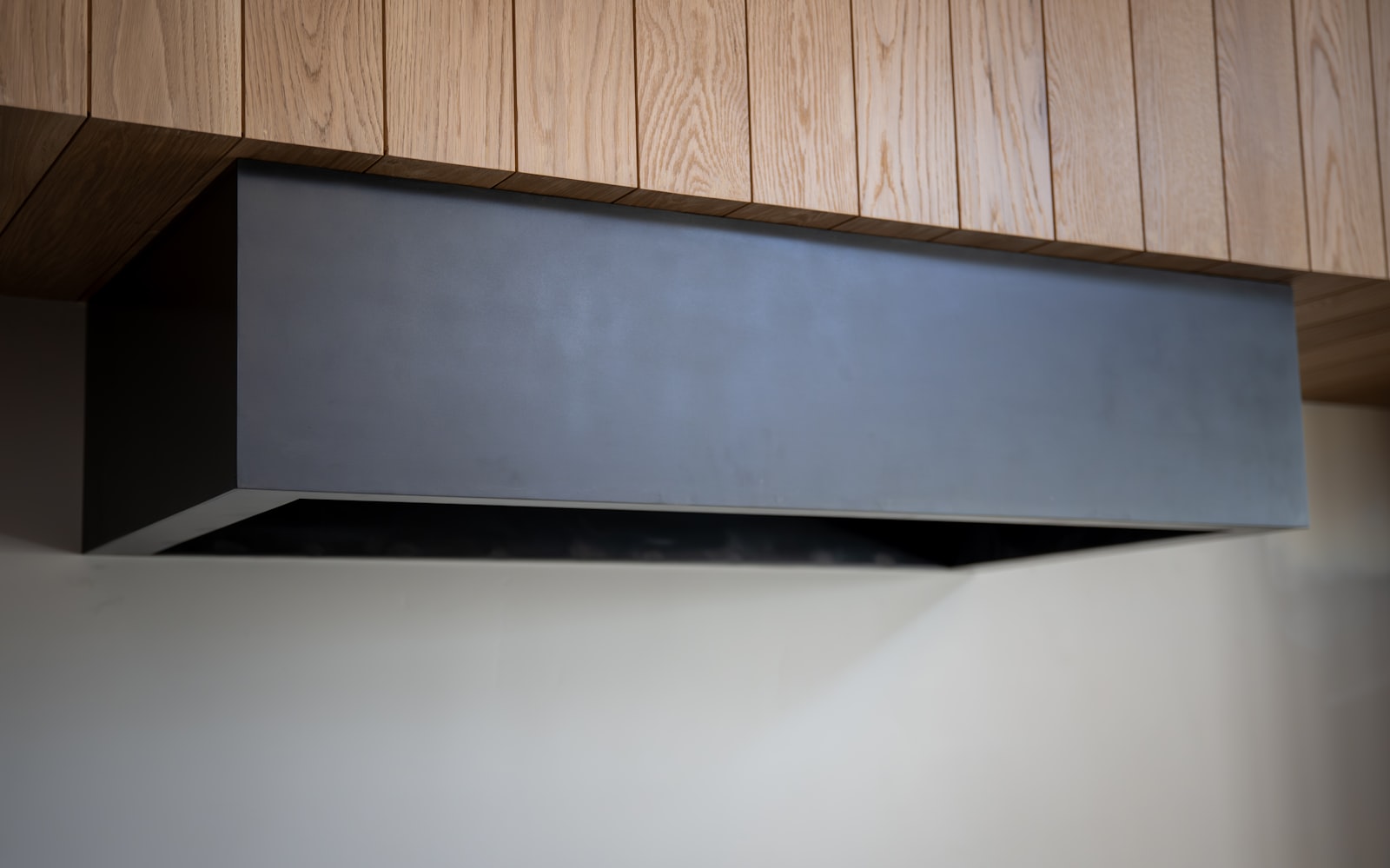
Getting whirlpool range hood venting right is what actually determines whether your hood clears the air, and it matters more than the CFM number on the box. A powerful blower choked by undersized or twisty ductwork moves far less air than a modest one on a short, straight run. Whirlpool range hoods (WVU, UXT, WVW series) can be installed ducted or, on many models, ductless — and the duct path is the part most worth getting right.
Planning the Whirlpool range hood venting
- Duct size: match the duct diameter to your hood outlet — never reduce it. Necking down a duct strangles airflow and makes the fan loud and ineffective.
- Shortest, straightest run: every elbow and every foot of flex duct adds resistance. Aim for the most direct path to the exterior, and use smooth rigid duct over corrugated flex where you can.
- Exterior cap and damper: terminate at a proper wall or roof cap with a backdraft damper that opens when the fan runs and closes when it is off, keeping outside air, pests, and cold out.
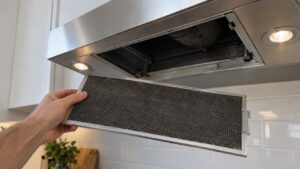
- Ductless option: if venting outside is not practical, set the hood up recirculating with a charcoal filter — convertible Whirlpool models support both, but expect somewhat less effective odor and moisture removal.
Mounting and electrical
Mount the hood at the height specified in your manual above the cooktop — too low is a fire and head-clearance issue, too high hurts capture. Under-cabinet models (WVU, UXT) screw to the cabinet bottom; chimney canopy models (WVW) mount to the wall and need solid backing. Whirlpool hoods typically connect to a standard household circuit; follow the wiring instructions and use the correct junction-box connection. Confirm the internal damper flap moves freely and the duct connection is sealed so air does not leak back into the cabinet.
When to call a pro for Whirlpool range hood venting
Cutting a new exterior vent opening, running duct through walls or ceilings, and making the electrical connection are where many homeowners bring in help — especially the exterior penetration, which has to be weather-sealed correctly. If a newly installed hood underperforms, the cause is almost always the duct path rather than the hood, and you can schedule a Whirlpool range hood service visit to confirm. Our Whirlpool range hood repair overview explains what that diagnosis covers. Repairs and parts are genuine OEM with a 30-day labor warranty.
Common venting mistakes that kill airflow
A few errors account for most underperforming hoods, and they are all in the duct. Reducing the duct diameter — connecting a hood with a larger outlet to a smaller existing duct — chokes airflow dramatically and makes the fan loud; always match or never neck down. Using long runs of flexible corrugated duct adds far more resistance than smooth rigid duct, so keep flex to a minimum and prefer rigid where you can. Too many elbows compound the problem, since each turn costs airflow; plan the straightest path possible. Terminating into an attic or crawlspace instead of fully outside is both ineffective and a moisture hazard — the air must reach a proper exterior cap. A missing or stuck damper lets cold outside air pour back in and can make the hood whistle. And venting a ductless-only model as if it were ducted, or vice versa, defeats the design. Getting the duct right is genuinely more important to performance than the hood CFM rating on the box.
Verify before you finish
With the hood running, hold a tissue to the exterior cap — it should be pushed open by the airflow. For the exact duct size, mounting height, and ducted-versus-ductless options for your model, always follow the installation instructions at whirlpool.com.