
Most refrigerator breakdowns we see could have been delayed or avoided with twenty minutes of routine care. Good whirlpool refrigerator maintenance keeps cooling efficient, lowers energy use, and protects the compressor — the single most expensive part to replace. On any Whirlpool model, from the WRF560SMHZ French Door to the WRS555SIHZ Side-by-Side, the same handful of tasks make the difference.
A whirlpool refrigerator maintenance schedule
Break the work into intervals so it never piles up:
- Every month: wipe the door gaskets with warm soapy water and check the seal with the dollar-bill test.
- Every six months: vacuum the condenser coils (underneath or behind the unit) and replace the EveryDrop™ water filter.
- Every six months: clean the defrost drain port to prevent the frozen-drain leaks that plague many fridges.
- Yearly: level the unit, check the door hinges, and clean the drain pan.
Why coil cleaning matters most
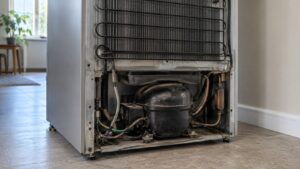
Dust on the condenser coils acts like a blanket, trapping the heat the refrigerator is trying to expel. The compressor then runs longer and hotter, raising your power bill and shortening its life. In homes with pets, coils can clog in a single season. A coil brush and a vacuum take care of it in ten minutes and are the highest-value maintenance you can do.
Filters, ice, and air
An old water filter slows dispenser flow and can leave the ice maker producing small, hollow cubes. Whirlpool recommends replacing the EveryDrop™ filter roughly every six months; many models flash a filter indicator. If your fridge has a FreshFlow™ air filter, replace it on a similar schedule to control odors.
Catching problems early
Maintenance is also a chance to spot trouble before it becomes a breakdown. Frost building on the freezer back wall can be an early sign of a defrost problem — the same failure Whirlpool flags with a dE defrost alert. Warm spots may precede an SY EF evaporator-fan alert. If you notice either during a cleaning session, address it before food spoils. Our no-cooling guide walks through the diagnosis.
Interior care and odor control
Beyond the mechanical parts, a little interior upkeep keeps food fresher and the unit pleasant to use. Wipe spills promptly so they do not dry onto shelves or seep into the gasket channel. Once or twice a year, empty the fridge and wash the interior with a mild baking-soda solution rather than harsh cleaners, which can damage plastic liners. Keep an open box of baking soda inside to absorb odors, and store strong-smelling foods covered. Check the crisper drawers and their humidity sliders so produce lasts and excess moisture does not pool. If your model has a temperature-controlled drawer or deli pan, confirm its setting matches what you store there. These small routines do not affect the compressor, but they make the difference between a fridge that simply works and one that keeps food at its best — and they give you a regular reason to glance at the seals, vents, and back wall where mechanical trouble first shows. Keeping a simple calendar reminder for the six-month tasks — coils and filter — is the easiest way to make sure none of this slips, and it turns refrigerator care into a quick, predictable habit rather than a scramble after something goes wrong.
When to bring in a technician
If maintenance reveals a torn gasket you cannot reseat, a coil fan that rattles, or cooling that has already slipped, an independent specialist can replace worn parts with genuine OEM components before the compressor is stressed. Labor is backed by a 30-day labor warranty and pricing starts from a trip-and-diagnostic fee depending on the diagnosis. You can schedule a tune-up or repair online. For maintenance documentation and the right filter part numbers, check Whirlpool. A little routine care goes a long way toward a fridge that lasts.