Whirlpool washer repair or replace comes down to three things: which part has failed, how old the washer is, and whether anything else is wearing out at the same time. A single failed part such as a lid lock, inlet valve, drain pump or belt is almost always worth repairing. A failing motor, worn bearings or a damaged tub on a washer that has been in service a long time is where replacement starts to be reasonable. This guide gives you a way to decide without guessing.
How old is too old to repair a Whirlpool washer?
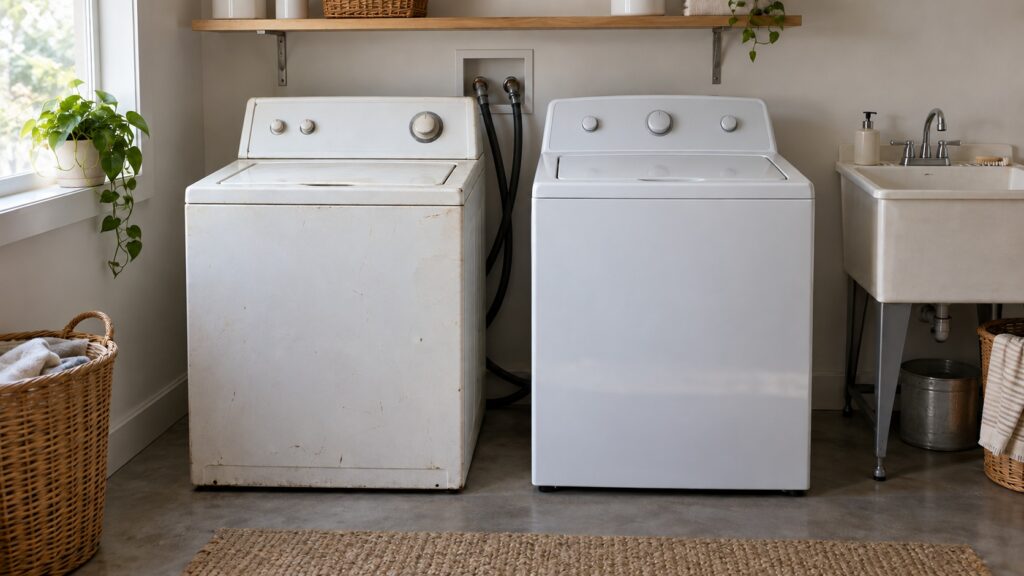
There is no single age that decides it, but a washer is usually considered mature after about a decade of regular family use. Under that, repair is the normal choice for nearly any single-part failure, because the rest of the machine still has plenty of life. Past it, the chance that a second or third part follows the first rises, and that is what the owner is really betting on. A fourteen-year-old washer with a worn lid lock and an otherwise clean drum and quiet bearings is still a candidate for repair; a fourteen-year-old washer with a lid lock failure, a rusted base and a drive that growls is not.
Look at the whole machine, not only the part in front of you. Rust trails, a musty smell that returns after cleaning, a drum that wobbles when you grab it and a spin that sounds rougher than it used to all tell you how much life is left.
Which Whirlpool washer faults are almost always worth fixing?
The water and safety parts. A long fill code such as F8E1 usually means clogged inlet screens, a kinked hose or a weak inlet valve; read the Whirlpool washer F8E1 long fill guide to see how modest the cause often is. A washer that will not drain is typically a clogged filter, a hose or a pump, which our will not drain guide explains. Door and lid locks, the temperature sensor behind F3E1, and a belt that has slipped are similar: well-defined parts, straightforward diagnosis, and a repair cost far below a new machine.
These faults also tend to be the ones an owner can partly test, which keeps the diagnosis fee as the main cost of finding out.
Which faults need a harder look?
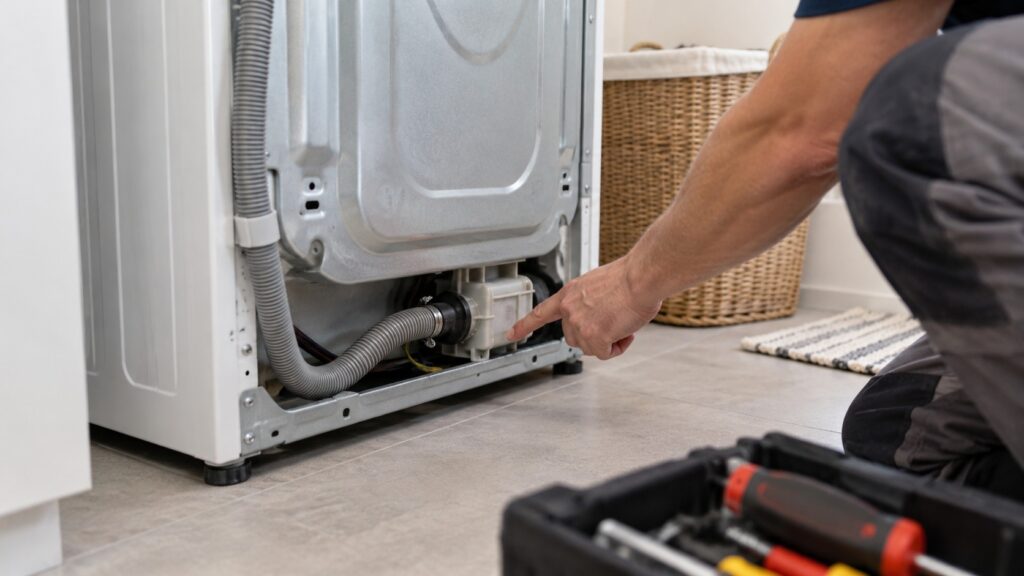
The drive. F7E1 means the motor is not confirming the spin speed it was told to reach. The cause may be a speed sensor, a motor control board, a connector or the motor itself. A technician measuring each of those can tell you which, and the answer changes the decision. A sensor or connector is a modest repair. A worn motor on an older washer is a bigger one. A worn bearing is bigger still, because it often means removing the tub and can cost more than the age of the washer justifies.
The same logic applies to a shifter on a top-load washer, shown as F7E5, and to the main control board. If the washer is showing codes from several different families at once, for example a drain code, a lid code and a motor code, the control may be the problem rather than any of the parts it is complaining about, and that is a case for a careful diagnosis before anyone orders parts.
What does replacing a washer really involve?
It is not just the price of a new washer. Newer machines are often taller, wider or deeper than a long-standing one, and a front-load model needs a stand or flat floor and may need new hoses and a different drain setup. A top-load washer in a closet needs lid clearance. Take measurements of the space and the doorway before you shop. Compare that effort with a repair that restores the washer you already have, and be honest about whether you want the features of a newer model, since that is a reason to replace independent of the fault.
The model also matters when you decide. A WTW4816FW or a WTW4957PW that has been reliable for years is a good candidate for a single repair; our WTW4816FW guide shows what that model offers and what to check on it.
Does water and energy use change the math?
Sometimes, but less than most people expect. A newer high-efficiency washer can use less water and spin out more moisture, which shortens dryer time, and those savings are real. They accumulate slowly, though, and rarely outweigh the cost of buying a machine while a working one is still available. They matter most when the old washer is a standard-capacity model with a long history of poor spin performance, or when the household has grown and the drum is now too small. If your current washer cleans well, spins out properly and simply needs one part, repair keeps a machine you already know in service and avoids a delivery, a haul-away and an installation.
What questions should you ask before deciding?
Ask what exactly failed and how it was confirmed. Ask whether the part is available and whether anything else is likely to be linked to it. Ask what the drum, bearings and cabinet look like. Ask whether the repair addresses the cause, since a drain pump replaced when the real problem is a blocked standpipe will fail again. Our guide to how a Whirlpool washer works makes these answers easier to understand.
We are an independent repair company, not the manufacturer, and we will tell you plainly if a repair is not worth it. A diagnostic visit is a sensible first step because it replaces guesswork with a named part. If you want that opinion, our Whirlpool washer repair service can inspect the machine, and you can schedule a visit online.