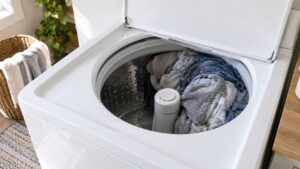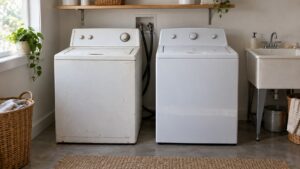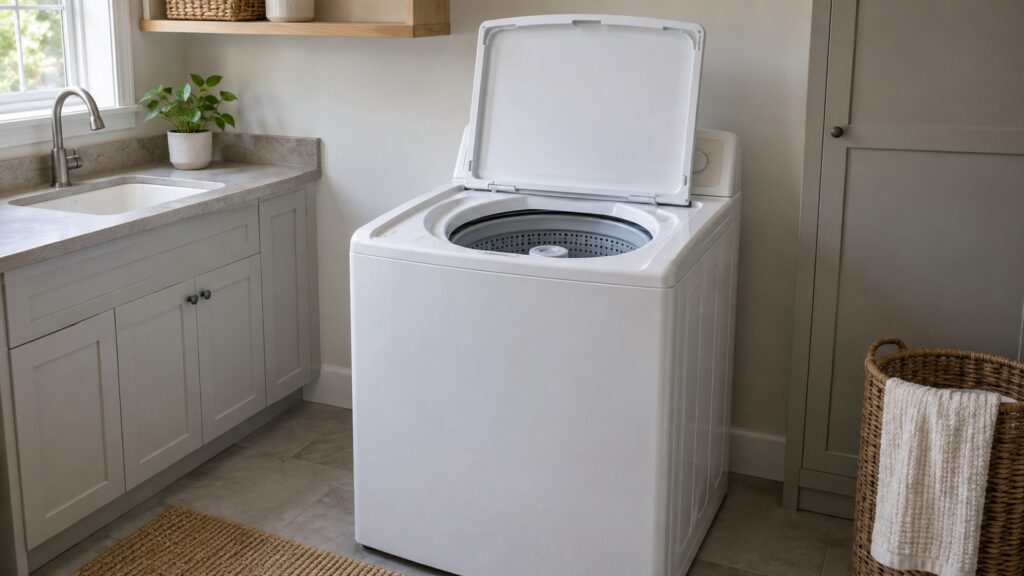
The Whirlpool WTW4816FW is a 3.5 cu ft high-efficiency top-load washer in white with a Deep Water Wash option and a Quick Wash cycle. Whirlpool no longer makes it, so every purchase today is a used or inherited machine, and the question is not “is it a good model” but “is this particular washer in good shape”. This guide gives you the model facts first, then the checks that matter before you pay for one or decide to keep the one in your home.
What kind of washer is the Whirlpool WTW4816FW?
It is a top-load machine that uses less water than the old fill-the-tub designs. Instead of filling to a fixed depth it senses the load and adds water to suit, which is what “auto sensing” means in practice. A Deep Water Wash option raises the water level for heavily soiled or bulky loads, and the Quick Wash cycle shortens a small, lightly soiled load. At 3.5 cu ft it is a mid-size drum: roomy enough for a family’s weekly towels and jeans, but not the place for a king-size comforter.
Because it is a high-efficiency design, it is sensitive to the same things every machine of this type is sensitive to: too much detergent, a slow drain, and a load that sits unevenly. Those three account for most of the calls we see on it, and they decide whether a used unit is a bargain or a headache.
How does it compare with the WTW4957PW, WTW4307SW and WTW4300SW?
The family around it is easy to mix up because the model numbers look alike. The differences below come from the model pages on this site.
If you are choosing between used units and have the option, the larger drums handle bulky bedding better, while the WTW4816FW is the simplest of the group. Fewer features means fewer things to fail, but it also means fewer cycle choices. For a household that mostly washes everyday clothes, that trade is often fine.
What should you check before buying a used WTW4816FW?
Do these checks standing in front of the washer, ideally with it plugged in and the seller’s permission to run a short cycle.
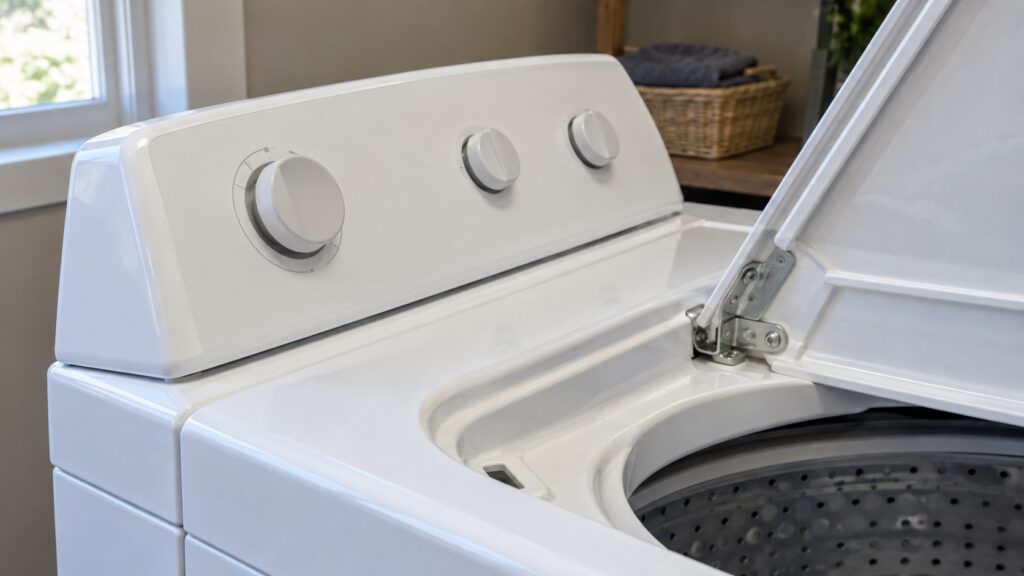
First, lift the lid and let it close. The lid lock should engage with a firm click, and the washer should refuse to spin with the lid up. A lid that does not lock is the cause behind the F5 family of codes, and the part is not something to guess at. Second, run a Quick Wash and watch the fill. Water should arrive at a steady rate and the cycle should not pause with an almost empty tub, because that is what a long-fill code looks like in real life. Third, listen to the drain and the spin. The tub should empty within a few minutes, and the spin should build up smoothly with no grinding or thumping.
Finally, look around the base and behind the washer for rust trails, water stains or a musty smell. A top-load machine that has leaked or sat wet for years will often show it on the floor under the cabinet before it shows it in the cycle.
Which codes does a WTW4816FW show most often?
Our technicians see a short list again and again on this model. F8E1 means the washer took too long to fill, so the first suspects are the inlet screens, the hoses and the water valve. You can read how that works in our Whirlpool washer F8E1 long fill guide. F9E1 means the tub took too long to drain, which usually points at the drain pump filter, the hose or a partial clog; our washer will not drain guide walks through it. The F5 codes relate to the lid lock, the F0 group covers an off-balance load or too many suds, and F7E1 is the motor not confirming the spin speed. Every one of those has its own page in the washer error code list.
None of these codes means the washer is finished. Several are cleared by an owner in minutes. Others need a meter and a part. The point of knowing them before you buy is that you can ask the seller whether the washer has ever shown any of them.
Is a WTW4816FW worth keeping or repairing?
A washer in this class is usually worth repairing when the fault is a single, well-understood part: a lid lock, an inlet valve, a drain pump or a belt. It becomes a closer call when the problem is the drive system or the control board on a machine that is already showing wear elsewhere. Our Whirlpool washer how-it-works guide explains what each of those parts does, which helps you judge what a diagnosis is telling you. A repair that costs a fraction of a new washer, on a drum and cabinet that are still sound, is normally the sensible choice. When two or three major parts are failing together, replacement starts to make more sense.
How do you get the most life out of the washer you have?
Use the amount of detergent the label calls for for a high-efficiency machine, not a full scoop out of habit. Leave the lid propped open between loads so the tub dries. Level the cabinet so it does not walk during spin, and do not wash a single heavy item alone. Our Whirlpool washer maintenance checklist and washer cleaning and odor guide cover the routine. If a code appears, write down exactly what the display shows before you power off, because it shortens the visit.
We are an independent repair company, not the manufacturer, and we will tell you plainly when a washer is not worth the repair. If your WTW4816FW is showing a code or you want a second opinion before buying one, our Whirlpool washer repair service can inspect it, and you can schedule a visit online.