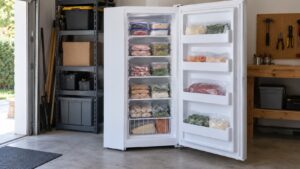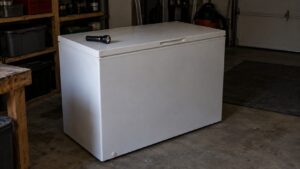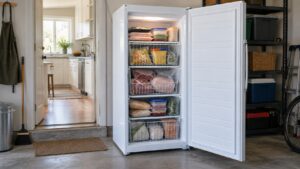

A standalone freezer is one of the few appliances that runs every minute of every day, so a little routine care pays off in lower bills and a longer life. Good whirlpool freezer maintenance centers on three things: keeping the door seal tight, keeping the condenser coils clean, and managing frost. On uprights like the WZF34X20DW and chest models like the WZC5216LW, these tasks take minutes and head off the expensive failures.
A whirlpool freezer maintenance routine
- Monthly: wipe the gasket and check the seal with the dollar-bill test.
- Every six months: vacuum the condenser coils and confirm clearance for airflow.
- As needed: defrost a manual-defrost chest model once frost reaches about a quarter inch.
- Yearly: level the unit, clean the interior, and check the drain (where fitted).
Door seal care
The gasket is the freezer’s first line of defense. A seal that has hardened or torn lets warm, humid air leak in, which causes frost, drives up energy use, and makes the unit run nonstop. Clean the gasket with warm soapy water so it stays supple, and replace it if it no longer grips a sheet of paper anywhere around the door.
Coils and clearance
As with a refrigerator, dust on the condenser coils traps heat and forces the compressor to overwork. Vacuum them twice a year, more often in dusty or pet-heavy homes, and keep a few inches of clearance around the cabinet so heat can escape. This single habit is the highest-value freezer maintenance you can do.
Managing frost
Frost-free uprights handle frost automatically, but you should still keep door openings short and avoid storing uncovered liquids. Manual-defrost chest freezers need periodic defrosting; never chip ice with a sharp tool, which can puncture the coil. Our frost-buildup guide walks through safe defrosting step by step.
Catching problems early
Maintenance is also a chance to notice trouble before food is at risk. A freezer that is starting to run constantly, frost that returns fast in a frost-free model, or a cabinet that feels warmer than usual are all early warnings — see our running-constantly guide for what each one means. Acting on them early often turns a major repair into a minor one.
Organizing and stocking for efficiency
How you load a freezer affects how hard it works. A reasonably full freezer is more efficient than an empty one, because the frozen mass holds cold and shortens the run time after each door opening — if yours is sparsely stocked, jugs of water make cheap, effective thermal ballast. At the same time, avoid overpacking a frost-free upright so tightly that food blocks the interior air vents, which starves the cabinet of circulation and creates warm spots. Keep an inventory and rotate older items to the front so you open the door less and for shorter periods. Label and date packages so you are not standing with the lid open deciding what is what. In a chest freezer, use the baskets to keep the contents reachable so a single open does not turn into a long dig. These organizing habits cost nothing, cut energy use, and reduce the door-open time that drives frost and constant running.
When to bring in a technician
If maintenance reveals a gasket you cannot reseat, a coil fan that rattles, or cooling that has already slipped, an independent specialist can replace worn parts with genuine OEM components before the compressor is stressed. Labor is backed by a 30-day labor warranty and pricing starts from a trip-and-diagnostic fee depending on the diagnosis. You can schedule a tune-up or repair online. For care instructions and the right gasket part for your model, check Whirlpool.