How whirlpool range self-clean works? This guide walks through exactly what to check and when an experienced technician should step in.
Understanding how whirlpool range self clean works helps you use the feature without accidentally damaging the oven, because the two systems Whirlpool uses work in very different ways. Traditional high-heat self-clean and the newer AquaLift® steam clean both leave a cleaner oven, but they put very different stress on the components — and using the wrong one too often is a real cause of repair calls on ranges like the WFE975H0H and WFG975H0H.
How whirlpool range self clean works — the high-heat method
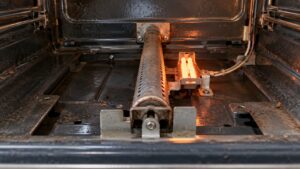
Traditional pyrolytic self-clean raises the oven to roughly 880°F and holds it there for hours. At that temperature, food soil is reduced to a fine ash you simply wipe away. To do this safely the oven locks the door with a motorized latch so it cannot be opened during the cycle. The trade-off is heat stress: the very high temperature is hard on the door latch, the gasket, the temperature sensor, and the control board. Running it frequently is a known way to shorten the life of these parts.
The AquaLift low-temperature method
AquaLift® takes the opposite approach. You pour water into the oven floor and run a low-temperature (around 200°F) cycle that uses steam to loosen soil, then you wipe it out by hand. Because it never reaches the extreme temperatures of pyrolytic cleaning, AquaLift is much gentler on oven components — but it works best on light-to-moderate soil and may need a hand-scrub for baked-on spots.
Why self-clean causes problems
The high heat of pyrolytic cleaning is the reason many post-clean problems appear. The door latch can fail to lock (F5E0 territory) or fail to unlock afterward, and the temperature sensor often fails during or after a hot clean, showing up as an F3E1 open-sensor failure — read the detail on our F3E1 sensor page. If your oven will not heat right after a self-clean, the sensor or a tripped thermal fuse is the usual cause; our oven not-heating guide covers the next steps.
Using either cycle safely
- Wipe up heavy spills by hand before starting, so the cycle has less to do.
- Remove racks that are not rated for the high-heat cycle to prevent discoloration.
- Ventilate the kitchen; both cycles can produce odor and some smoke.
- Let the oven cool fully and unlock before using it again — never force the door.
- Reserve high-heat self-clean for occasional deep cleans, not routine.
Which method suits your oven and your soil
Choosing the right cleaning approach for the job keeps the oven working longer. For heavy, baked-on grease after a big roast, the high-heat pyrolytic cycle does the most thorough job, but use it sparingly and accept that it stresses the latch, sensor, and gasket each time. For routine, lighter cleanup, the gentler AquaLift® steam cycle is the smarter choice on models that have it, since it spares the components and still handles everyday spatter. If your oven has neither, or you simply want to avoid the wear, a manual clean with a baking-soda paste and a damp cloth is kind to every part and perfectly effective for light soil. Whatever method you use, wiping spills as they happen — especially sugary or acidic spills that etch the enamel — means you rarely need the harsh high-heat cycle at all. Matching the cleaning intensity to the actual mess is the single best way to keep an oven’s electronics and latch healthy for years.
When to call a technician
If the door stays locked after a clean cycle, the oven will not heat afterward, or an error code appears, an independent specialist can diagnose the latch, sensor, or board with genuine OEM parts, a 30-day labor warranty, and pricing from a trip-and-diagnostic fee depending on the diagnosis. You can schedule a diagnosis online. For the official self-clean and AquaLift instructions for your model, see Whirlpool.