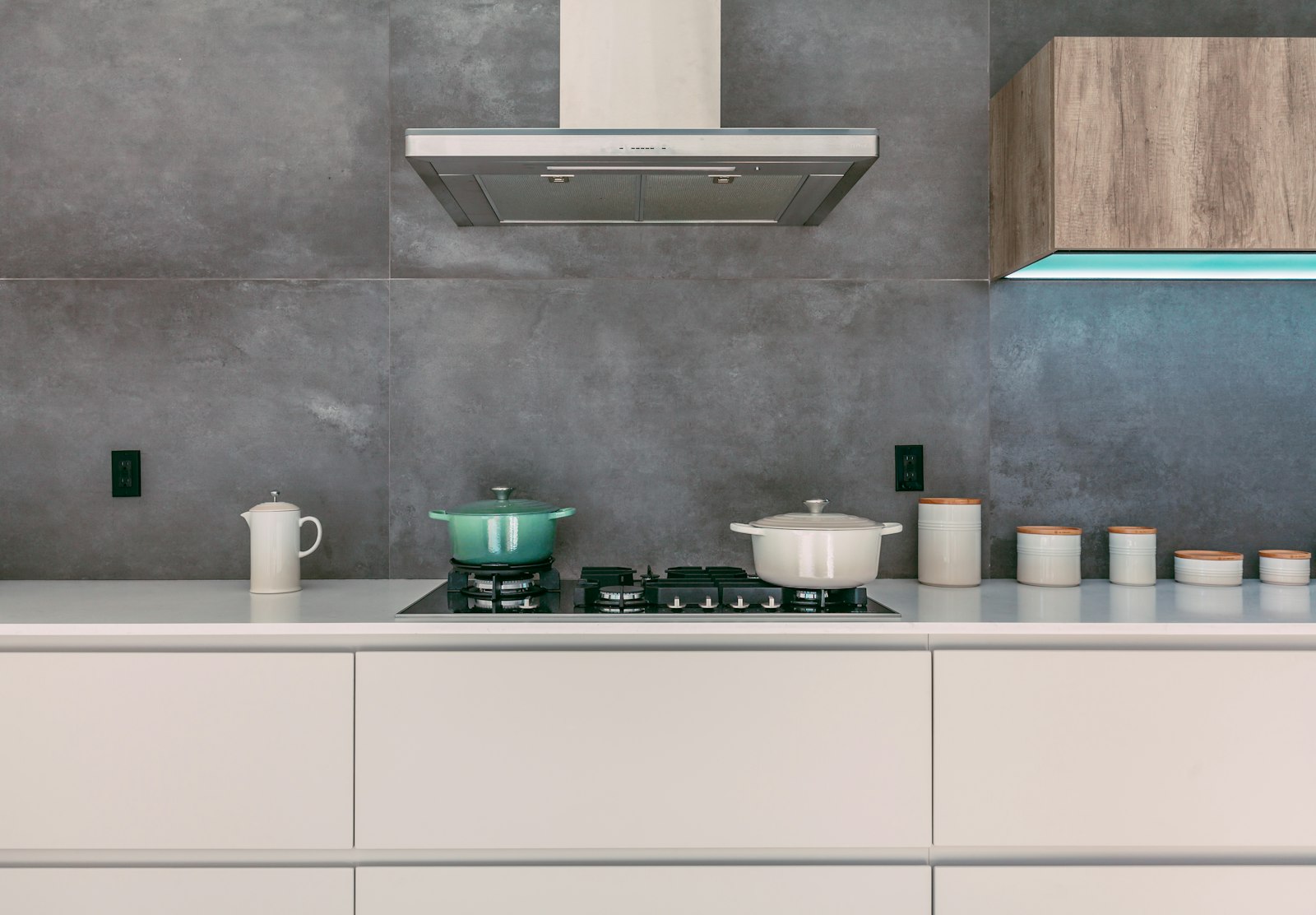
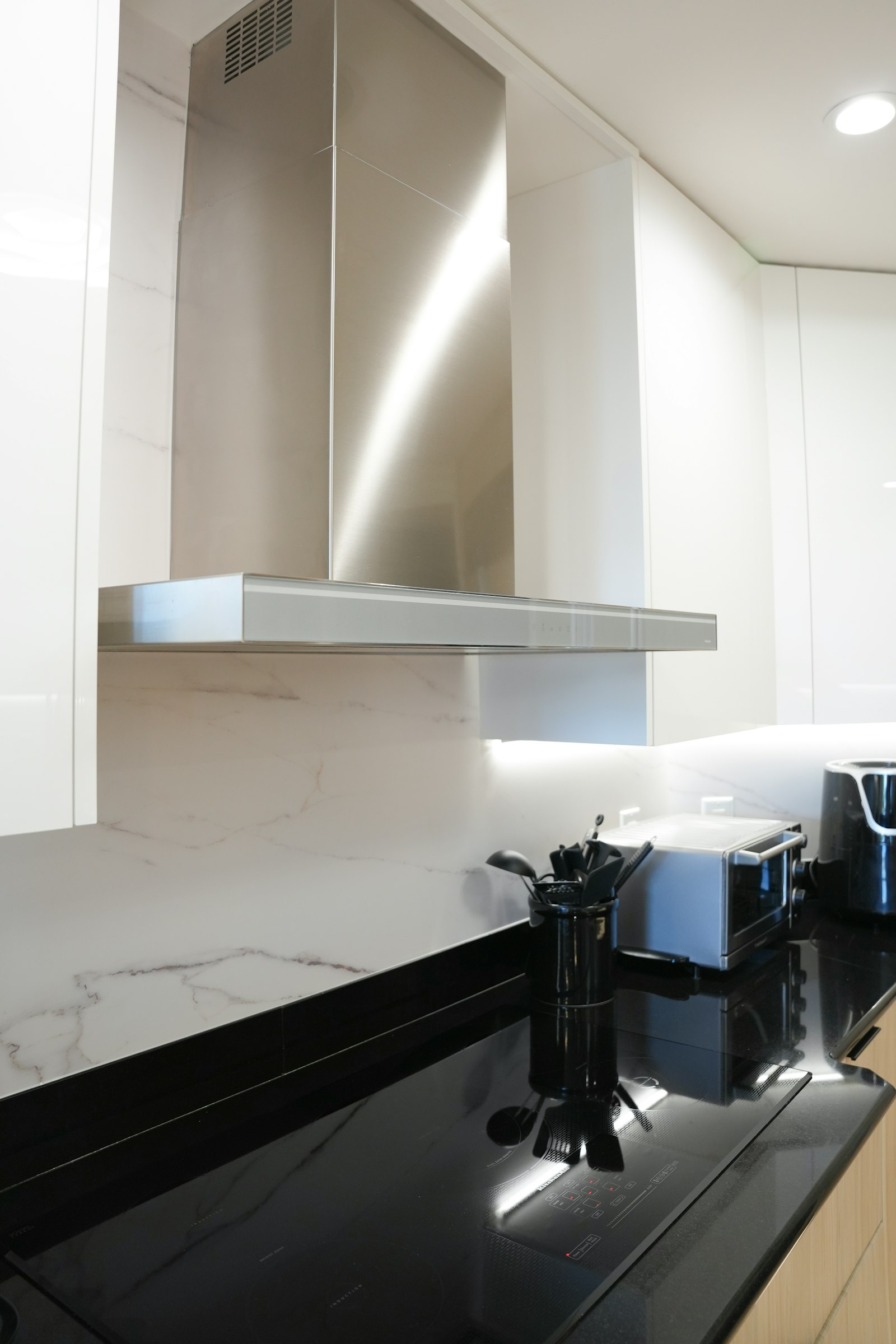
Understanding how a whirlpool range hood works makes every airflow and noise problem easier to diagnose, because the whole appliance is really just a fan and a filter in a box. A Whirlpool range hood (WVU, UXT, WVW series) captures the smoke, steam, grease, and odors rising off your cooktop, pulls them through a filter and a blower, and then sends that air either outside or back into the room. Which path it takes is the single biggest design distinction.
The airflow path in how a Whirlpool range hood works
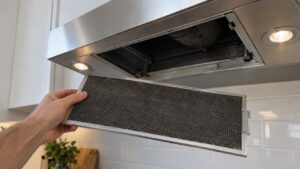
When you turn the hood on, the blower motor spins a squirrel-cage wheel that draws air up into the hood. First the air passes through the metal grease filter, where most of the airborne grease condenses and is trapped (which is why that filter loads up and needs cleaning). The blower then pushes the air toward the outlet. Fan speeds simply change how fast the blower spins and therefore how much air (rated in CFM) the hood moves — Whirlpool hoods range from around 140 CFM on compact ductless units to 400 CFM on larger convertible and canopy models.
Ducted versus ductless — the key distinction
- Ducted (vented): the blower pushes air through ductwork to a wall or roof cap outside, carrying heat, moisture, smoke, and odor completely out of the house. A backdraft damper keeps outside air from blowing back in when the fan is off. This is the most effective option.
- Ductless (recirculating): the air passes through an additional charcoal filter that absorbs odors, then returns to the kitchen. There is no duct to the outside. Convertible Whirlpool models (like the UXT5530AAS) can be set up either way.
What this means for repairs and performance
Because performance depends on a clear path, a “weak hood” is usually a clogged filter or blocked duct, not a failing motor. Because the motor and blower wheel do the moving, a “dead fan” is usually motor, capacitor, or switch. Knowing the path tells you where to look. If the motor, capacitor, or damper has genuinely failed, you can schedule a Whirlpool range hood repair, and our Whirlpool range hood repair overview describes the diagnosis. Repairs use genuine OEM parts with a 30-day labor warranty.
The supporting parts in how a Whirlpool range hood works
Beyond the blower and filter, a few parts round out the system. The speed switch or electronic control sets how fast the blower runs and therefore the airflow. The lights — replaceable bulbs on some models, integrated LED modules on others — sit on their own circuit, which is why lights can work while the fan does not, and vice versa. The backdraft damper is a simple flap that opens under airflow and closes when the fan is off, stopping outside air, pests, and cold drafts from flowing back through the duct. On the motor, a start capacitor gives the blower the initial push to get spinning; when it fails, the motor hums but cannot start. Knowing each part exists and what it does turns a “the hood is broken” complaint into a specific question — is it the airflow path, the motor circuit, the switch, or the light circuit — which is the first and most useful step in any diagnosis.
Getting the most from your hood
Run the hood a few minutes before you start cooking and leave it on a while after to clear lingering air, use the speed that matches the cooking intensity, and keep the grease filter clean so the blower can move its rated airflow. For your model CFM rating and whether it is ducted, ductless, or convertible, Whirlpool documents it at whirlpool.com.