When someone searches for Whirlpool refrigerator parts names, they usually want one of two things: the word for the part they can see, or the word for the part a technician mentions on the phone. This glossary covers both. It is a list of names and what each part does, not a parts shop, and it does not tell you to replace anything yourself. A refrigerator is a sealed cooling system plus a set of everyday parts, and knowing which is which makes it much easier to describe a problem.
What are the cooling parts called?
Our page on how a Whirlpool refrigerator cools describes the loop in order. The compressor pressurizes refrigerant gas. The gas flows through the condenser coils, usually under or behind the refrigerator, where it gives up heat to the room. It then passes through a metering device into the evaporator coils behind the freezer, where it gets cold and absorbs heat from the cabinet air. The cycle then repeats. The words condenser and evaporator describe direction: one lets heat go, the other takes heat in.
Everything in this loop is sealed. Nothing in it is a do-it-yourself part, and the refrigerant circuit is work for a trained technician. Keeping the area around the coils free of dust and clutter is the only maintenance a homeowner normally does.
What do the fan, damper and defrost heater do?
On many French door and side-by-side refrigerators, an evaporator behind the freezer makes the cold; the layout on your model is in the owner’s manual. An evaporator fan blows that air through ducts into the fresh-food compartment, and a damper, motorized or manual, controls how much of it the fresh-food section receives. A stalled fan or a stuck damper produces the classic split symptom: a cold freezer and a warm refrigerator section.
Because the evaporator runs below freezing, frost builds on it. A defrost heater briefly warms the coil from time to time so the frost melts and drains away. That meltwater leaves through the defrost drain, a small channel that carries it out of the cabinet. If a drain clogs, water can pool or freeze inside the cabinet. Our refrigerator water leaking page covers what to look at first.
Which parts do you touch every day?
These are the parts most people mean when they say “parts”:
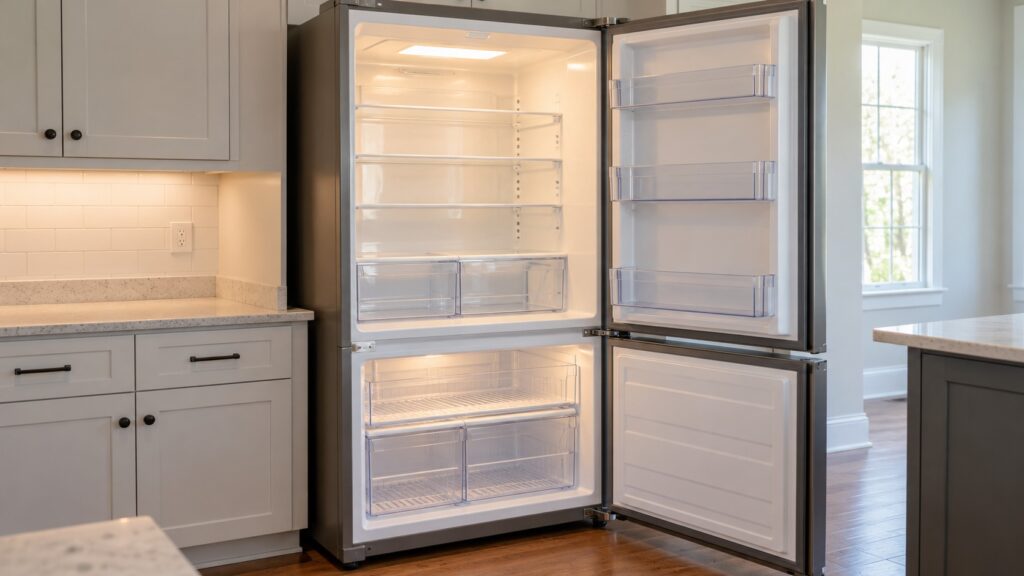
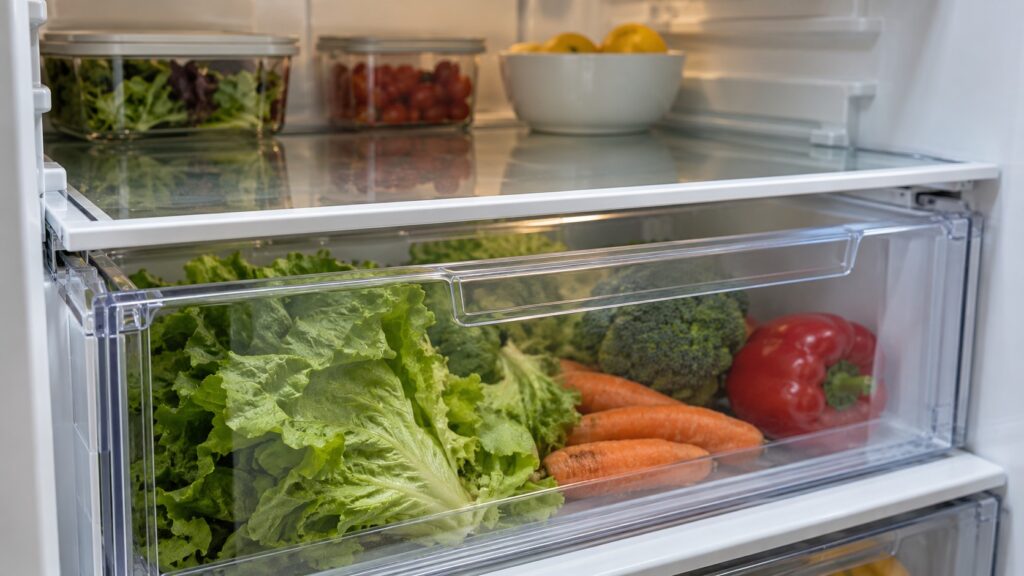
Shelves and bins. The shelves are the adjustable platforms in the fresh-food compartment, often glass or a glass-and-frame design. Door bins are the shelves on the inside of the door.
Crisper drawers. The covered drawers at the bottom of the fresh-food compartment, meant for produce. Some models have an adjustable control on the drawer; what it does on your model is in the owner’s manual.
Freezer basket or drawer. The pull-out storage in the freezer compartment.
Door gasket (seal). The flexible strip around the door edge that keeps cold air in. Our page on door gasket tips explains how to care for it. People also call it the door seal or the weatherstrip.
Light. The interior lamp, which switches on when the door opens.
What are the water and ice parts called?
On models with a through-the-door dispenser, a water inlet valve at the back opens to fill the ice mold and feed the dispenser. The water passes through an EveryDrop water filter for taste and clarity; see our EveryDrop filter glossary for the name behind the cartridge. The ice maker has its own mold, a heater and a motor that twists the tray, and drops cubes into the ice bin (the container that holds the ice). The dispenser is the part in the door that delivers ice and water.
The ice and water system rides on top of the cooling loop and is not part of it. That is why a refrigerator can cool perfectly while the dispenser misbehaves, and why the two complaints are usually diagnosed separately. Water near cold parts also explains why leaks and small, hollow cubes are common complaints.
What are the control and sensor parts called?
Temperature sensors, called thermistors, measure the temperature in each compartment and report to the main control board, which decides when to run the compressor, fans and defrost. The control panel or display on the door or inside the cabinet is where you set temperatures. A faulty sensor can make the refrigerator run too cold or too warm even when the mechanical parts are healthy. Whirlpool shows alerts on some models, such as the ones in our refrigerator PO code page, but what an alert means on your exact model is in the owner’s manual.
How do you use these names when you call for service?
Be specific about where you see the problem, not which part you think failed. “Warm refrigerator section, cold freezer, and a humming from the back” is more useful than a guess at the part. Tell the technician the model number from the label inside the cabinet, whether the dispenser is affected, and when it started. Do not remove panels, the lower grille or the back cover to look at the parts above; the compressor, fans and heater sit near live electrical parts and the sealed system is a technician’s job. If water or sparks appear near an outlet, switch off the breaker at the panel while standing on a dry floor and never pull a plug from a wet outlet. For a visit, see refrigerator repair.