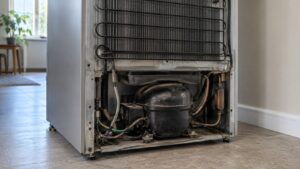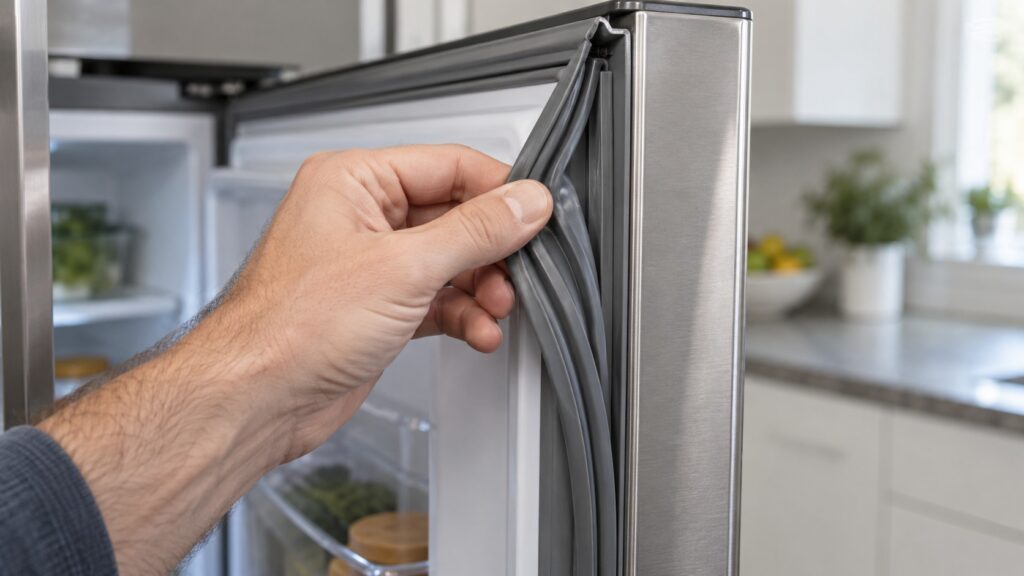
The Whirlpool refrigerator door gasket is the flexible rubber seal around the edge of each door, and when it stops sealing, the refrigerator pays for it every hour of the day: the compressor runs longer, frost grows near the door, and the cabinet drifts warm. People often search for “fridge rubber” when they notice it. The good news is that a gasket is one of the easiest parts of a refrigerator to test, clean and, if needed, replace. These tips show how to check yours in two minutes and what to do with the answer.
How do you test a Whirlpool refrigerator door gasket in two minutes?
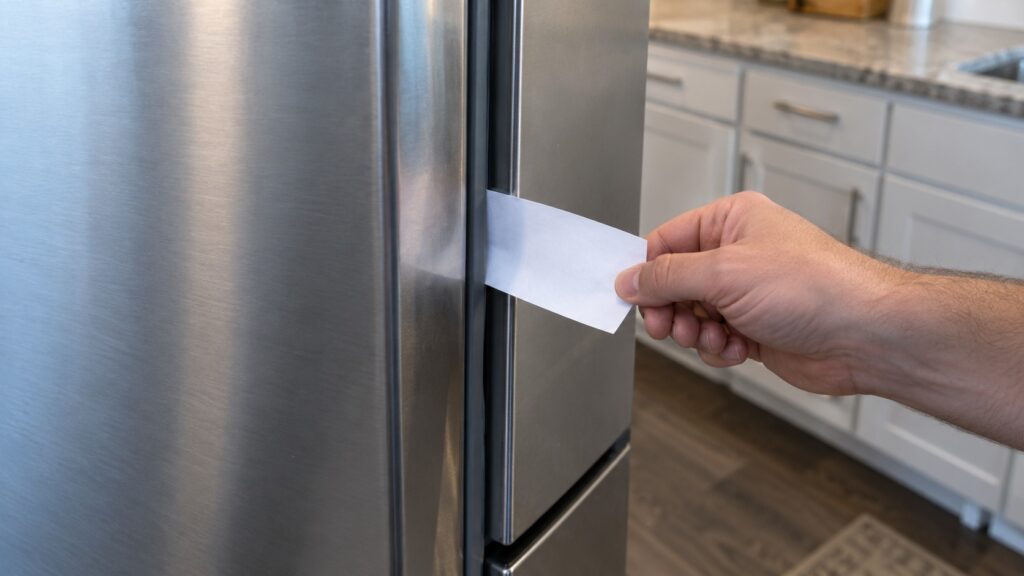
Take a strip of paper, or a dollar bill, and close the door on it with the strip lying across the seal. Gently pull it out. A good seal grips the paper, and you feel a drag. If the strip slides out freely, the seal is not touching at that spot. Repeat the test around the whole door: both sides, the top, the bottom and the corners, because a gasket usually fails in one area, often at a hinge-side corner or at the bottom, where the door sags.
Do this on the fresh-food doors and the freezer door. On a French-door model, also check the point where the two doors meet in the center, since a door that is slightly out of line leaves a gap there even when both gaskets are fine.
What does a failing gasket look like from the outside?
The signs show up in how the refrigerator behaves. Moisture beads along the edge of the door or on the cabinet frame, a sign that humid kitchen air is leaking in and condensing. Frost grows in the freezer near the door, because the humid air freezes on the first cold surface it meets. The compressor seems to run all day. A tone sounds and a door icon flashes because the control believes a door is open. On our site, the usual causes for a door alarm are a flattened gasket, a sagging hinge, an overfilled gallon door bin and a misaligned door.
If you notice frost in the freezer, our frost buildup guide explains how to tell a seal problem from a defrost problem.
How do you clean a gasket so it seals better?
Dirt and dried spills make the rubber sticky, and a sticky gasket can tear when the door opens. Wipe the whole gasket with a soft cloth dipped in warm water and mild dish soap, including inside each fold, where crumbs and sugar collect. Rinse with a clean damp cloth and dry it well. Avoid bleach, solvents and abrasive pads, which dry out and crack the rubber. Do this every few months, and pull out the crisper drawers to reach the bottom edge.
How do you fix a dented or flattened gasket?
A dent in a soft gasket can sometimes be coaxed back into shape. Warm the dented section gently with a hair dryer on a low setting, keeping it moving and a few inches away, then press the rubber back into its shape with your hand. The rubber softens with mild warmth and holds its shape as it cools. Do not use high heat or a heat gun, since a hot spot can distort the gasket permanently. If the gasket does not recover, or it has turned hard and brittle, it needs replacement.
Is the door really the problem, not the gasket?
Check three things before you buy a replacement. First, the refrigerator must be level and tilted very slightly back, so the doors swing shut on their own. Second, the door bins must not be so full that something presses against the shelf and keeps the door from closing fully. Third, the hinges must be tight, because a sagging door pulls away from the seal at the top and the bottom. Fixing one of these is often enough to restore a seal that looked bad. For help with placement and airflow around the cabinet, see our Whirlpool refrigerator tips.
When should you replace the gasket, and can you do it yourself?
Replace a gasket that is torn, split, hardened, permanently flattened or pulling out of its groove. A new gasket is usually a modest repair compared with the cost of running a refrigerator that leaks cold air, and it is far cheaper than a new refrigerator. Many gaskets push into a groove around the door and are held with a retainer strip or screws, so a careful owner can replace one. Warm the new gasket in a bowl of warm water first so it softens and sits flat, and fit it evenly all the way around. A match for your model matters, because the profile and length differ between models.
If the cabinet still runs warm after you fix the seal, the cause is something else, covered in the Whirlpool refrigerator not cooling guide, and the refrigerator maintenance checklist lists the other routine checks. We are an independent repair company, not the manufacturer. Our Whirlpool refrigerator repair service can check the seal, the hinges and the cooling system, and you can book a visit online.