A refrigerator is the only appliance in the house that never switches off, which means every small inefficiency in how it is used or maintained compounds around the clock. These Whirlpool refrigerator tips are the habits that keep food lasting longer and the compressor working less — and the handful of five-minute jobs that prevent most of the service calls we take on these appliances.
Where food goes decides how long it lasts
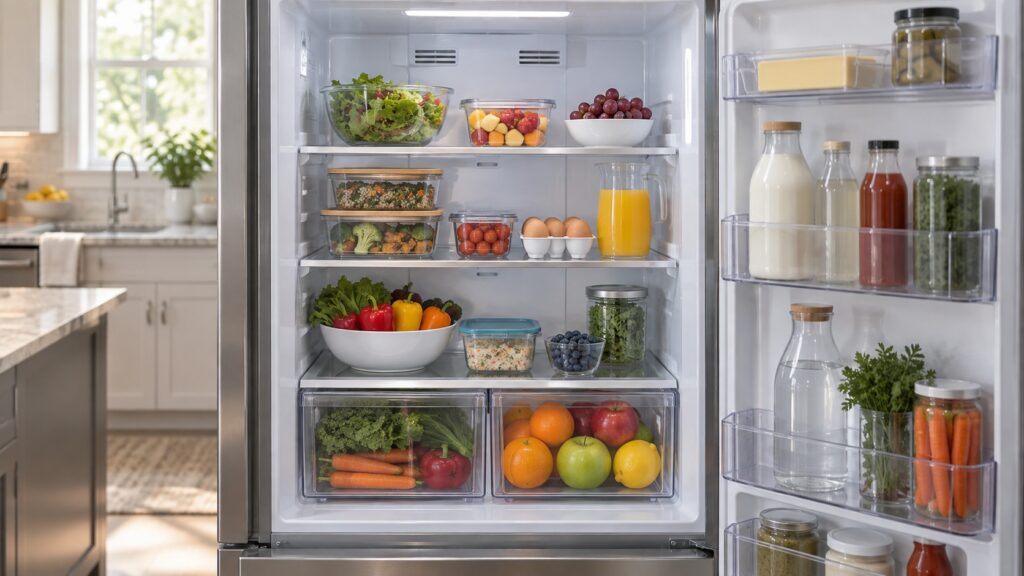
The compartment is not one temperature. The back is colder than the front, the bottom is colder than the top, and the door is the warmest place in the appliance by a wide margin. Putting food where it belongs is free and it adds days.
- Door: condiments, and nothing else that matters. It is the warmest and the most temperature-cycled spot.
- Top shelves: leftovers, drinks, ready-to-eat items.
- Lower shelves: raw meat and fish, where it is coldest and where a drip cannot reach anything below.
- Crispers: produce, with the humidity slider set high for leafy greens and low for fruit.
Milk in the door is the single most common placement mistake, and it is why milk sometimes sours days before its date. Our maintenance checklist covers the rest of the routine.
Airflow is what actually keeps things cold
Cold air is blown around the compartment through vents, usually at the back. A carton pushed flat against a vent blocks the circulation to everything downstream of it, and the symptom is a compartment that reads correctly at the sensor and has a warm shelf somewhere. People conclude the appliance is failing.
Leave the vents clear, and do not pack a refrigerator to the point where air cannot move. This is the opposite of the freezer, where fullness helps — a freezer holds cold in its contents, a fresh-food compartment moves cold with air.
The coils, and the biggest free saving there is
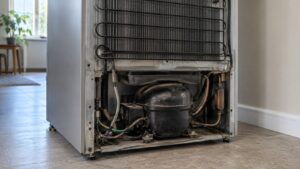
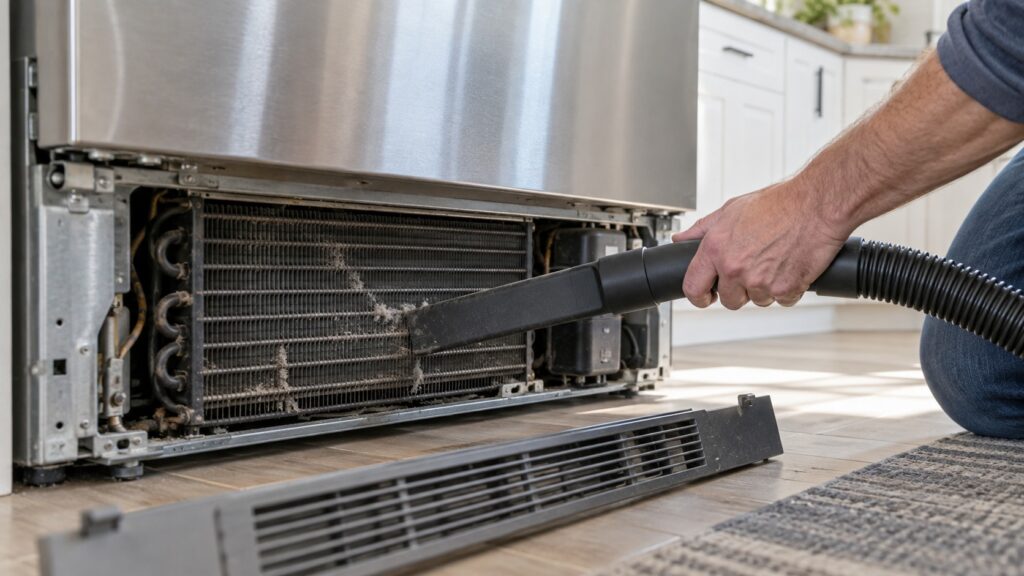
Condenser coils shed the heat the refrigerator removes from inside. Coated in dust and pet hair they cannot, and the compressor runs longer for the same result — continuously, for years, without anything appearing to be wrong. Vacuum them twice a year, behind the base grille or at the back depending on the model.
In a household with pets, make it three or four times a year. It is five minutes, and on a refrigerator that runs every hour of every day it is the largest saving available anywhere in the kitchen.
The door seal, tested with a strip of paper
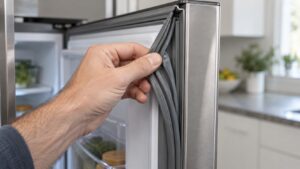
Close the door on a strip of paper and pull. It should drag. Do that at several points around the opening, particularly at the hinge-side corners where a sagging door shows first. A seal that has hardened, or a door that no longer closes square, lets warm humid air in every minute of the day — which shows up as a compressor that never rests and, in a freezer, as frost.
Clean the seal with a damp cloth and nothing else. Solvents and kitchen sprays harden the material and shorten its life considerably. Our page on water at the refrigerator covers what a failed seal eventually produces.
Habits that quietly cost you
Standing with the door open while deciding is the obvious one, and the least important. The expensive habits are structural: putting hot food straight in, which raises the whole compartment and makes the compressor work hard for an hour; setting the temperature colder to compensate for a warm spot that is actually a blocked vent; and leaving the appliance in a hot location — beside an oven, against a sunlit window — where it fights its surroundings permanently.
Let hot food cool on the counter for a while first, fix the airflow rather than the dial, and where siting cannot be changed, at least keep the clearances at the back and top clear.
Water and ice, briefly
Change the filter every six months on a date, not when the water tastes wrong — taste is a late symptom of a saturated cartridge, not an early warning. After fitting one, flush several gallons and discard the first two batches of ice. And wash the ice bin quarterly in warm water with nothing scented, because ice absorbs whatever is in the freezer around it.
Our filter explainer covers what a cartridge can and cannot do, and the page on ice that tastes bad covers the order to check things in.
The crispers, and the sliders nobody moves
Crisper drawers have a humidity slider, and in most households it has never been touched since delivery. It does something real: it opens or closes a vent that lets moisture escape from the drawer. High humidity — slider closed — suits leafy greens, herbs and anything that wilts. Low humidity — slider open — suits apples, pears and stone fruit, which give off ethylene gas that needs somewhere to go.
Mixing the two in one drawer at one setting is why salad goes limp beside apples that were fine. If the refrigerator has two drawers, use one of each and keep produce sorted between them. It costs nothing and it is the difference of several days on most greens.
Power outages, and what survives
An unopened refrigerator holds safe temperatures for about four hours; a full freezer for around two days. The rule during an outage is to keep both doors shut — there is nothing inside worth checking, and every opening spends part of the margin you have.
Afterward, judge by temperature rather than by how long the power was off. A thermometer left in each compartment is the only thing that can tell you what actually happened while you were out, and it is a few dollars against a compartment full of food.
When habits are not the problem
A refrigerator running constantly with clean coils and a good seal, a compartment that will not reach temperature, water pooling inside, or frost where there was none — those are components rather than routines. See a refrigerator that is not cooling for the diagnosis.
We are an independent repair company, not a factory service arm. Pricing starts from a diagnostic visit and we confirm the estimate before any work begins. Whirlpool refrigerator repair covers the sealed system, the defrost circuit and the water supply, and you can schedule a visit online.