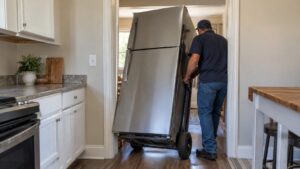
A Whirlpool refrigerator clicking and then going quiet without cooling usually points to the electrical parts that start the compressor, most often the start relay or the overload protector, rather than to a dead compressor. The click is typically the relay or overload cycling while the compressor tries and fails to start. That distinction matters because a relay fault is a far smaller repair than a sealed-system job, but telling the two apart takes testing at the unit, and that is a technician’s job, not something to try by taking the back panel off.
Why does a Whirlpool refrigerator click and not cool?
The compressor is the pump of the sealed cooling system, and it needs a push to start. A start relay and an overload protector sit next to it and handle that. When one of them is failing, the compressor may try to start, fail and shut off, and the relay or overload clicks as it cycles. You hear the click, the compressor never settles into a steady running sound, and the compartments slowly warm up.
Our guide on a Whirlpool refrigerator compressor failure describes the same pattern: a loud hum or click that repeats without the fridge cooling. It also notes that a start relay or overload failure can mimic compressor failure and costs far less to fix. That is the reason a clicking refrigerator is worth a proper diagnosis before anyone talks about replacing the unit.
Is the click always the start relay?
No. Several sounds are normal. A refrigerator makes small clicks and ticks as it begins and ends a cooling cycle, and plastic parts expand and contract as the temperature changes. A single click followed by the compressor running steadily is nothing to worry about. The pattern that matters is a click that repeats, with the compressor not running and the temperature rising.
A fan that ticks against ice can also sound like a click. If the freezer back wall is coated in frost or the fan sounds like it is hitting something, that points at the airflow and defrost side instead. Our Whirlpool refrigerator not cooling guide covers those causes in order, from airflow to the evaporator fan.
What can you check yourself without opening anything?
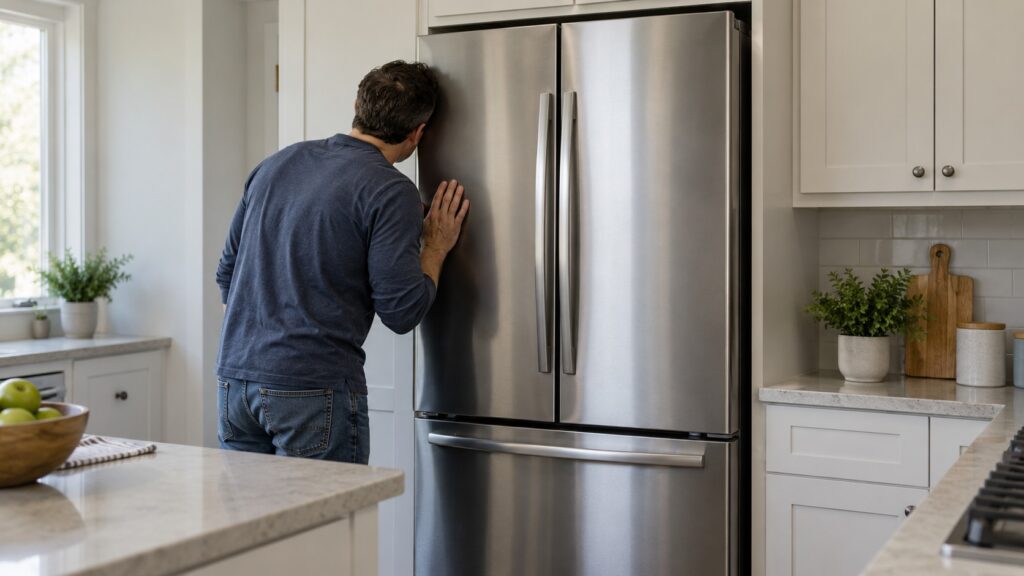
Keep your checks outside the cabinet. First, listen from the front and note what you hear: a repeating click, a hum, a buzz or a fan. Second, check the temperature settings and whether the display shows any alert. Third, check that nothing blocks the air vents inside the fridge and freezer. Fourth, look at the door gaskets, because a door that does not seal makes the compressor work harder.
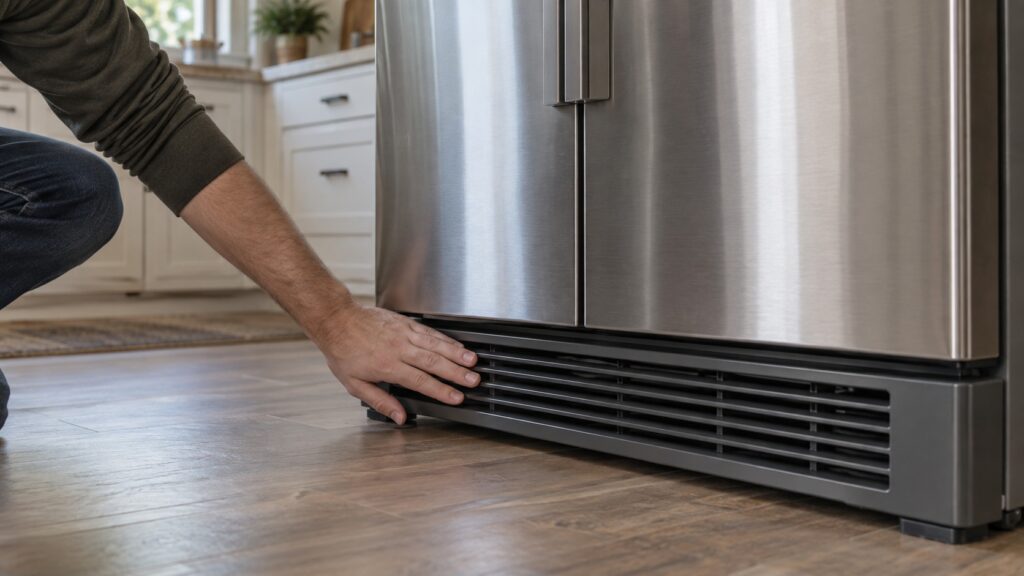
The fifth check is the condenser coils. A coil caked in dust traps heat and strains the compressor. Our not-cooling guide suggests vacuuming the coils underneath or behind the unit about every six months. Pull the refrigerator out gently so you do not kink the water line, and unplug it while you vacuum.
What should you not do?
Do not remove the rear lower panel to look for the relay. The parts behind it carry line voltage, and the relay is mounted directly on the compressor, so a mistake can cause a shock. Do not tap, pull or force the relay while the unit is plugged in, and do not try to jump or bypass any part. Do not leave a refrigerator that keeps clicking without starting running for long periods. Unplug the unit if the clicking continues and call a technician. If you ever see water at the outlet, sparks or a burning smell, switch off the breaker at the panel while standing on a dry floor and never pull a plug from a wet outlet.
How do you protect the food while you wait?
Keep the doors closed as much as possible. According to the FDA, a closed refrigerator keeps food safe for about four hours, a full freezer for about 48 hours and a half-full freezer for about 24 hours. Food that has been above 40 degrees F for longer than that should be thrown out. Move the most perishable items to a cooler with ice, and check the temperature with an appliance thermometer if you have one. When in doubt, throw it out.
Is it worth repairing, and when should you call?
If the cause turns out to be the relay or overload, the repair is one of the smaller jobs on a refrigerator, and the fridge typically goes back to work. If the compressor itself has failed, the decision is bigger and depends on the age of the unit and any sealed-system warranty; see our refrigerator compressor repair or replace guide. Getting a second opinion is sensible on any compressor diagnosis.
Call a technician when the click repeats, the fridge is warming and the checks above do not help. Mention what you heard and how long it has been happening. Our Whirlpool refrigerator repair page explains how a visit works.