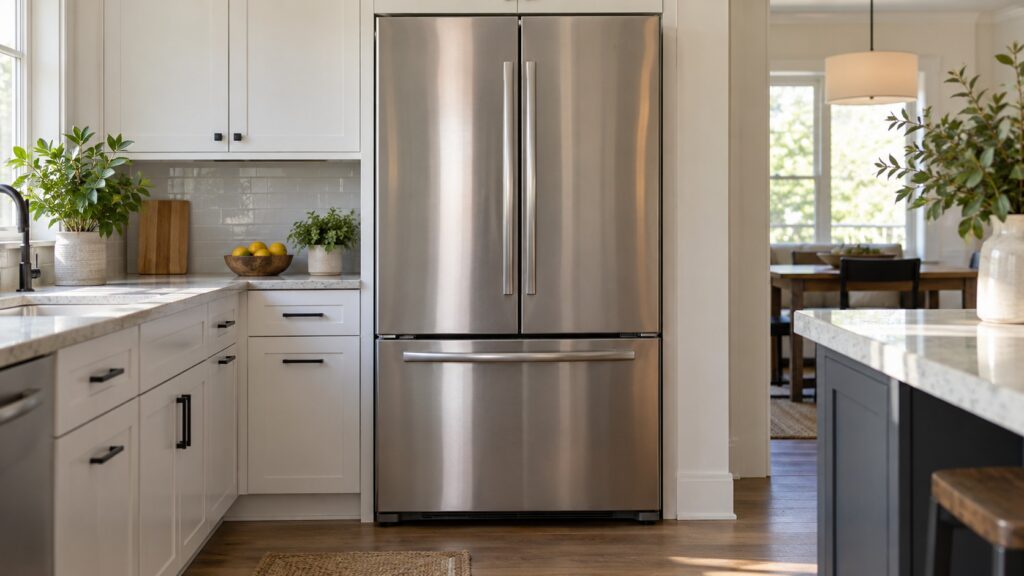
Whirlpool stainless steel cleaning is simple. The safe way to clean a Whirlpool stainless steel refrigerator is to use a soft cloth, a little mild dish soap in warm water, a wipe in the direction of the grain, then a dry cloth to finish. Skip abrasive pads, steel wool and harsh chemical cleaners, which scratch or dull the surface. This guide covers the routine, the mistakes that mark stainless steel, how to deal with fingerprints and water spots, and the cleaning steps that belong to your owner’s manual because the finish differs between models. We do not recommend any brand of cleaner, since the right product depends on the finish on your door.
How do you clean a Whirlpool stainless steel refrigerator?
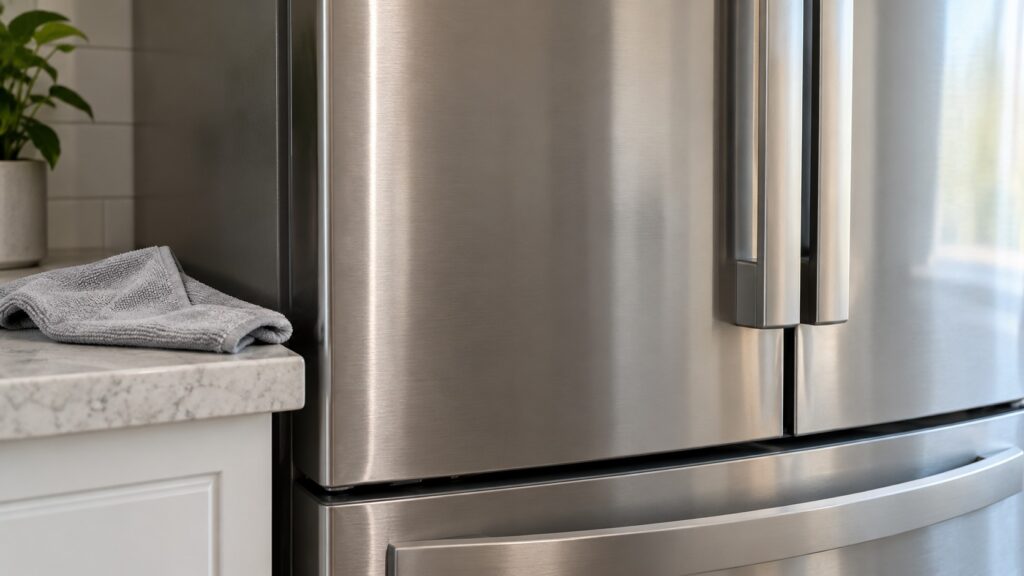
Start with the refrigerator’s own surface, not the cleaner. Many of the stains on a stainless door are fingerprints, drips and dust, and a damp soft cloth removes most of them. Mix a few drops of mild dish soap into warm water, wring the cloth well so it is damp and not dripping, and wipe the door and the side panels. Then go over the same area with a clean damp cloth to remove any soap, and finish with a dry soft cloth or microfiber towel so water does not dry into spots.
It helps to look closely at the door first. Stainless steel usually has a faint grain, like fine parallel lines. Wiping along those lines, not across them, makes the surface look even and avoids showing tiny marks. If you cannot see a grain, wipe in one direction and keep the strokes consistent. Pull the cloth flat across the door and avoid pressing hard; pressure does not clean better, it only pushes grit into the finish.
What should you never use on stainless steel?
Avoid steel wool, metal scrapers, scouring pads and gritty cleaning powders, because they scratch the surface and the scratches do not wipe off. Harsh chemical cleaners, including strong bleach products, can stain or dull stainless steel and leave streaks. Do not spray cleaner directly onto the door near the handle, the ice and water dispenser or the control panel, because liquid can run into gaps. Spray or pour it onto the cloth instead. If a product says on its label that it is not for your type of finish, believe the label.
Also avoid cleaning a stainless door when it is warm from the sun or a nearby oven. A warm surface dries cleaner too fast and leaves streaks. Let the surface cool to room temperature, then wipe. Keep magnets, stickers and adhesive notes in mind too: sticky residue can be removed with a damp cloth and a little soapy water, but pulling an old label off with a blade will scratch the door.
How do you deal with fingerprints and water spots?
Fingerprints show on bare stainless steel because oils sit on the surface. A damp cloth with a drop of dish soap lifts them, and a dry cloth after it leaves the door clear. Water spots are mineral deposits left when a drop dries; wiping while the door is still damp and drying it at once prevents most of them. Some Whirlpool refrigerators may be sold with a coating that resists fingerprints, but our pages do not say which models have one, so check the owner’s manual for your model. If your manual describes a special cleaning method for a coated finish, follow it and not the general steps here.
If a mark does not come off with soap and water, try again with a fresh damp cloth before reaching for anything stronger. Stubborn spots are often old residue that needs a little time. Rest a damp cloth on the spot for a short while, then wipe. If the finish has been scratched or has a rust-colored stain, the surface itself is damaged, and a cleaner will not fix it; stop scrubbing, because more rubbing only widens the mark.
What else on the front of the refrigerator needs care?
The door is not the only part. Handles collect the most grease and are worth wiping each time you clean the door. The ice and water dispenser area collects drips; our pages mention Whirlpool’s EveryDrop water filter on many models, and the dispenser tray should be wiped dry so water does not pool. Door gaskets, the soft seals around the edge, hold crumbs and spills, and our guide to refrigerator door gasket tips explains how to look after them. Keep controls and display panels dry: wipe them with a barely damp cloth and dry them at once.
Underneath and behind the refrigerator, dust builds up on parts that help the refrigerator keep cold. Our refrigerator maintenance checklist lists the routine tasks, and it is a better place than this guide for coil and drain care. Do not pull the refrigerator out and do not remove back or lower panels to clean; if you want those areas cleaned or you hear unusual noise, a technician should do it.
When should you call a technician?
A cosmetic problem rarely needs a technician, but a few signs on or near the cabinet do. Call if water collects inside a door panel, if the door will not close evenly or if the refrigerator is warm. If you ever see water around electrical parts, sparks or smell burning, switch off the breaker at the panel while standing on a dry floor, and never pull a plug from a wet outlet. Do not remove panels. We are an independent repair company, and you can read about our Whirlpool refrigerator repair or schedule a visit.