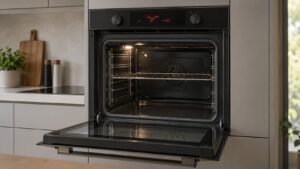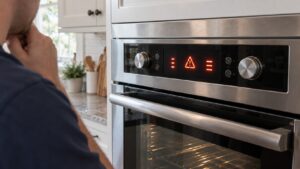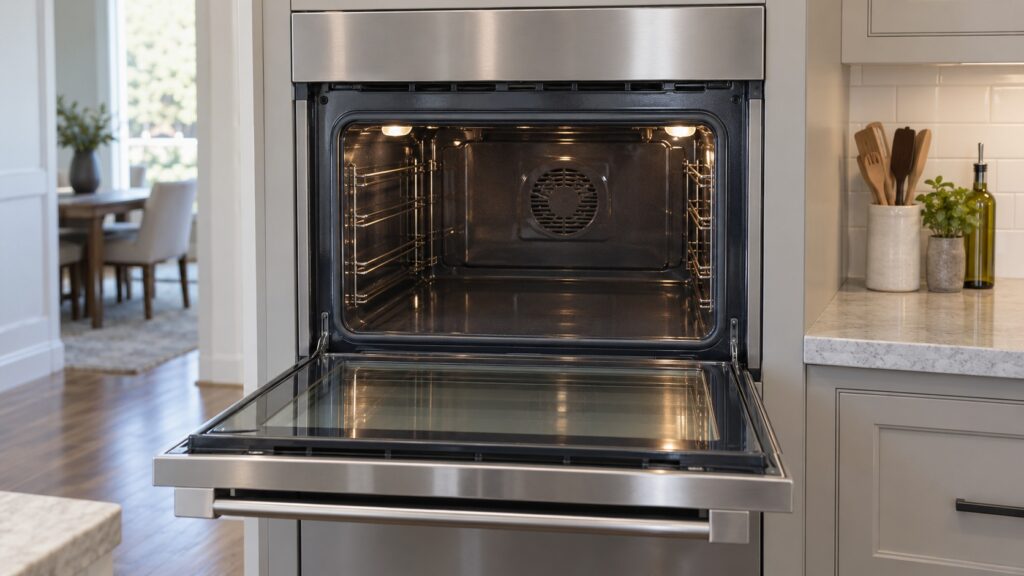
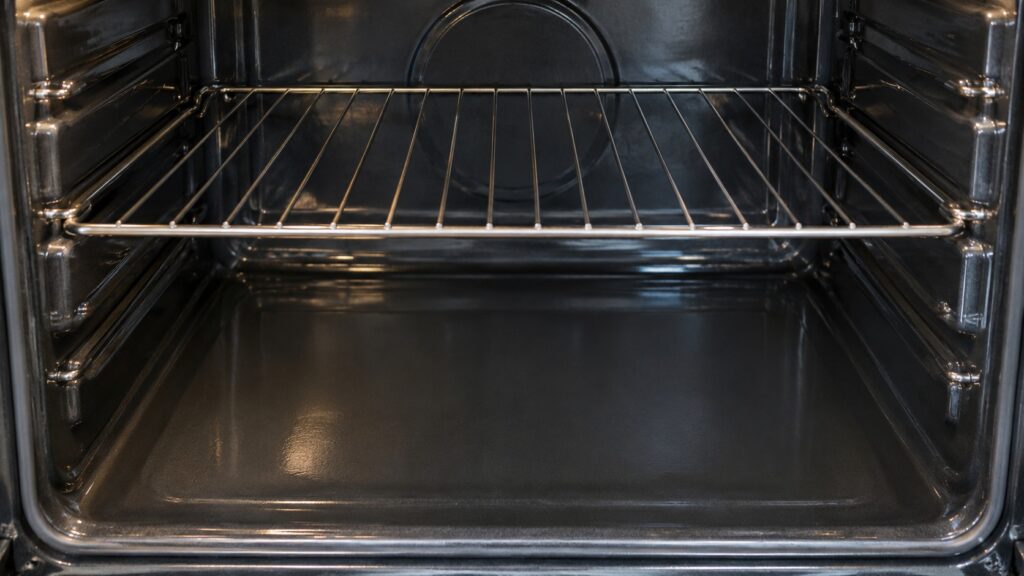
A Whirlpool hidden bake element is a bake heating element sealed out of sight under the oven floor, so the bottom of the cavity is a smooth surface instead of an exposed glowing coil. The heat reaches your food by warming that floor and the air above it, and an oven temperature sensor tells the control when to switch the element on and off. Understanding that chain explains why these ovens are easy to wipe clean, why they heat a little differently from a coil oven, and which part is the likely suspect when one stops heating.
How does a hidden bake element heat the oven?
When you set a bake temperature, the control sends power to the bake element under the floor. The element gets hot, the floor panel above it absorbs that heat, and the panel warms the lower part of the cavity. Warm air rises, the oven walls and the upper elements add to it, and the cavity climbs toward the setpoint. The temperature sensor, a probe that sticks into the oven from the back wall, reports the cavity temperature to the control many times a minute. When the cavity reaches the setpoint, the control switches the element off. When it drops a little, the control switches it on again. That on-and-off cycling is why the heat does not stay perfectly steady.
The same principle runs through the whole Whirlpool wall oven line. Our guide to how Whirlpool AccuBake works explains the temperature management layer on top of it.
Why do hidden-element ovens look and feel different from coil ovens?
You cannot see the element glow, so there is no orange coil at the bottom to reassure you. You also lose the direct radiant heat that a bare coil throws at a pan on the bottom rack, which means the first few minutes can feel less intense even though the oven is heating normally. The big advantage is cleaning: spills land on a flat floor instead of baking onto a coil, and you can wipe the floor with a cloth once the oven is cool.
The design has one rule worth following. Do not line the oven floor with aluminum foil or set a pan directly on it. Foil can trap heat over the hidden element, damage the finish of the floor and give you uneven baking. Use a sheet pan on a rack to catch drips instead.
What does Rapid Preheat do on a model such as the WOES3030LS?
Rapid Preheat is listed on our WOES3030LS model page, and as the name suggests it is meant to shorten the wait before the oven reaches temperature. Your owner’s manual explains exactly how your model does that and how to switch it on. The sensible way to use it is to wait for the oven to signal that preheating is done before you load the food, because the air has reached temperature by then, although the walls and the floor may still be catching up. If a recipe is sensitive, such as bread, give it a few extra minutes.
How does the oven know when the bake element is not working?
The control has no direct way to see an element glow. It watches the cavity temperature through the sensor. If the control calls for heat and the temperature never rises, a failed element is one explanation, but the control cannot tell the difference between a dead element and other causes on its own. A failed sensor is a different story, because the control can read an open or shorted sensor immediately and responds with a code. The sensor code on Whirlpool ovens is F3E0, described on the Whirlpool oven F3E0 page, and the detailed walk-through is in our bake sensor guide.
What are the signs of a failed hidden bake element?
The clearest sign is an oven that powers on, lights up and shows a normal display, but never gets hot. The broil side may still work, because it is a separate element. Other signs are a very long preheat, a cavity that never reaches the setpoint, or a thermometer that reads far below what the display says. Because the element is hidden, the usual first look, checking for a glowing coil, does not work. Do not try to lift the floor panel yourself. The element is wired to line voltage, and the panel and its fasteners are not designed for a quick look.
A technician tests the element with a meter for continuity and resistance, checks that voltage is reaching it, and verifies the sensor and the relay on the control board before replacing anything. That order matters, because a sensor that reads wrong can mimic a weak element, and replacing the wrong part wastes time.
What else can look like a bake element failure?
Several things stop an oven from heating that have nothing to do with the element. A door switch that does not register a closed door can prevent heating, which is what the F9E0 code points at on Whirlpool ovens. A control relay can fail, a thermal cutoff on a self-clean circuit can open, and a sagging door can let heat escape. Our Whirlpool oven not heating guide separates these, and the oven temperature off guide covers the case where the oven heats but bakes too hot or too cold.
We are an independent repair company, not the manufacturer. If your oven shows a code or will not heat, our Whirlpool oven repair service can test the element, the sensor and the board, and you can book a visit online.