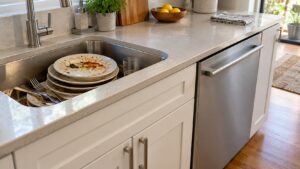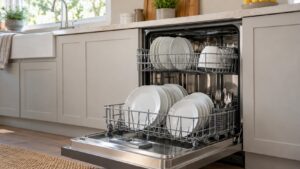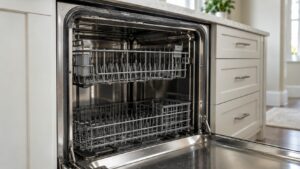
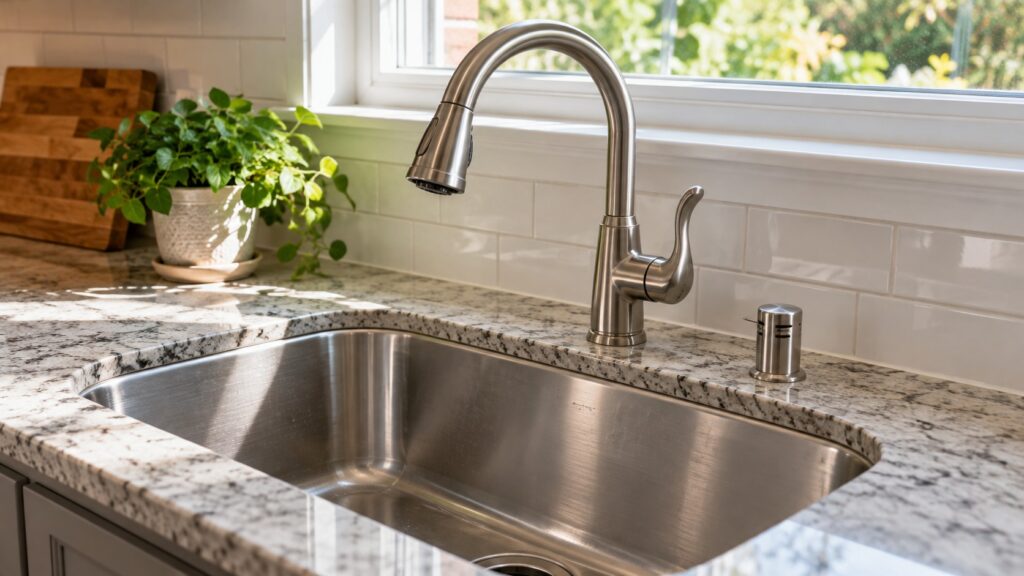
A Whirlpool dishwasher air gap is a small fitting that sits on the sink or countertop next to the faucet. It breaks the connection between the dishwasher drain hose and the sink drain so dirty sink water cannot flow back into the dishwasher. Not every home has one: whether you need an air gap is set by local plumbing code, and some homes use a high loop in the drain hose instead. This guide explains what the air gap is, how it fits into the drain path, and how to keep the parts you can reach clean so the dishwasher drains well.
What is a dishwasher air gap and do I have one?
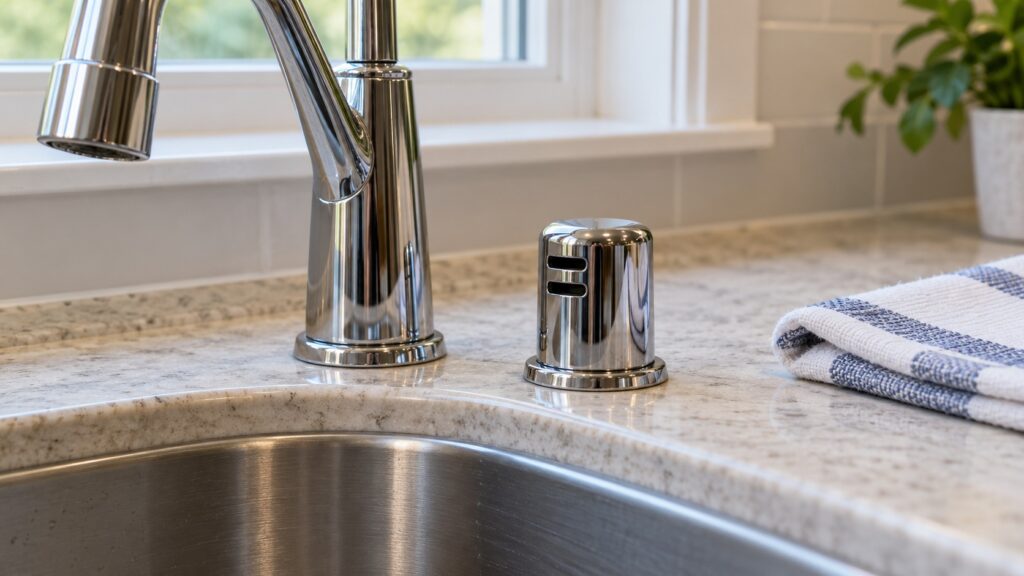
Look at the sink area. If you see a small chrome or plastic cylinder with a cap, standing on the countertop or on the rim of the sink near the faucet, that is an air gap. If you see nothing, your dishwasher may be set up with a high loop instead. Our installation guide says to make a high loop or an air gap as local code requires. We cannot tell you which one your home needs, because that depends on your local code and inspector. If you are not sure, ask the person who installed the dishwasher or your building department.
The idea is the same either way: the drain water must be kept from returning to the tub. Our guide to the dishwasher high loop covers that alternative, so this page does not repeat it. Here we focus on keeping the drain path clean.
How does the water get from the dishwasher to the drain?
A Whirlpool dishwasher drains by pumping water through a filter, up a drain hose and into your sink drain or garbage disposal. Our page on a dishwasher that will not drain lists the usual causes in order: a clogged filter, a kinked hose or missing high loop, a clogged disposal or air gap, and a jammed drain pump. In a home with an air gap, the hose goes from the pump to the fitting, and a second hose carries the water from the fitting to the disposal or the drain. Anything that blocks that route leaves water sitting in the tub.
The air gap is the one part of that path that is above the counter, which makes it easy to inspect. A drain problem therefore often shows up there first.
How do you clean the filter, which causes most drain problems?
Start in the tub. The filter at the bottom is the first thing to clear, and the manufacturer recommends cleaning it regularly. Our filter cleaning guide shows the steps: remove the lower rack, twist out the filter assembly, rinse it under running water, scrub the fine mesh gently with a soft brush and put it back until it is seated firmly. Wipe the area around it. A loose filter lets debris bypass it, so make sure it is locked in place.
Do this regularly, and more often if you run heavily soiled loads. A clean filter does more for drain performance than any other step on this page.
How do you clean the air gap cap?
If you have an air gap, it can catch food and debris as the water passes through. On some fittings the cap can be removed so you can look inside, but whether and how it comes off depends on the fitting, and some are fixed. Follow your owner’s manual or the instructions that came with the fitting, and do not pull on anything that is not meant to come off. If the instructions say the cap can be removed, rinse it under the tap, clear any debris from the inside of the cylinder with a soft brush or a cloth, and replace it. Do not use sharp tools, and do not force anything that does not move.
You are cleaning the part you can reach. Do not take apart the fittings under the sink, and do not unclamp hoses. If the inside looks heavily clogged, or water spills out of the top of the fitting while the dishwasher drains, stop using the dishwasher and call a plumber or a technician.
What about the disposal and the drain connection?
A Whirlpool dishwasher often drains through the garbage disposal, so a blocked disposal blocks the dishwasher too. If the sink drains slowly, the problem is in the plumbing, not the machine. Run the disposal for a few seconds and see whether the sink empties briskly. A recently installed disposal can also have a plug in the dishwasher inlet that was never knocked out, and our dishwasher installation guide lists it among the usual causes. If a dishwasher fills and then will not drain on the first day, that plug is the classic suspect. Removing it means working on the disposal, so ask an installer.
When should you call a technician?
If the filter is clean, the sink drains well, and water still stands in the tub, the drain pump may be jammed or failed, and that needs inspection. Water spilling from the air gap, a gurgling sound with every drain, or an odor that returns after cleaning also point to a blocked drain line. Whirlpool reports a drain failure as an F9E1 code, covered in our dishwasher error codes reference. Do not open the lower panel or pull the dishwasher out to look at the pump or the hose; these parts sit close to the water and the electrical connections. If water reaches an outlet or the wiring, switch off the breaker at the panel while standing on a dry floor and never pull a plug from a wet outlet. To arrange a visit, see dishwasher repair.