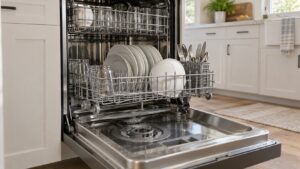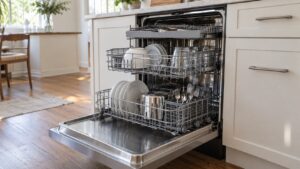
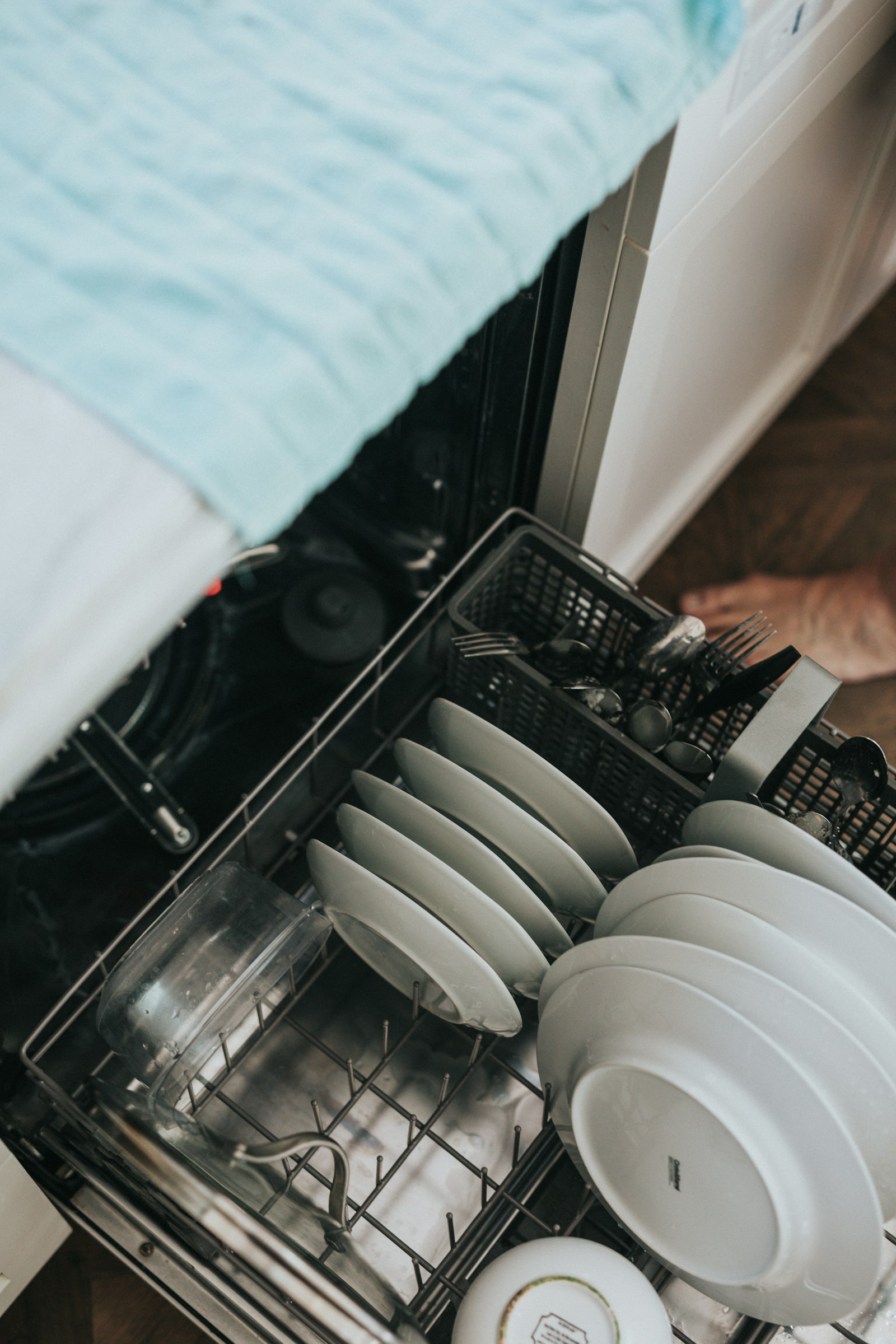
When a whirlpool dishwasher will not drain, you open the door to standing water in the bottom of the tub and dishes that never got properly rinsed. It is one of the most common dishwasher complaints — and one of the most fixable, because Whirlpool reports it as the F9E1 drain problem and the cause is almost always a clog or a hose, not a dead machine. Clearing the filter alone resolves the majority of these calls, so work through the steps below before assuming the worst.
Why a whirlpool dishwasher will not drain
A dishwasher drains by pumping water through a filter, up a drain hose, and into your sink drain or disposal. Anything blocking that path leaves water sitting in the tub. The usual causes, in order, are:
- A clogged filter assembly. Food debris, glass grit, and grease pack the cylindrical filter at the bottom of the tub. This resolves more than half of no-drain cases.
- A kinked drain hose or missing high loop. The hose must rise in a loop near the countertop before going down to the drain, or water siphons back.
- A clogged garbage disposal or air gap. If you recently installed a disposal, the knockout plug may still be blocking the dishwasher drain port.
- A jammed or failed drain pump. Glass shards or a foreign object can seize the impeller.
Steps to try yourself
- Clean the filter. Remove the lower rack, twist out the filter assembly, rinse it under hot water, and scrub the mesh. Wipe the sump it sits in.
- Check the drain hose high loop. Under the sink, confirm the hose loops up high before dropping to the drain.
- Run the disposal. Standing water in the dishwasher often means a clogged disposal; run it and check for slow draining at the sink.
- Clear the disposal knockout if the dishwasher was recently connected to a new disposal.
For the full F9E1 diagnosis and the related drain and fill codes, see our reference on Whirlpool dishwasher error codes.
One cause catches people out far more often than any failed part: the garbage disposal. A Whirlpool dishwasher very commonly drains through the disposal, so anything that blocks the disposal blocks the dishwasher too. If the disposal is clogged, half-clogged, or — the classic trap — was recently replaced without knocking out the internal plug, the dishwasher has nowhere to send its water and stands full. Before suspecting the dishwasher at all, run the disposal for a few seconds and watch whether the kitchen sink itself drains briskly; a slow sink means a plumbing blockage, not a machine problem. The other quiet culprit is the high loop. The drain hose must rise to the underside of the countertop before dropping to the drain, and if that loop has slipped down over time, dirty sink water can siphon back into the tub and look exactly like a drain failure. Checking these two things first, before opening any panel, resolves a large share of no-drain complaints without a single tool.
When to call a technician
If the filter is clean, the hose loops correctly, and water still will not drain, the drain pump is likely jammed or failed and needs inspection or replacement with a genuine OEM part. A blocked check valve can do the same. Our experienced technicians test the pump before condemning it; you can schedule a dishwasher repair. Note that a related code, F6E4, means an active internal leak — that one needs prompt professional attention. Whirlpool publishes model documentation at whirlpool.com.
How to prevent drain problems
Scrape plates before loading, clean the filter monthly, and run hot water at the sink before starting a cycle. A dishwasher that drains slowly today is the one that throws F9E1 next week. Our guide on cleaning a Whirlpool dishwasher filter shows exactly how, and our Whirlpool dishwasher repair service handles pumps and valves with a 30-day labor warranty.