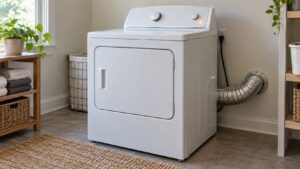
A noisy Whirlpool dryer drum is often the sign of a worn support part, and a worn drum bearing is one of the faults a technician is asked about most when a dryer starts to grind, thump or squeal. Whether a Whirlpool dryer drum bearing is worth repairing depends on three things: how old the dryer is, whether the rest of the dryer is in good shape and what a technician finds when the drum is out. This guide explains what a drum bearing does, how to tell a bearing from a belt or roller problem, and how to think about repairing versus replacing without anyone quoting you a number you cannot check. We do not give prices or lifespans here, because they depend on your model and on a technician’s diagnosis.
What does the drum bearing do in a Whirlpool dryer?
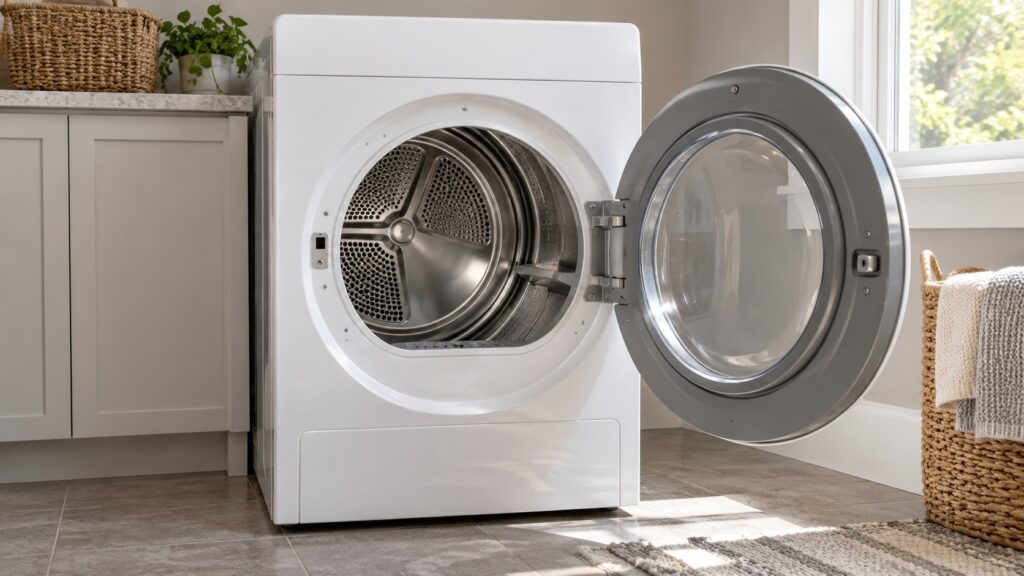
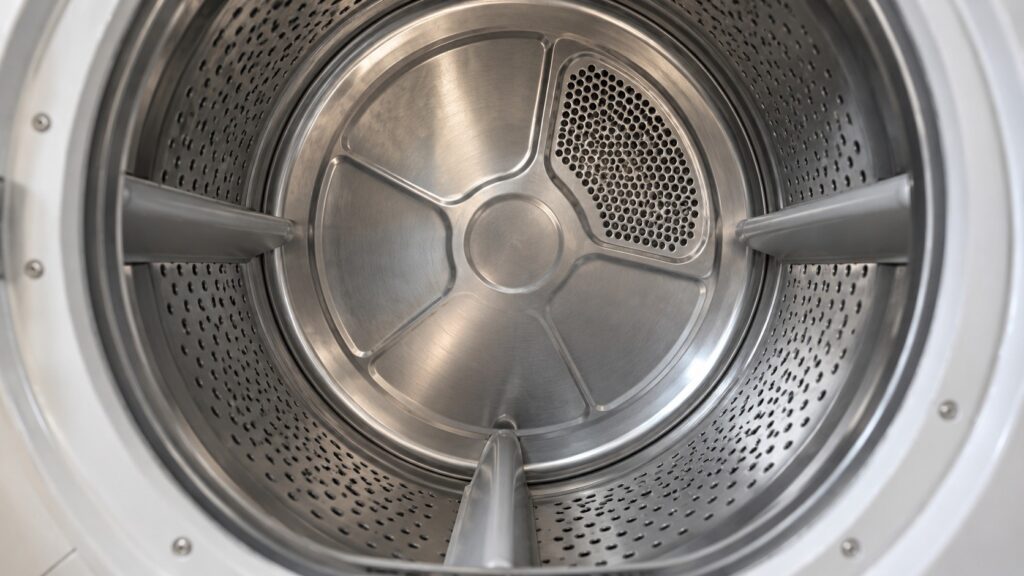
The drum is a heavy steel cylinder that spins with a full load of wet clothes inside. It has to turn smoothly and stay centered, and a support system carries that weight. Depending on the model, that support can include rollers, glides, a bearing or a combination of them, and our pages do not say which your Whirlpool uses. In general, a bearing is the part that lets a shaft or drum turn with little friction. When it wears, the drum no longer turns freely and begins to make noise.
Our guide to a Whirlpool dryer drum not turning explains the more common cause of a stopped drum, a broken belt, and mentions worn drum rollers and the idler pulley. A bearing problem is related but sounds different, and the repair is a different job, so it helps to separate them before you decide anything.
How do you tell a bearing problem from a belt or roller problem?
Listen. A worn bearing or roller usually makes a repeating noise that follows the drum around: a rumble, a grind or a squeal, often louder with a full load or after the dryer has been running a while. A broken belt produces a different symptom, because the motor hums or runs but the drum does not move at all. Our dryer guide also notes that a squeal that builds with the cycle often points at rollers or the idler pulley. A thump once per turn can point to a flat spot on a worn part.
You can check one thing safely. Switch the dryer off at the breaker and make sure it cannot be started, then open the door and gently turn the drum by hand. A drum that spins freely and quietly is not the cause of noise you hear only under power. A drum that feels rough, gritty or hard to turn points to a worn part, and a drum that will not turn at all needs a technician. Do not reach for the back panel or try to lift the drum out. A gas dryer also has a burner and gas line, and opening the cabinet is never an owner job.
Is a worn drum bearing worth repairing?
Our Whirlpool dryer repair versus replace guide says a dryer in the first half of its life is almost always worth repairing, while one well past its expected lifespan is a closer call, and that cheap and common repairs are worth doing at almost any age. A drum support repair is usually more involved than a belt, because the drum has to come out. That is labor, and it is what technicians weigh against the age and condition of the dryer.
These questions help you decide. Is the dryer otherwise sound, drying well with a clear vent? Has it needed other repairs lately? Is the noise limited to the drum, or are there other symptoms such as a burning smell, slow drying or a code? If the answer is a newer dryer with one clear fault, repair is usually reasonable. If the dryer is old and also needs other work, replacement starts to look better. Ask the technician to explain what they found in plain words and to give you the total in writing before they begin, so you can compare it with the price of a new dryer. In words, a repair makes sense when it costs clearly less than a new dryer and the dryer has years of use left. Our dryer repair or replace guide gives the general rule of thumb.
What should you do while you wait?
Stop using a dryer that grinds loudly, smells hot or burnt, or runs with the drum visibly wobbling. A worn support part can strain the motor. If you notice a burning smell, smoke or sparks, switch off the breaker at the panel while standing on a dry floor, keep the area clear and do not open the cabinet. Do not run the dryer empty or with a small load to test it again and again. Meanwhile, line-dry the load or take it elsewhere.
It is also worth clearing lint from the screen and checking the vent, because a restricted vent makes a dryer run hotter and can mask or worsen other faults. Our dryer maintenance and vent cleaning guide lists the airflow checks an owner can do. A clear vent does not fix a worn bearing, but it keeps the dryer from adding heat problems to a mechanical one.
When should a technician look at it?
As soon as the drum makes a grinding or squealing noise that does not go away, when the drum is hard to turn by hand or when you cannot tell whether it is a belt, roller or bearing. The technician can confirm the cause and tell you what the repair involves on your model. We are an independent repair company. Read about our Whirlpool dryer repair or schedule a visit, and describe the noise as exactly as you can.