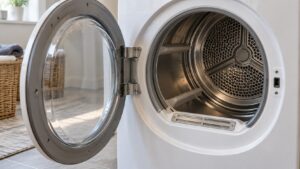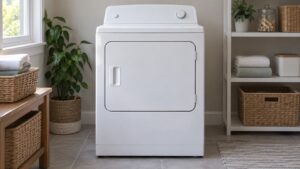
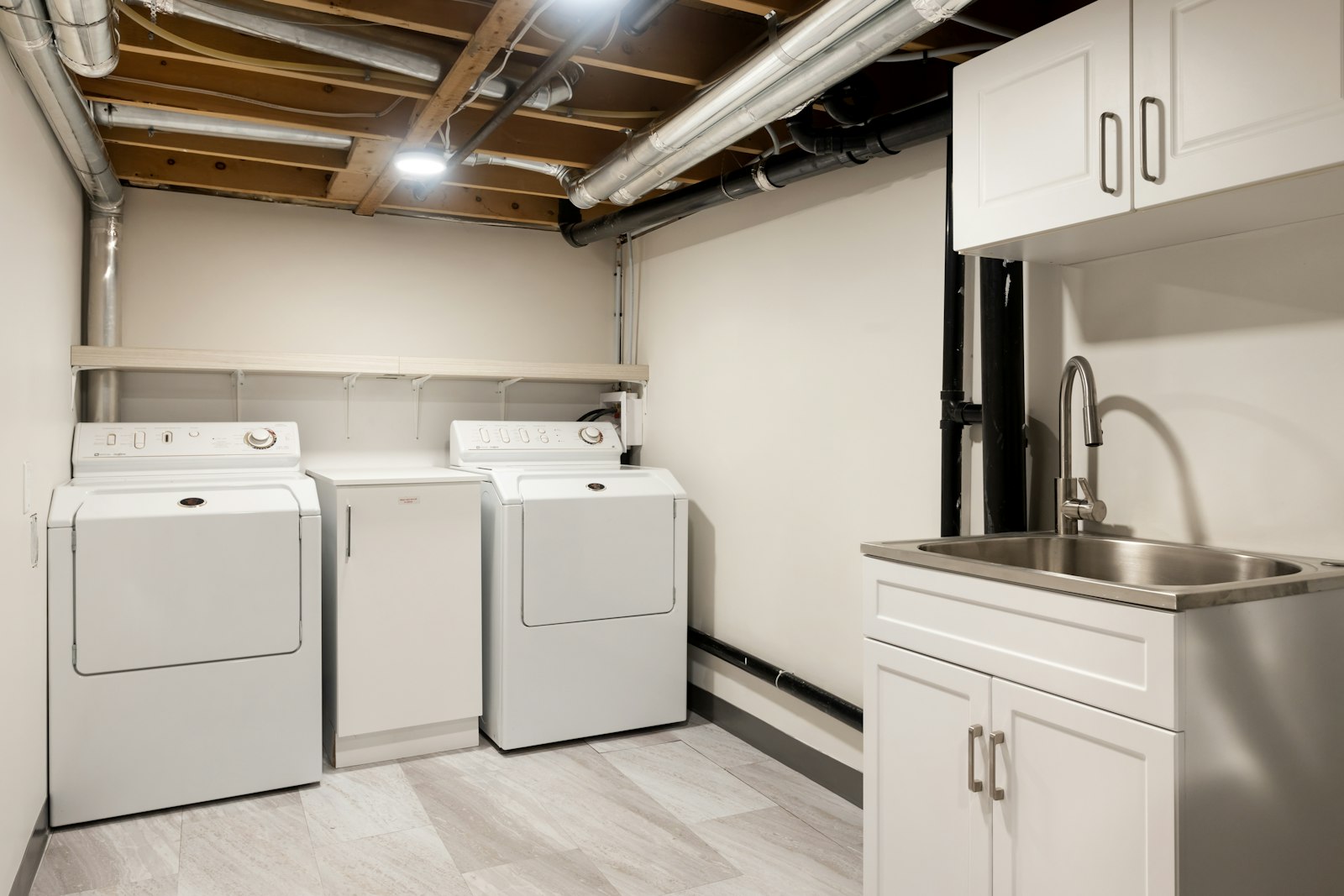
Good whirlpool dryer maintenance is the single most important thing you can do for both performance and safety, because nearly every dryer problem and every dryer fire traces back to one thing: lint blocking airflow. A dryer pushes hot, moist air out through a vent, and lint accumulates everywhere along that path. Keep the air moving freely and your dryer dries faster, runs cooler, uses less energy, and lasts years longer. The routine below is short, but it prevents the failures we are called out for most.
Your every-load whirlpool dryer maintenance habit
Clean the lint screen before or after every single load. This one habit does more than all the rest combined — a clogged screen chokes airflow, makes the dryer overheat, and is a leading ignition source. If you use dryer sheets, scrub the screen with water and a brush monthly, because softener leaves an invisible film that beads water and blocks air.
Your yearly tasks
- Clean the full exhaust vent. Disconnect the dryer and clear the duct from the cabinet to the outdoor hood, paying attention to bends where lint collects. Confirm the outside flap opens fully when the dryer runs.
- Inspect the transition hose. Replace crushed or kinked flexible hose with short, smooth-walled metal duct.
- Check airflow. Run the dryer and feel for strong air at the exterior vent. Weak flow means a partial blockage.
- Listen for the drum. A new squeal points to worn rollers or idler pulley — catch it before they seize.
- Clean the interior lint. Lint also collects inside the cabinet around the element; a professional cleaning removes what you cannot reach.
Why airflow matters so much
When airflow is restricted, the dryer overheats. Overheating blows the thermal fuse, burns out the heating element, and trips thermistor failures — many of the codes in our Whirlpool dryer error codes reference are downstream of a blocked vent. It is also the difference between a dryer that finishes in one cycle and one that needs two or three, as covered in our guide on a Whirlpool dryer that takes too long.
The safety side of this whirlpool dryer maintenance routine is worth stating plainly, because lint is not just a performance issue. Dryer lint is highly combustible, and when it builds up in the duct, in the outdoor hood, or inside the cabinet near the heating element, an overheating dryer has both the fuel and the ignition source for a fire. Thousands of home fires every year start exactly this way, and nearly all of them are preventable with the simple habits above. Watch for the warning signs between cleanings: a dryer that feels hot to the touch on the outside, a load that comes out hotter than usual, a burning or musty smell during a cycle, or an outdoor vent flap that barely opens when the dryer runs. Any of these means airflow is restricted and the dryer is running hotter than it should. The longer the duct run and the more bends it has, the more often it needs clearing — a long, twisting vent to a second-floor laundry can need cleaning twice a year rather than once.
When maintenance is not enough
If you clean the vent and the dryer still runs hot, dries slowly, or squeals, a component — the thermistor, element, or drum rollers — likely needs attention. These are quick repairs when caught early. Our experienced technicians can clean the internal lint you cannot reach and test the heat and drive systems; you can book a maintenance visit. A periodic professional clean-out is especially worthwhile if your laundry sits over carpet or in a closet, where the fine lint that escapes the screen settles inside the cabinet faster than most owners realize. Whirlpool publishes care and venting guidance for each model at whirlpool.com, and our Whirlpool dryer repair service backs every job with a 30-day labor warranty.