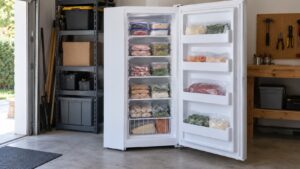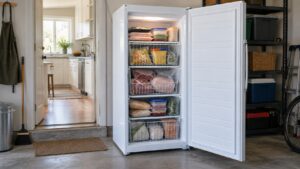
For a Whirlpool freezer power outage, the rule is simple: keep the door or lid closed. A full freezer holds a safe temperature for about 48 hours without power, and a half-full one for about 24 hours, so every unnecessary opening costs you time. When the power returns, use a thermometer and the state of the food, not the clock alone, to decide what to keep. This guide covers what to do before, during and after an outage, and what it means when the freezer misbehaves afterward.
How long will a Whirlpool freezer keep food frozen without power?
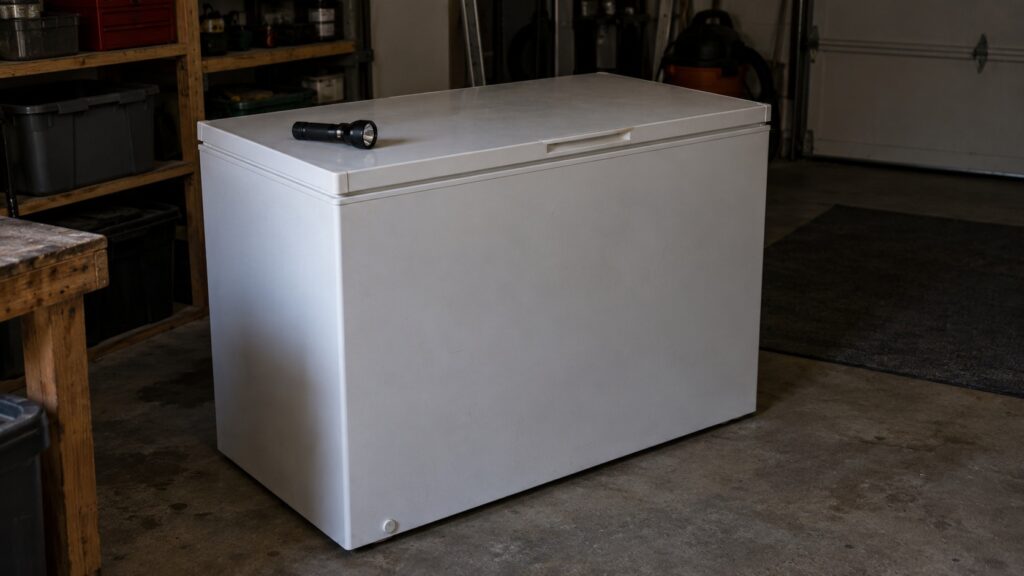
The numbers above are guidelines, and they depend on three things. The first is how full the freezer is: packed food acts as a block of cold that keeps itself cold, while a half-empty cabinet warms faster. The second is the shape: a chest freezer, which holds cold air low in the cabinet and loses little when the lid opens, outlasts an upright freezer. The third is the room: a freezer in a hot garage in summer loses ground faster than one in a cool basement. If your freezer is mostly empty, fill the gaps with containers of water frozen solid ahead of time, which both adds thermal mass and, if the power fails, melts into drinkable water.
What should you do while the power is out?
Do not open the door to check on the food. Every opening lets cold air out and warm air in, and an upright freezer loses cold air fast. Put a sheet of paper or a blanket over a chest freezer if the room is warm, but never block the vents, and do not wrap it in a way that traps heat. If the outage is going to last more than a day, plan ahead. Dry ice, handled with gloves and in a ventilated space, can hold a full freezer for much longer; never seal dry ice in an airtight container and never put it in a closed car with people inside. Alternatively, move the most valuable items to a neighbor’s working freezer or a cooler with ice.
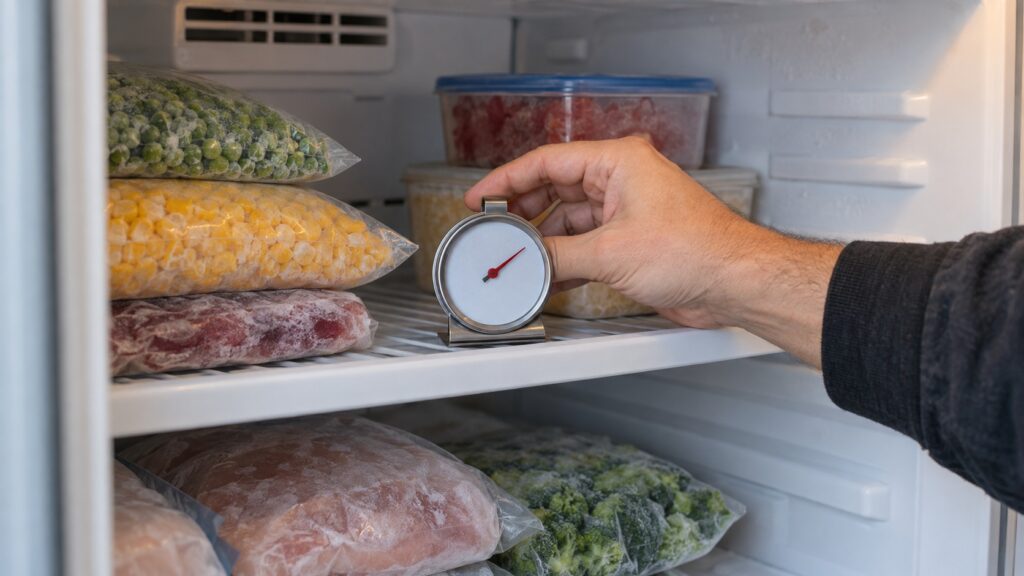
Keep an appliance thermometer in the freezer all the time. A freezer thermometer costs little and lets you read the temperature at a glance, which is the single most helpful thing you can do before an outage. Set it where you can read it without opening the door if possible, such as a stick-on or dial type on the front edge of a shelf near the door.
What do you do when the power comes back?
First, check the thermometer. A reading of 0 degrees F or colder means nothing has changed. Between 0 and 40 degrees F, look at the food: packages that still hold ice crystals or feel as cold as if refrigerated can be refrozen, though quality may drop. Anything that has been above 40 degrees F for two hours or more should be discarded. Meat, poultry, fish and dairy are the most important to be strict about. When in doubt, throw it out, because you cannot smell or see the bacteria that cause food poisoning.
Do not refreeze food that was thawed and left warm. Food that thawed in the refrigerator rather than at room temperature is more forgiving. Mark anything that was partly thawed and cook it first.
Why does the freezer behave differently after an outage?
Several things are normal. The compressor may wait a few minutes before restarting, because the system protects itself against restarting under pressure. The freezer may then run almost continuously for hours to pull the temperature back down, which is also normal; our Whirlpool freezer running constantly guide explains when long running is a problem. A frost-free model may show extra frost after the food thaws and refreezes, as moisture re-deposits on the walls, and our freezer frost buildup guide shows how to deal with it.
Signs that something is wrong are different. If the freezer does not restart after thirty minutes, hums without cooling, or does not reach 0 degrees F after a full day, read our Whirlpool freezer not freezing guide before assuming the compressor is gone. A power surge when the grid returns can also affect a control board, so it is worth plugging a freezer into a surge protector rated for appliances or a dedicated outlet.
What about an outage that lasts several days?
Plan in layers. In the first day, do nothing except keep the door closed. If the outage looks likely to pass 48 hours, decide what matters most: raw meat and seafood go into the coldest part of the freezer or a cooler with ice, while bread, baked goods and fruit survive a thaw with little harm. If you have a generator, run it outdoors only, far from windows and doors, and never in a garage, because exhaust contains carbon monoxide. A freezer needs a stable supply when it restarts, so plug it directly into the generator outlet rather than through a long, thin extension cord. Once power is restored, give the freezer time before you open it to restock, so it can pull the temperature down first.
How do you prepare in advance?
Keep the freezer reasonably full, keep the gasket clean and sealing, and know where the manual’s temperature guidance is. Our Whirlpool freezer maintenance guide covers the routine. Freeze water in clean containers and rotate them. Know where the nearest dry ice supplier is. Write down the model number, which sits on the data label inside the cabinet, in case you need service later.
We are an independent repair company, not the manufacturer, and we focus on repairs. If your freezer does not recover after an outage, our Whirlpool freezer repair service can find the failed part, and you can schedule a visit online.