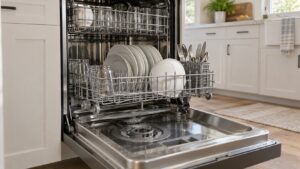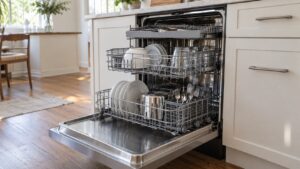
Learning to clean whirlpool dishwasher filter components is the single most valuable bit of dishwasher maintenance there is, because a clogged filter is behind so many complaints: bad odors, dishes that come out gritty, and the dreaded F9E1 drain problem. Most modern Whirlpool dishwashers use a manual filter rather than a self-cleaning grinder, which means it is your job to rinse it out — and the manufacturer recommends doing so regularly. The whole task takes about five minutes and requires no tools.
Why you need to clean whirlpool dishwasher filter parts
The filter sits in the bottom of the tub and catches food debris so it does not redeposit on your dishes. Over weeks it packs with grease, food bits, and mineral scale. A clogged filter recirculates dirty water (so dishes do not get clean), restricts drainage (so water stands in the tub and trips F9E1), and goes stagnant (so the dishwasher smells). Cleaning it solves all three at once.
How to clean the filter
- Remove the lower rack to reach the filter at the base of the tub.
- Twist out the filter assembly. Most Whirlpool filters are a two-part design: turn the cylindrical upper filter counterclockwise and lift it out, then remove the lower mesh screen.
- Rinse under hot running water. Flush out the trapped food and grease.
- Scrub gently. Use a soft brush (an old toothbrush works) with a little dish soap to clear the fine mesh. Avoid wire brushes that can damage it.
- Wipe the filter housing and the sump area where the filter seats.
- Reseat it firmly. Drop the mesh screen back, then lock the upper filter by turning it clockwise until it seats — a loose filter lets debris bypass it.
Do this monthly, or more often if you run heavily soiled loads or do not scrape plates first. If water still stands after cleaning the filter, the problem may be deeper in the drain path — see our guide on a Whirlpool dishwasher that will not drain.
While you are in there
A filter clean is a good moment for a little extra upkeep: pull the spray arms and clear the jets, wipe the door gasket, and run a dishwasher-cleaner cycle to cut grease and scale across the tub. These small steps keep the machine cleaning at full strength and prevent the heating and drain codes in our Whirlpool dishwasher error codes reference.
How often you need to clean the filter depends almost entirely on how you load the dishwasher. If you scrape plates well before loading and rarely run heavily soiled pots, a once-a-month rinse is plenty. If you tend to skip the rinse and let the machine handle baked-on food, the filter packs faster and benefits from a clean every couple of weeks. A good way to judge is to glance at the filter each time you unload: if you can see a film of food or grease building on the mesh, it is due. Two habits make the job easier and the results better. First, scrape rather than pre-rinse — modern Whirlpool dishwashers and their detergents are designed to work with a little soil present, and scraping keeps the big debris out of the filter without wasting water. Second, never run the machine with the filter left loose or removed after cleaning, because the filter is the only thing keeping food out of the pump; a missing or unseated filter lets debris reach the drain pump, which is exactly the kind of damage routine cleaning is meant to prevent.
When to call a technician
If you keep the filter spotless and the dishwasher still drains poorly, smells, or leaves dishes dirty, something downstream — the pump, check valve, or heating element — needs a look. Our skilled technicians can confirm it quickly; you can schedule a service visit. Whirlpool publishes filter-cleaning steps for each model at whirlpool.com, and our Whirlpool dishwasher repair service backs every repair with a 30-day labor warranty.