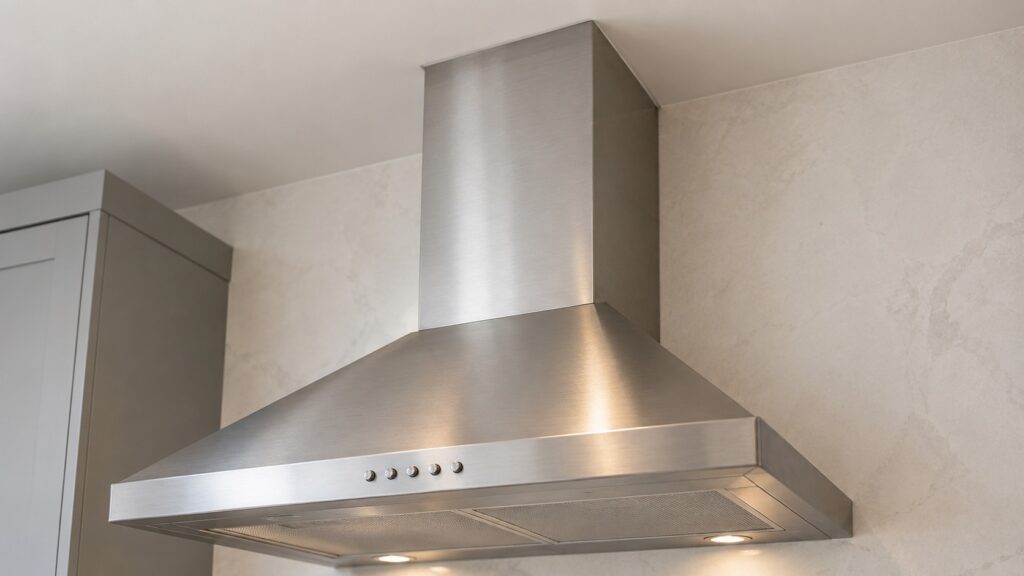
The Whirlpool WVW53UC6LS is a 36-inch wall-mount chimney range hood rated at 400 CFM, with a 3-speed fan, LED lighting and a removable grease filter. It is the wide version of this chimney line, so it suits a 36-inch cooktop or range with open wall space above it. The 30-inch sibling, the WVW53UC0LS, shares the same 400 CFM class, three speeds and filter, which is why the two model numbers are so often confused.
What is the Whirlpool WVW53UC6LS?
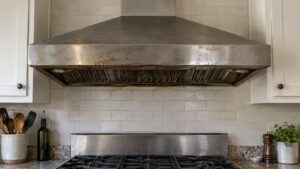
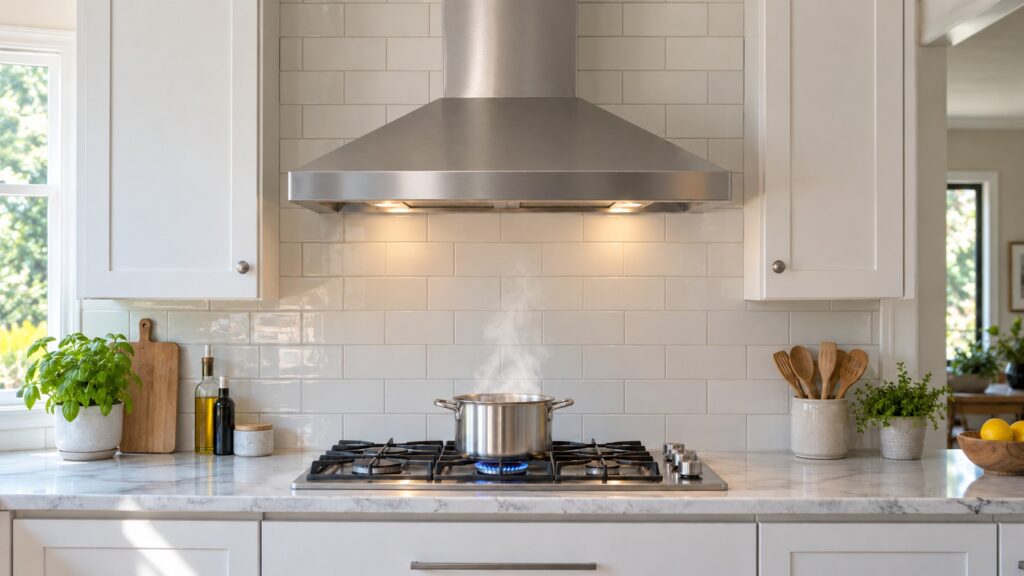
It is a current Whirlpool wall-mount hood from the same chimney line. “Chimney” describes the shape: a sloped canopy over the cooktop with a vertical stack rising toward the ceiling. That is different from the shallow under-cabinet hoods in the WVU and UXT series, which tuck beneath a cabinet and have no visible stack. A chimney hood needs open wall space above the cooktop and no cabinet in the way, so check your kitchen layout before anything else.
Whirlpool’s own range hood lineup runs from compact ductless units at around 140 CFM up to 400 CFM on the larger convertible and canopy models, and the WVW53UC6LS sits at the top of that range. Our general Whirlpool range hood buying guide compares the whole lineup by width, airflow and mounting style; this page is about this one model.
How does the WVW53UC6LS differ from the WVW53UC0LS?
The difference that matters most is width. The “6” model is the 36-inch hood and the “0” model is the 30-inch hood. Both are listed as wall-mount chimney hoods in the 400 CFM class with a 3-speed fan, LED lighting and a removable grease filter, so choosing between them is mostly a measuring exercise rather than a features comparison. The model pages on this site list the same feature set for both, so we do not claim any other difference between them. If a seller’s listing shows other differences, check the model’s spec sheet or your owner’s manual rather than relying on a listing.
You can compare the two directly: the WVW53UC6LS model page is the 36-inch hood, and the 30-inch WVW53UC0LS and the curved-glass WVW51UC0LS (also 30 inches, also 400 CFM) are listed in the same group of hoods.
Is a 36-inch hood the right width for your cooktop?
Match the hood to the cooktop. A 36-inch cooktop or range pairs with a 36-inch hood, and a 30-inch cooktop pairs with a 30-inch one. A hood narrower than the cooktop leaves the outer burners uncovered, so rising steam and grease slip past the edges. If you are between sizes, go slightly wider, never narrower. Measure the cooktop itself rather than the cabinet opening, because many cooktops are labeled by nominal width.
Also look at the wall. A chimney hood hangs from the wall above the cooktop, so the surface behind it needs to be sound and the space above it needs to be clear to the ceiling. If a cabinet already hangs over the stove, an under-cabinet hood from the same family is usually the simpler swap.
Is 400 CFM enough for your cooking?
CFM is the amount of air a hood can move, and more is not automatically better. On a hood like this, a higher rating mostly matters for heavy or high-heat cooking such as searing, frying and wok cooking, and that is where a 400 CFM class hood earns its place. For light simmering and boiling, a lower rating is enough. The three fan speeds are what make a high-CFM hood livable: you can run a lower speed for everyday cooking and keep the top speed for the moments that need it.
Higher airflow generally comes with more fan noise at full speed, so think about how often you will actually use the top setting. How much air a hood really clears in your kitchen depends on the duct run behind it, not only on the label rating, which is why the next section matters.
Does the WVW53UC6LS need ducting?
The model page lists the hood as a wall-mount chimney hood but does not describe its venting options, and we do not want to guess. Ducted venting that sends air outside is the most effective way to remove heat, moisture and odor, while recirculating hoods use an extra charcoal filter and return the air to the room. Which of those a given unit supports, and what accessories it needs, belongs to the owner’s manual and the installation sheet for the exact model.
Before you buy, decide whether your kitchen already has a duct to the outside. Our guide to Whirlpool range hood venting and ducting explains the difference and what a clear duct path looks like. Mounting a heavy wall hood and connecting the duct and the electrical supply is installer work, so plan on a qualified installer rather than a weekend project, and follow the manual for the exact mounting height.
How do you keep the hood working well?
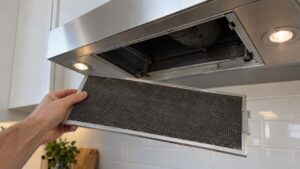
The removable grease filter is the part you will handle most. Grease collects there first, and a grease-clogged filter is one of the usual reasons a hood seems weak. Cleaning it on a regular basis keeps the air moving; our guide to cleaning a Whirlpool range hood grease filter walks through it. Run the fan while you cook and for a short while after, so the hood clears what is still in the air. The model page lists LED lighting; check the owner’s manual for how the lights are serviced.
Do not open the hood housing or touch anything wired inside it. A fan that will not run, dead controls or lights that stay dark are diagnosed at the hood itself, and that is a technician’s job. Our weak suction page covers the symptom that is most often just a dirty filter.
When should you talk to a technician instead of buying new?
If you already own a WVW53UC6LS and it has stopped working well, the repair route is often worth a look before replacing it, because the common faults are specific parts such as the fan motor, the switch or the filter. A technician can tell you which it is and whether a part swap makes sense. For a hood you are only considering, a technician is not needed, but a measured width, a known duct path and a note of your cooktop size are all you need to compare models.
We are an independent repair company, not the manufacturer. For an existing hood that is noisy, weak or dead, see our Whirlpool range hood repair page.