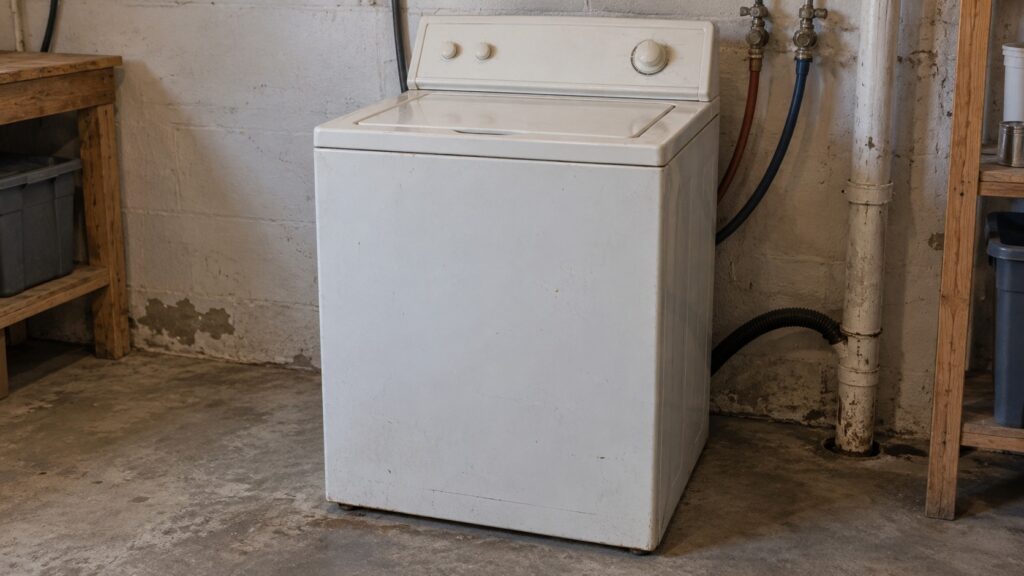
Whirlpool washer life depends far more on how it is used and maintained than on any single number. We do not publish a fixed lifespan for these machines, because the honest answer varies with the model, the load size, the water, the detergent and how well the washer has been looked after. What we can tell you is how to judge where your own washer is in its life: our repair-or-replace guide treats a washer as mature after about a decade of regular family use, and the signs below show you whether yours has years left or is nearing the end.
How long does a Whirlpool washer last?
There is no honest single answer. Machines in the same family can have very different lives. A washer used for a couple’s weekly laundry in soft water can outlast a washer used for several children’s sports clothes in hard water. The model matters too: a front-load WFW and a top-load WTW have different parts that wear, such as the door boot on one and the agitator drive on the other.
The most useful rule we can give comes from our Whirlpool washer repair or replace guide, which calls a washer mature after about a decade of regular family use. Under that, repairing a single failed part is the normal choice. Past it, the chance that a second or third part follows the first rises. That is a guide to how to think about it, not a promise that a washer will fail at any particular age.
What wears out first on a Whirlpool washer?
Most breakdowns are in the parts that handle water or move the load, not in the cabinet. The model pages for the top-load and front-load families note the codes we see most: F8E1 for a long fill, F9E1 for a long drain, lid and door lock problems, off-balance and suds faults, and F7E1 for the motor or drum. These point at fill valves and screens, the drain pump and filter, the lock, the load balance and the drive.
The same repair-or-replace guide lists the water and safety parts as usually worth repairing, such as the lid or door lock, the inlet valve, the drain pump, the drain hose, the belt and level adjustments. The drive, the motor, the bearings and the tub are where the bigger decisions are made.
Which signs say your washer is near the end?
Look at the whole machine rather than the part in front of you.
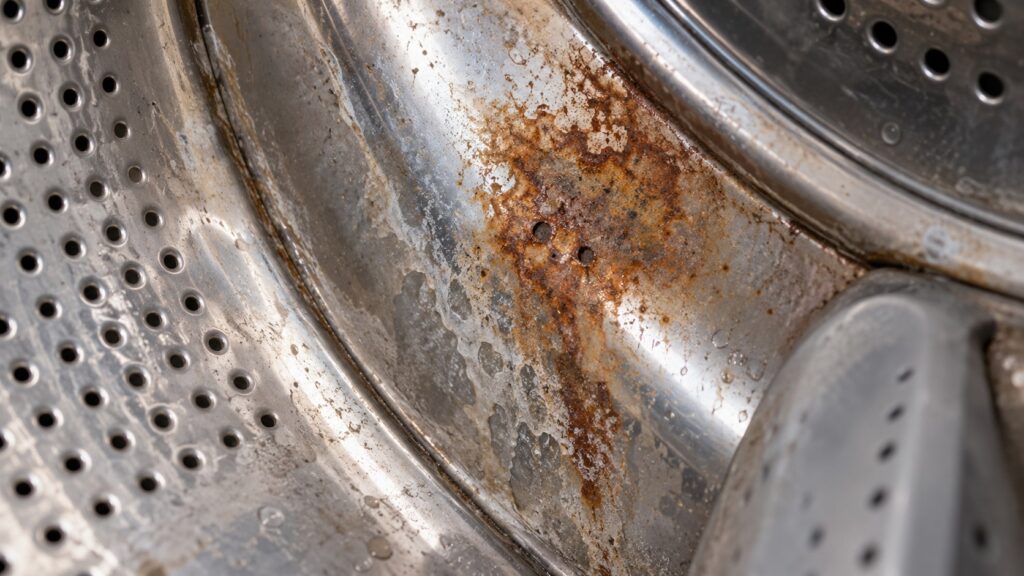
- Rust on the inside of the tub or on the cabinet, especially at the base.
- A growling or grinding sound in spin that was not there before, which can point to worn bearings.
- A drum or tub that wobbles noticeably when you grab it.
- Several different codes from different families in a short time, for example a drain code, a lock code and a drive code.
- A musty smell that returns soon after cleaning.
- Repairs piling up, with a second part failing soon after the first.
One of these on its own does not mean the end. Two or three together, on a washer past the decade mark, point toward replacement rather than another repair.
How do you make a washer last longer?
This is where owners have the most influence. Our Whirlpool washer maintenance checklist lists the tasks and why they work.
- Run the Clean Washer cycle each month and wipe the door gasket on front-load models.
- Use the right amount of high-efficiency detergent. Over-dosing leaves residue and can cause suds problems.
- Do not overload the drum, because an overstuffed washer trips balance problems and stresses the suspension.
- Empty pockets so coins and tissues do not reach the pump.
- Check that the washer is level; a washer that rocks wears its bearings.
- Inspect the fill hoses for bulges and cracks, and replace rubber hoses every five years, as the checklist advises, before they fail.
For smells, see how to clean a Whirlpool washer and stop the smell.
Is it worth repairing an older Whirlpool washer?
Ask three questions. Which part failed? How old is the washer? Is anything else wearing out at the same time? A lid lock or a drain pump on an otherwise clean, quiet washer is worth repairing. A worn bearing, a cracked tub or a rusted base on an older washer often is not, because those repairs can cost more than the machine’s remaining life justifies. Our Whirlpool washer repair cost guide covers what repairs generally involve, and a technician visit gives you a firm diagnosis before you decide. A part swap is usually far cheaper than a new washer, but only a technician can tell you whether a given washer is worth the repair.
If your washer will not spin or will not drain, see Whirlpool washer not spinning and will not drain first, because both can be simple causes.
When should you call a technician?
Call before deciding to replace a washer, because the diagnosis changes the answer. Do not take the cabinet or the tub apart yourself; that work involves water and electrical parts. If you see water near an outlet, sparks or a burning smell, switch off the breaker at the panel while standing on a dry floor and do not pull a plug from a wet outlet. Our Whirlpool washer repair page explains how a visit works.