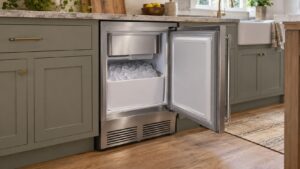
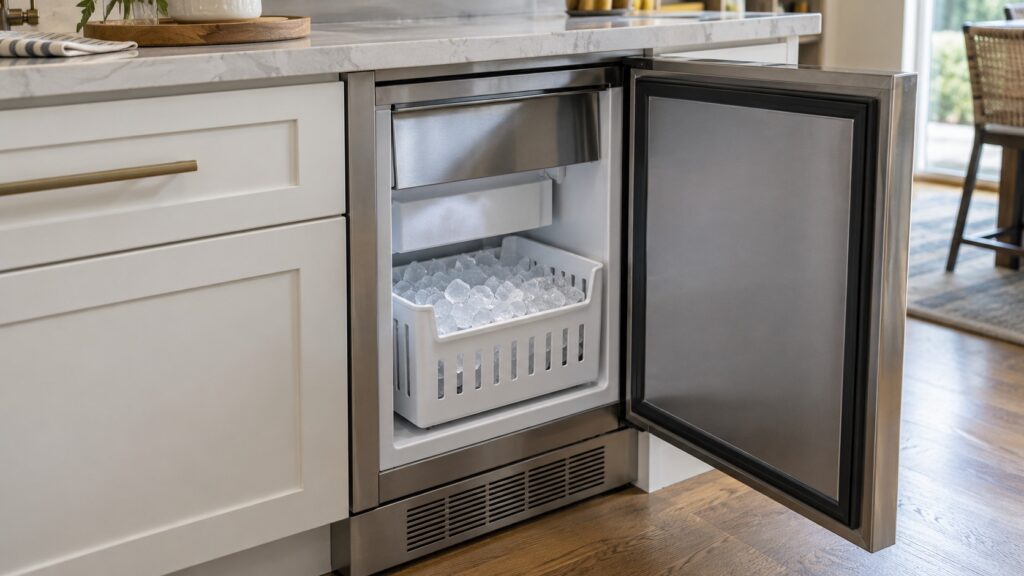
Whirlpool ice machine repair or replace comes down to what has failed, not how old the machine is. Scale, a dirty condenser, a blocked grille, a clogged inlet screen or a drain problem are all maintenance or minor repairs, and the machine is usually worth keeping. A failure in the sealed refrigeration system, repeated breakdowns after proper cleaning or a legacy model that is hard to keep supplied tilt the decision toward replacement. A technician’s diagnosis is what turns the question into an answer.
What should you rule out before deciding?
Most ice machine complaints are not the end of the machine. Our Whirlpool ice machine terms glossary names scale on the evaporator plate as the most common cause of slow or no ice, and a dirty condenser or blocked front grille as the reason a machine runs hot and slow. Our cleaning and descaling guide covers the routine that prevents most of it. Run the cleaning described in your manual, clear the base grille and check the supply and drain before you spend money on a part or a new unit.
Write down what you see before you call: whether the ice is thin, cloudy or small, whether the bin has water in it, whether the machine runs but does not cool, and how long since the last cleaning. Those notes help a technician narrow the cause in one visit, and they make a repair-or-replace conversation much more concrete than a general complaint that the machine is not working.
A machine that has never been cleaned is not a good test of whether it is worn out. If a thorough cleaning brings it back, you had a maintenance problem and the machine has life left.
Which problems are usually worth repairing?
A water-fill or drain problem, a clogged inlet screen, a failed valve, a weak or dead drain pump on a model that has one, a slow harvest or a dirty-condenser problem are all part-level faults. Our Whirlpool ice machine not making ice guide and our slow harvest guide list the common causes. For a current machine, such as the WUI75X15HW with Clear Ice Technology, a 25 lb bin and a Self-Cleaning cycle, a repair of this kind is often worth considering before you start again.
Think about the whole job, not only the part. A part swap on a machine that is otherwise sound often makes sense, while the same part on a machine with several problems may not.
When does replacing make more sense?
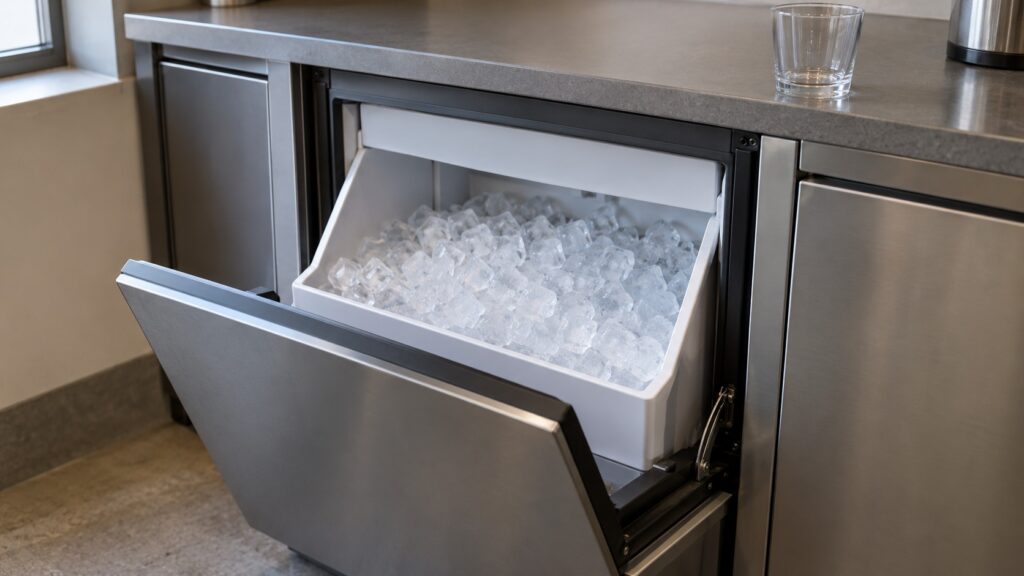
Three situations come up. The first is a sealed-system failure: if the refrigeration circuit itself has failed, the repair is specialist work and can cost a meaningful part of a new machine’s price depending on the machine and the fault, so it is worth asking the technician for a written quote and weighing it against a new machine. The second is a machine that keeps failing in different places even after cleaning and good installation. The third is a legacy unit where the cost and effort of keeping it running add up. Our model pages call the GI15NDXXS, GI15NDXZS and GI15PDXZS discontinued legacy models, no longer in production, but we still service them, so age alone is not a reason to scrap one.
The question to ask the technician is simple: what has failed, can it be fixed in one visit, and how long can the rest of the machine be expected to last? Do not ask for a guess on years; the answer depends on water quality and care.
How does water quality change the answer?
Scale is the dominant failure mode on these machines, and a filter does not soften water. In a hard-water area, a machine can keep scaling up no matter how often you repair it. A good installation, water filtration where it is suitable and regular cleaning change the picture for a replacement as well as a repair. If a new machine would go into the same water, the same cleaning routine applies, so a replacement does not fix a scale problem by itself. Our ice machine installation guide explains the supply, drain and ventilation a machine needs.
A machine installed with its grille boxed in, or without a proper drain, will struggle whatever its age. Fixing the installation can be the cheapest repair there is.
Which model should you compare against?
If you replace, compare features that matter to you. Our pages list the WUI75X15HZ with a gravity drain and the WUI95X15HZ with a built-in drain pump, both 15 inches wide with a 25 lb storage bin and a Self-Cleaning cycle. Match the drain method to the space under your counter before you choose, because a pump model is made for places where gravity will not work. The WUI75X15HW model page lists the white finish.
Do not remove panels from the old or the new machine yourself. The refrigeration system and the electrical parts are for a technician.
When should you call a technician?
Call when a good cleaning has not fixed the problem, when the machine makes no ice, leaks or runs without cooling, or when you want a repair-or-replace opinion before you spend money. If water reaches an outlet or the cord, switch off the breaker at the panel while standing on a dry floor and do not pull a plug from a wet outlet. Our Whirlpool ice machine repair page explains how a visit works.