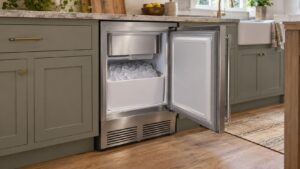

A whirlpool ice machine slow harvest is different from a machine that makes no ice at all: the unit is still cycling, but each batch takes far too long and the bin never keeps up. On a 15-inch undercounter Clear Ice machine like the WUI75X15HZ, harvest time is driven by how cleanly the evaporator can freeze and release a sheet of ice, and how efficiently the condenser can reject heat. Anything that fouls those two surfaces stretches the cycle and drops your daily output.
What causes a Whirlpool ice machine slow harvest
Slow, low-output cycles on these residential undercounter machines usually come down to heat and scale:
- Scale on the evaporator — mineral buildup insulates the freezing surface, so each sheet takes longer to form and longer to release. This is the most common cause.
- A dirty condenser or blocked front grille — a clogged condenser cannot shed heat, so the refrigeration system works harder and slower.
- Warm ambient or no clearance — a hot garage, a tight built-in cabinet, or a nearby heat source raises condensing temperature and lengthens every cycle.
- Low or fluctuating water supply — inconsistent fill can produce thin or incomplete sheets that read as slow output.
- A weak harvest assist — if the hot-gas harvest is sluggish, sheets cling to the evaporator and delay the next freeze.
Steps to speed harvest back up
- Run a full descale / clean cycle with proper ice-machine cleaner. Removing evaporator scale is the single biggest win for harvest time.
- Vacuum and brush the condenser and front grille so the machine can reject heat efficiently.
- Verify the unit has its required air clearance and is not boxed into a sealed cabinet or sitting next to an oven or fridge exhaust.
- Check that incoming water is cold and steady; warm supply water lengthens the freeze.
- Re-test over a full day. Clean machines in a cool spot harvest noticeably faster.
How to tell scale from a refrigeration problem
The most useful thing you can do before calling for service is figure out whether slow harvest is a cleaning issue or a refrigeration issue, because they have very different fixes and costs. A few observations usually tell them apart:
- It improves after a clean cycle — if running a descale visibly speeds harvest, scale was the problem and regular cleaning will keep it solved.
- The cabinet sides feel hot and the room is warm — heat-related slowdowns often trace to a dirty condenser, blocked grille, or a hot location rather than the refrigeration charge.
- The ice sheet looks thin or incomplete — this can be a water-fill problem, so check the supply and inlet before assuming the worst.
- Nothing helps and cycles are very long — a clean machine in a cool room that still harvests slowly is the pattern that points to a sealed-system problem needing gauges.
Working through these in order means you only pay for refrigeration diagnosis when the cheaper, more common causes are genuinely ruled out. It also tells the technician where to start, which makes the visit faster.
When to call a technician
If the evaporator is clean, the condenser is clear, the room is cool, and harvest is still slow, the cause may be a refrigeration issue — a slightly low charge, a struggling compressor, or a weak hot-gas harvest valve. These need a technician with gauges to diagnose properly. Our independent service can measure cycle times and refrigeration performance to separate a cleaning problem from a sealed-system problem. Book a diagnostic and we will time a full cycle and inspect the refrigeration side. Regular descaling prevents most slow-harvest complaints — see our cleaning and descaling guide — and you can confirm your model and replacement parts at whirlpool.com. If a slow machine is also leaking or draining poorly, our ice machine repair service can handle the whole unit.