
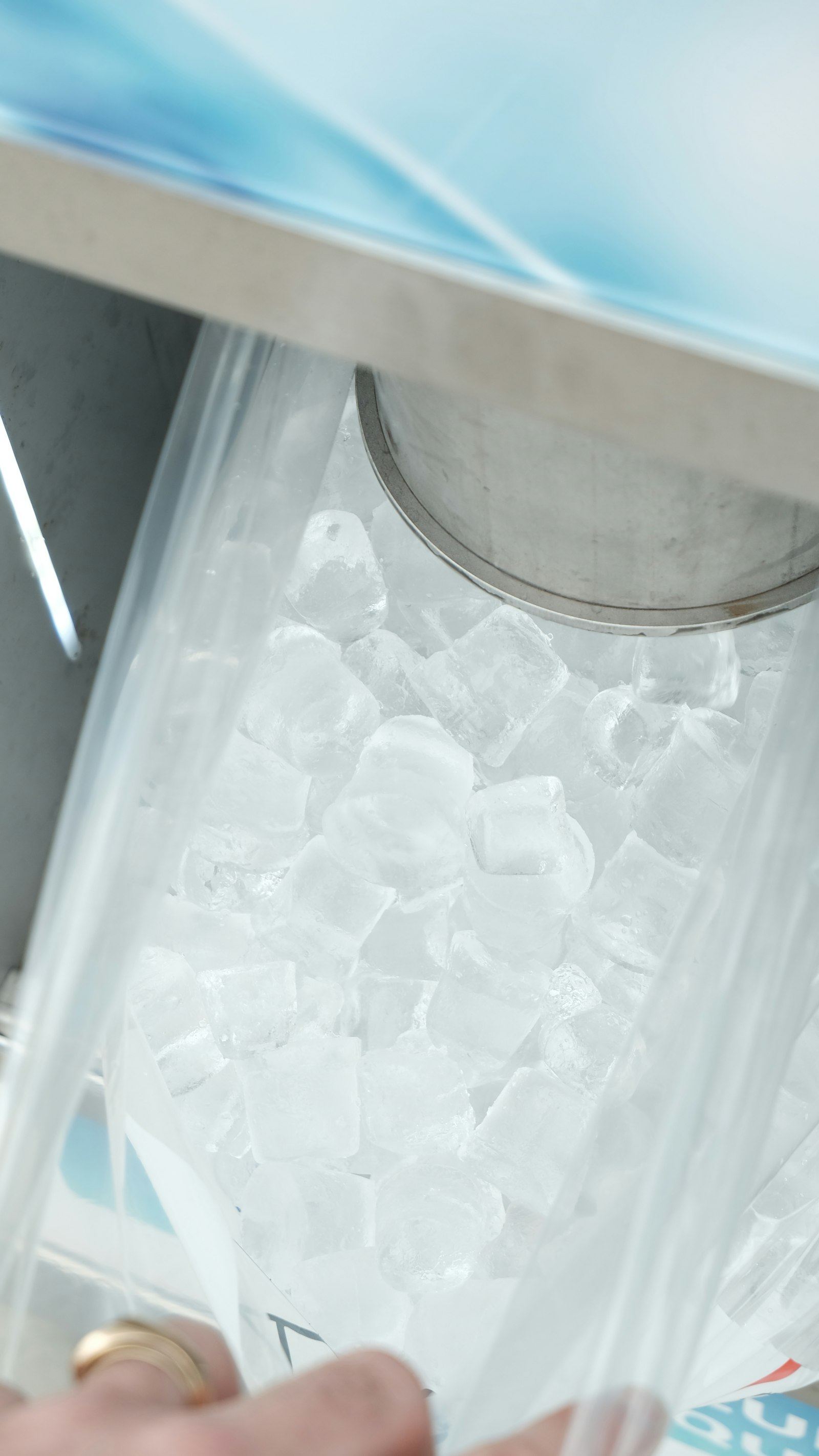
Understanding how a whirlpool ice machine works explains why a 15-inch undercounter unit is a completely different animal from the little icemaker inside a refrigerator. The WUI series is a self-contained appliance with its own compressor, condenser, evaporator, and water-circulation system. Instead of filling a small mold, it flows water over a chilled evaporator plate to grow a sheet of clear ice, then harvests it. Knowing that cycle tells you exactly where to look when output drops. Whirlpool makes these as residential undercounter machines rather than commercial modular units, so they are sized and serviced for the home.
The refrigeration and water cycle, step by step
- Fill — the inlet valve admits fresh water into a sump at the base of the machine.
- Freeze — a pump circulates water from the sump over the evaporator plate. As the refrigeration system chills the plate, a sheet of ice forms layer by layer. This slow, flowing-water freeze is what gives Clear Ice Technology its clarity, because impurities are washed away instead of trapped.
- Harvest — when the sheet reaches thickness, the machine reverses, sending hot refrigerant gas to the plate. The warmed plate releases the sheet, which falls onto a cutter grid or breaks into cubes and drops into the storage bin.
- Repeat — the cycle restarts, and a bin thermostat or sensor pauses the machine when the 25-pound bin is full.
Why how a Whirlpool ice machine works matters for repairs
Because the machine has both a refrigeration loop and a water loop, problems split cleanly into those two worlds:
- Water-side problems — a closed supply, clogged inlet, fouled sump, weak pump, or scaled evaporator. These show up as thin sheets, slow harvest, or no ice, and many are cured by cleaning.
- Refrigeration-side problems — a low charge, weak compressor, dirty condenser, or failed harvest (hot-gas) valve. These show up as long cycles, warm operation, or a machine that runs but never freezes a full sheet.
- Drain-side problems — a blocked gravity drain or a failed pump on a pump model floods the sump and stops production.
What Clear Ice Technology actually does
The flowing-water freeze is the detail that sets these machines apart, so it is worth a closer look. In a fridge icemaker, water sits still in a mold and freezes all at once, which traps dissolved air and minerals and gives you cloudy cubes. In a WUI undercounter machine, the pump keeps water moving across the evaporator plate the entire time the sheet is forming. Because the water is in constant motion, dissolved gases and impurities are carried away instead of being locked into the ice, and the sheet builds up in clean, clear layers. That is what the Clear Ice Technology name describes: slower, washed ice that comes out clear and melts more slowly in a drink. The trade-off is that the process depends on a clean evaporator and a healthy pump, which is exactly why scale and water-side maintenance matter so much on these units compared with a simple mold-type icemaker.
Gravity drain versus drain pump
One practical design note: the WUI75X15HZ uses a gravity drain and must sit above its drain point, while the WUI95X15HZ adds a built-in drain pump so it can push water uphill to a higher drain. Picking the wrong one for your plumbing causes drainage headaches that look like machine problems. Once you can picture the fill-freeze-harvest cycle and which drain you have, diagnosis gets much simpler. For the hands-on checks, see our no-ice guide; for the cleaning that keeps the water side healthy, see our descaling guide. You can confirm which WUI model and drain type you own at whirlpool.com. When the problem is clearly on the refrigeration side, schedule a technician rather than attempting a sealed-system repair yourself.