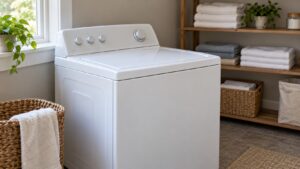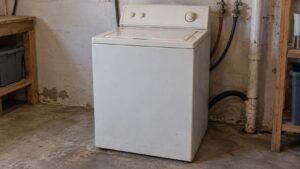
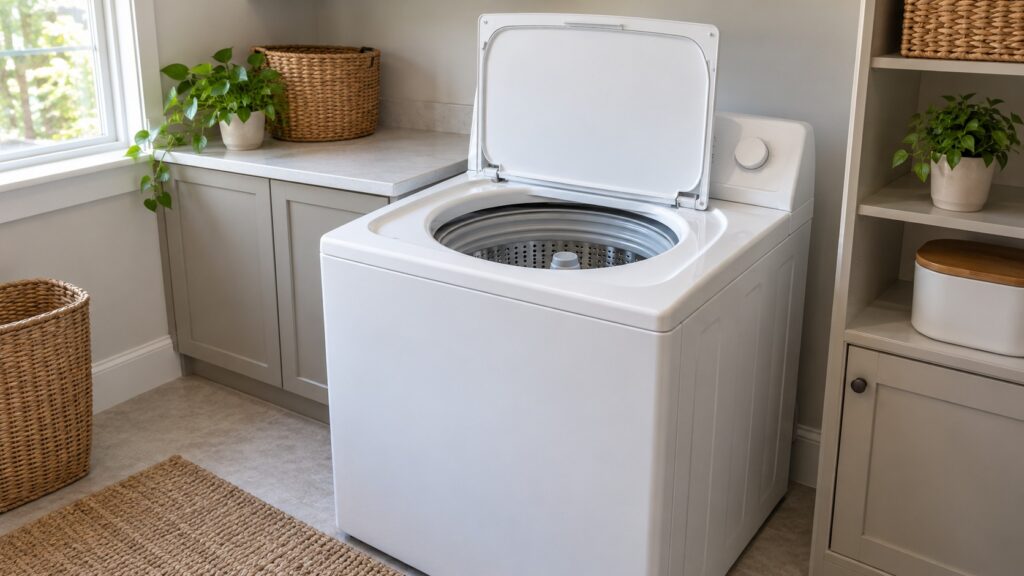
The Whirlpool WTW6157PW is a white top-load washer that our model page lists at 5.2-5.3 cu ft, ENERGY STAR rated, with a 2-in-1 removable agitator. If you are comparing it with other Whirlpool top-loaders, the short version is that it sits at the large-tub end of the range we service: a big drum, a removable center post for bulky loads, and the familiar Deep Water Wash, Quick Wash and Auto Sensing options. This guide explains what those words mean in daily use, which checks to make before you buy or accept a delivery, and what usually goes wrong with a top-loader of this kind.
What is the Whirlpool WTW6157PW?
The WTW6157PW is a top-load washer: you lift a lid on top and load clothes down into a vertical drum. Our model page describes it as a 5.2-5.3 cu ft ENERGY STAR washer with a removable agitator, in white. That is everything our site states about its hardware, so if a seller promises a specific wash motion, spin speed, water temperature setting or smart feature, check it against the label on the washer and in the owner’s manual rather than taking it on trust. The model number is printed on a label on the washer itself, usually near the lid opening or on the back; if the print is hard to read, take a photo and zoom in.
The size matters because it is the main reason people pick this model over the smaller tubs in the same family. Our model pages list the WTW4957PW at 3.8-3.9 cu ft and the WTW4307SW at 4.3 cu ft, so the WTW6157PW is the larger drum of the three. A bigger drum means you can wash a comforter or a pile of towels in fewer loads, as long as the washer can move the load freely.
What does the removable 2-in-1 agitator do?
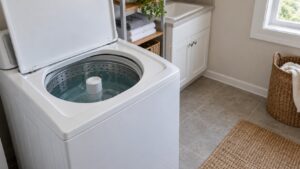
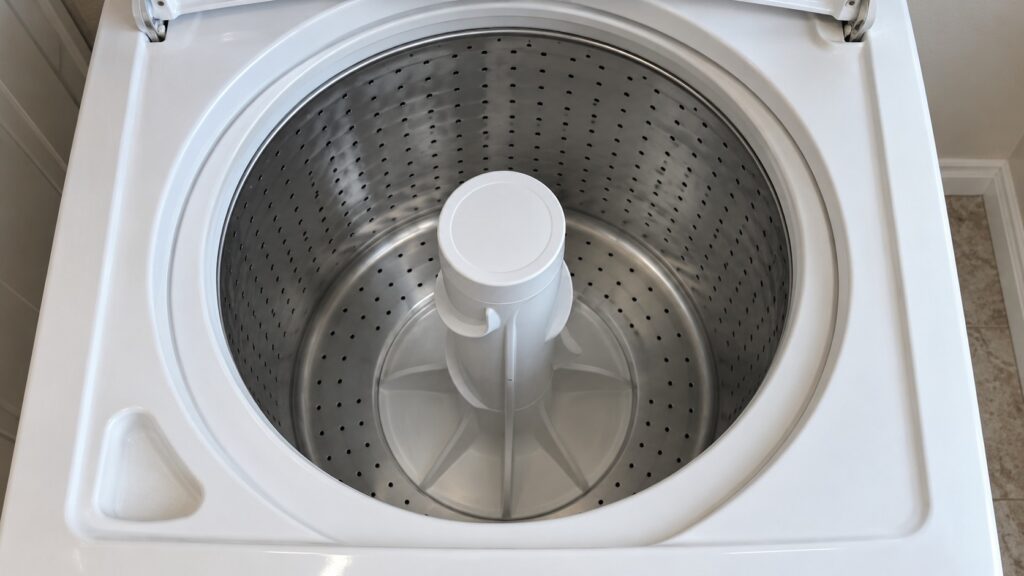
Our pages describe the agitator as 2-in-1 and removable: with the post in place the washer works the way a classic agitator top-loader does, and with the post taken out you get more open room in the drum for bulky items. The WTW4307SW page puts it plainly, that you can wash with the post in place or take it out for bulky loads. How the post comes out, and which cycles to use with it removed, differs between models, so use your owner’s manual for that step and do not pry at it. If the agitator will not release, or it feels loose and wobbles on its shaft, leave it alone and book a technician rather than forcing the drive underneath.
When you are standing in a showroom or looking at a used unit, lift the lid and look into the drum. A clean tub, a post that sits straight and a lid that opens and closes without sticking are all good signs. For the vocabulary around these parts, our Whirlpool pages use the same names that appear on the control panel, so reading the panel is a fast way to learn what the washer can do.
Which cycles and options does the WTW6157PW list?
The key features on the model page are a Deep Water Wash option, a Quick Wash cycle and Auto Sensing. In everyday terms, Deep Water Wash is meant for loads that need more water around them, Quick Wash is meant for lightly worn clothes when you are short on time, and Auto Sensing means the washer judges the load and adjusts the wash itself. The page does not say how much water, how many minutes or what temperature any of them uses, so we are not going to guess; the owner’s manual and the control panel for your unit are the sources for those numbers.
A practical tip when you try a washer in the store or at home is to run a small test load and watch the first few minutes. You should hear water fill, then the drum begin to move, and the lid should stay firmly shut. A washer that will not start with the lid closed, or that stops and shows a code, deserves a closer look before you commit. Our guide to Whirlpool washer error codes explains what the common F-codes mean.
How does it compare with other Whirlpool top-loaders on our site?
Here is a side-by-side read of what each model page says. The WTW4816FW is a 3.5 cu ft high-efficiency model that our page describes as discontinued and legacy; we still service it, and we have a separate WTW4816FW buying guide. The WTW4957PW is 3.8-3.9 cu ft with a removable agitator and adjustable soil levels. The WTW4307SW is 4.3 cu ft with a soft-close glass lid. The WTW6150PW is a 5.3 cu ft top-loader with a Presoak option, and the WTW7120HW is a 5.3 cu ft smart top-loader with a built-in water faucet and Load and Go dispenser.
The pattern is simple: the more you wash in one load, the more a larger tub helps, while the extras on the smart model add features you may or may not use. The WTW6157PW does not list a built-in faucet, a Load and Go dispenser or Wi-Fi on our page, so do not assume it has them.
What problems do owners of this type of washer run into?
The WTW6157PW model page says the codes we see most on Whirlpool top-loaders are F8E1 (a long fill, shown as LF on some displays), F9E1 (a long drain), the lid-lock failure codes, the off-balance and suds codes, and F7E1 (the motor or drum not confirming spin speed). Many of those are owner-level checks: open the water supply valves fully, straighten the fill hoses, clear the drain path, rebalance an oversized or lopsided load and use high-efficiency detergent in the amount your manual gives. A washer that keeps stopping on a lid or motor code every cycle is a different matter, because it can point to a lock, a motor or a control part.
If you are buying used, ask whether the washer has shown any of these codes and run it through a full cycle before you pay. Look underneath and behind it for water marks, listen for grinding when it spins and check that the drum turns freely by hand with the washer off and the lid up. Do not remove any cabinet panel to look inside; that is a technician’s job. Our washer installation guide covers leveling and hose connections, and our washer repair or replace guide helps you decide when a fault is worth fixing.
If you see water around the base, sparks or a burning smell, switch off the breaker at the panel while standing on a dry floor, and never pull a plug from a wet outlet. Then book a technician through our Whirlpool washer repair page or schedule a visit online.