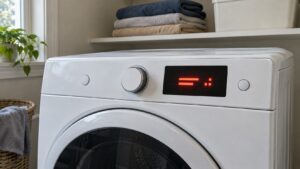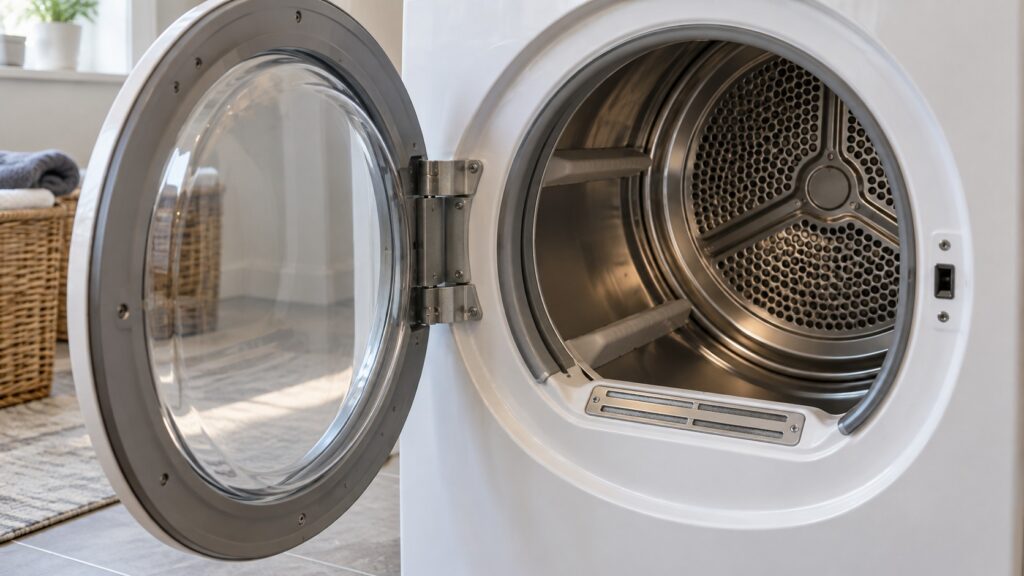
Whirlpool SpeedHeat is the name for a higher-output heating element used on certain Whirlpool electric dryers, designed to bring the drum up to drying temperature faster than a standard element so the moisture-sensing cycle can start pulling water out of the load sooner. It doesn’t change how the dryer senses dryness or ends the cycle — it changes how quickly the dryer reaches the temperature that sensing system is waiting for.
What part of the drying cycle does SpeedHeat actually speed up?
A dryer doesn’t dry clothes the instant you start it — the drum and the air moving through it have to reach a working temperature first, and only then does meaningful moisture removal begin. On a standard element, that warm-up period takes a certain amount of time before the drum interior reaches the temperature the moisture sensor is calibrated against. SpeedHeat uses a heating element rated for higher output specifically to shorten that warm-up window, so the moisture-sensing portion of the cycle — which is what actually determines when the load is done — starts working sooner. The overall time savings shows up mostly at the front of the cycle, not throughout it.
Does SpeedHeat mean clothes come out drier or hotter than on a standard dryer?
No — the moisture sensor, not the heating element, decides when the cycle ends, and that logic doesn’t change based on which heating element is installed. A SpeedHeat-equipped dryer finishes the same load to the same dryness level as a standard dryer would, just reaching that endpoint faster because less of the cycle is spent waiting for the drum to warm up in the first place. Fabric care settings, cycle temperature selections, and the moisture level you choose on the control panel work identically regardless of which heating element is behind them.
Why would a faster warm-up matter for everyday laundry?
For a household running multiple loads back-to-back, the warm-up period at the start of every cycle adds up across a laundry day in a way that’s easy to underestimate. Shaving a few minutes off the start of each cycle compounds over several loads, and it also means less total time the heating element and blower motor spend running per load, which can mean a small reduction in energy use per cycle compared to a slower-warming standard element doing the same job. The effect is most noticeable on smaller loads, where the warm-up period is a larger fraction of the total cycle time than it is on a large, heavily loaded drum that takes longer to dry regardless of element speed.
What does a failing SpeedHeat element look like compared to a standard one failing?
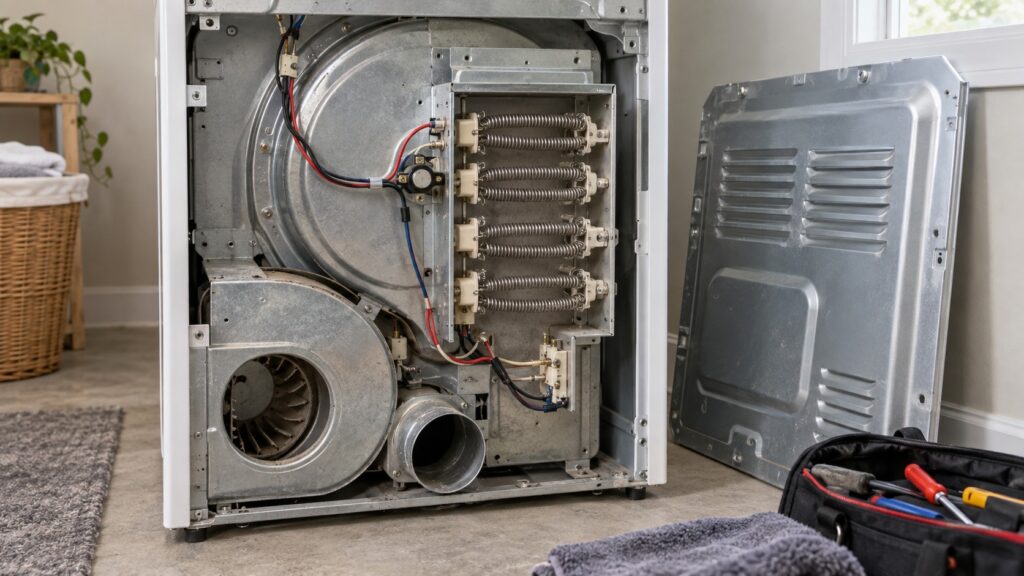
The failure mode itself — an open or burned-out heating coil — is mechanically the same kind of failure any dryer heating element eventually has. What’s different is how it shows up: because you’re used to the drum warming up quickly, a SpeedHeat element that’s starting to degrade often shows up first as “the dryer feels like it’s taking longer to get hot” rather than a dramatic total loss of heat right away. A fully failed element, SpeedHeat or standard, produces the same end result — a dryer that tumbles and runs its full cycle time but produces no heat at all, leaving clothes essentially as damp as they went in. Our guide on a Whirlpool dryer not heating covers that full-failure scenario in more detail.
Can a SpeedHeat element be replaced with a standard one, or does it have to match?
Whirlpool designs the rest of the dryer’s heating circuit — the thermostat, the thermal fuse, the wiring gauge — around the specific element rated for that model, so replacing a SpeedHeat element with a lower-output standard element intended for a different model isn’t a straightforward swap even if it physically fits the housing. Using the correct part number for your specific model matters more here than on some other dryer components, because an undersized element on a circuit built for higher output can undercharge the drying performance you’d otherwise get, and an oversized element on a circuit not rated for it is a safety concern rather than just a performance one. If you’re ordering a replacement, confirm the exact model number from your dryer’s nameplate before buying rather than assuming any dryer heating element is interchangeable.
How does routine maintenance affect how well SpeedHeat performs over time?
Lint restricts airflow through the drum regardless of which heating element is installed, and a restricted airflow path forces any element — SpeedHeat or standard — to work harder and longer to hit the same drum temperature, which erodes the time advantage SpeedHeat is designed to provide. A clogged lint filter or a long, poorly maintained vent run effectively cancels out the benefit of a faster-heating element, because the bottleneck moves from heating speed to airflow. Our dryer maintenance and vent cleaning guide covers the cleaning schedule that keeps airflow — and by extension, SpeedHeat’s actual advantage — intact. If cycles have been running long despite regular cleaning, our dryer takes too long guide walks through the other common causes.
Because SpeedHeat’s whole advantage is speed rather than a different end result, a slow warm-up is easy to dismiss as “just running a little long today” for weeks before it’s obviously a problem — there’s no code or alert tied specifically to warm-up time the way there is for a total heating failure. Paying attention to how long the drum takes to feel warm at the start of a cycle, compared to what you remember from when the dryer was newer, is one of the few ways to catch element degradation early rather than waiting for the day it fails completely.
If your SpeedHeat-equipped dryer is taking noticeably longer to warm up than it used to, our technicians can test the element directly rather than guessing whether it’s a heating fault or an airflow restriction — schedule a visit and we’ll confirm which one before ordering a part.