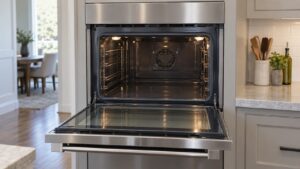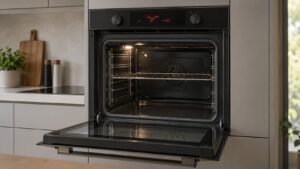
Asking what a whirlpool oven repair cost looks like is sensible before you commit, and the honest answer is that it depends entirely on which part failed. Rather than quote a flat figure, this guide gives realistic ranges by component so you can judge whether a repair makes sense for your oven. Every job starts with a trip-and-diagnostic fee that confirms the failed part before any parts cost is added.
What drives Whirlpool oven repair cost
Three things move the number: the part itself, how buried it is in the appliance, and whether it is gas or electric. A bake element is inexpensive and sits in the open cavity, so it is one of the cheaper repairs. A temperature sensor is also affordable. A door latch motor is mid-range because it lives behind the control panel. A control board is the priciest common part. Gas-valve and igniter work on gas ranges adds labor because of the safety steps involved. Pricing is always presented as starting “from” a base, never as a fixed final number, because the real cost is only known once the problem is confirmed.
Typical ranges by part
- Bake or broil element (electric): most jobs fall between a modest parts cost and an hour of labor — one of the lower-cost fixes.
- RTD temperature sensor: inexpensive part, quick install; this is usually the cheapest fix that solves a “temperature off” complaint.
- Door switch / interlock (F9E0): moderate, depending on how the panel comes apart.
- Door latch motor (F5E0 / F5E1): mid-range, since it sits behind the control assembly.
- Control board (F1E0 / F1E1): the highest common cost; this is where repair-vs-replace math gets real.
When the Whirlpool oven repair cost says replace instead
If your oven is well past a decade old and needs a control board plus another major part, the combined cost can approach replacement territory. Before deciding, it helps to know exactly which part failed — our reference on Whirlpool oven error codes turns the displayed code into a specific part so you are not estimating blind. When you are ready for a firm diagnosis, schedule a Whirlpool oven repair and you will get the failed part identified and a clear “from” price, with genuine OEM parts and a 30-day labor warranty. For current model pricing if you are weighing replacement, Whirlpool lists it at whirlpool.com.
What the trip-and-diagnostic fee covers
Every repair begins with a diagnostic visit, and it is worth understanding what that fee buys. The technician opens the oven, reads any stored problem, and tests the suspect parts with a meter rather than guessing — confirming, for example, whether a no-heat oven is a dead element, a weak igniter, or a failed door switch. That confirmation is what lets you get an accurate “from” price for the actual repair instead of an estimate built on a symptom. On many jobs the diagnostic fee is applied toward the repair if you proceed. The value is real: replacing the wrong part because a code was misread is the most expensive mistake in appliance repair, and a proper diagnosis avoids it. Gas ovens carry an extra step because the technician must safely verify the gas valve and igniter draw, which is part of why gas repairs run a little higher than the equivalent electric job.
Keeping costs down
Catching a problem early — a sensor that drifts before it fails outright, a latch that hesitates before it sticks — almost always costs less than waiting for a cascade failure. Regular gasket cleaning and gentle door handling are free and prevent the most common avoidable repairs. It also helps to note exactly what the oven was doing when it failed and to write down any displayed code before you reset power, since that single detail often shortens the diagnosis and keeps the labor portion of the bill lower.