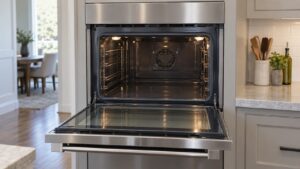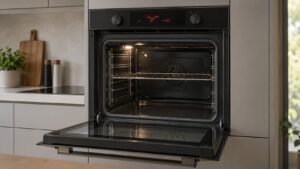
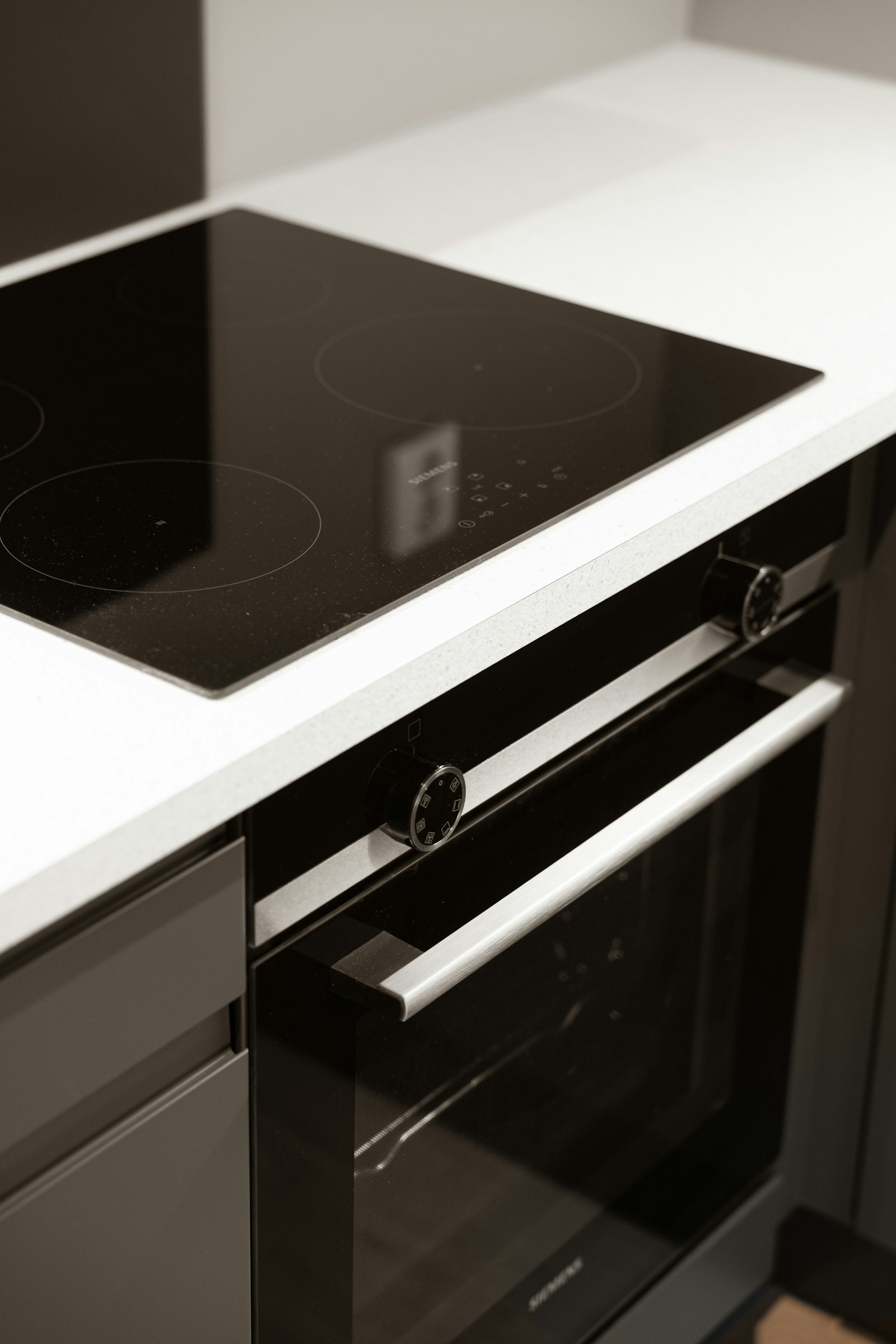
The whirlpool oven door lock is one of the most misunderstood systems on the appliance, partly because several different parts get lumped together under the word “lock.” This glossary defines each term in plain English so that when your oven displays a code or the door will not open, you know exactly which component is being described and why it matters.
Whirlpool oven door lock — the core terms
- Door interlock switch: a small switch that tells the control board the door is physically closed. It is NOT the self-clean lock. When this switch fails or the door sits crooked, the control may not allow heating and can show F9E0.
- Door latch motor: a small motor that physically drives the latch hook to lock the door shut during a high-heat self-clean cycle. This is the part most people mean by “the lock.”
- Latch assembly: the hook, lever, and switch that the latch motor drives. Heat over many cycles can warp it.
- Thermal fuse: a one-time safety device in the latch circuit that opens if things get too hot, cutting power to the latch.
- LOCK indicator: the on-screen icon that lights when the latch has engaged. If it never lights during self-clean, the latch did not lock.
The codes tied to the Whirlpool oven door lock
Two documented Whirlpool codes live here. F5E0 means the latch motor failed to lock within the expected time, so self-clean will not start — bake and broil still work. F5E1 means the latch failed to return to unlocked after self-clean, leaving the door stuck shut. The usual first move for F5E1 is a full cool-down (often a couple of hours) followed by a power cycle, since the latch sometimes only releases once the mechanism has cooled. Our full reference on Whirlpool oven error codes walks through both in detail.
When the door lock needs a technician
If the latch motor has failed outright or the latch assembly is heat-warped, replacement is the fix, and it sits behind the control panel where the wiring and thermal fuse also live. You can schedule a Whirlpool oven repair and a technician will replace the failed latch component with a genuine OEM part and confirm the LOCK function before leaving, with a 30-day labor warranty. For the parts diagram showing exactly how your model latch assembles, see whirlpool.com.
More door lock terms worth knowing
- Manual latch release: some Whirlpool ovens have a hidden release tab reachable behind the door frame or through the top vent, used to free a door stuck after a power loss mid-clean. The owner manual shows its location for your model.
- Auto-lock: the behavior where selecting self-clean automatically drives the latch closed before heating begins — you do not lock it by hand.
- Door spring / hinge: the spring-loaded hinges that hold the door at any angle. Weak springs let the door sag, which is a common reason the interlock switch stops registering “closed.”
- Strike / catch: the part of the frame the latch hook grabs. Wear here can keep the latch from fully seating.
- Cool-down lockout: the period after self-clean during which the door stays locked until the cavity drops to a safe temperature — this is normal, not a problem, and trying to force the door during it can damage the latch.
Why the distinction matters
Mixing up the interlock switch (a heating-permission sensor) with the latch motor (a self-clean lock) sends people down the wrong repair path and wastes money on the wrong part. Knowing which is which is the whole point of this glossary. The next time your oven shows a door-related code or refuses to open, you can read the symptom against these definitions and walk in with a clear idea of which single part is involved, rather than guessing at the whole door assembly.