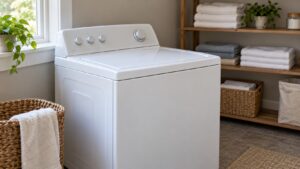
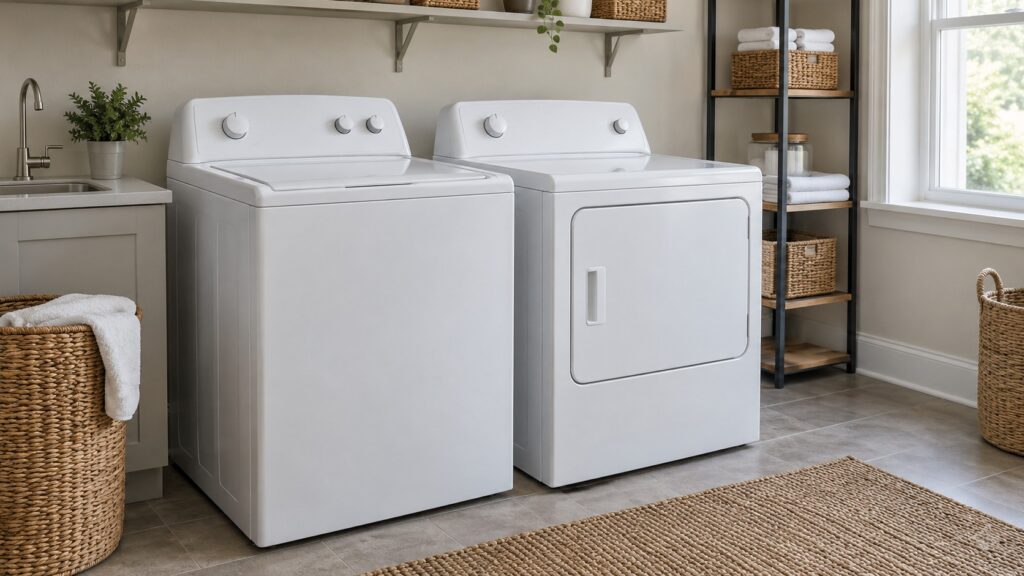
The Whirlpool WTW4307SW is a 4.3 cubic foot top-load washer with a 2-in-1 removable agitator and a soft-close glass lid, and the WED4307SW is its dryer partner: a 7.0 cubic foot vented, top-load electric dryer with Adaptive Dry and a Wrinkle Shield option. Both come in white. Buy them together if you want two machines with the same controls and the same finish, a dryer drum that comfortably holds what the washer produces, and a simple everyday laundry setup without a lot of extra programs.
Is the Whirlpool WTW4307SW a good fit for everyday laundry?
For a household that does ordinary loads of clothes, towels and bedding, yes. The whirlpool wtw4307sw is a top-load washer with a 4.3 cubic foot tub, which is the capacity listed on its model page on this site. It has a 2-in-1 removable agitator, so you can wash with the center post in place for everyday clothing or take it out when you have bulky items. It also lists a Quick Wash cycle and a Deep Water Wash option. The site only names those two features, so how long Quick Wash runs and how much water Deep Water Wash adds is something to confirm in the owner’s manual or on the cycle chart on the lid, not something to assume from the name.
The soft-close glass lid is the detail you will use every day, and you can see it in a showroom. The lid also works with the lid lock, and lid-lock failures are among the faults listed later in this guide.
What does the WED4307SW dryer add to the pair?
The WED4307SW is a vented dryer with a 7.0 cubic foot drum, so it is larger than the washer tub by a comfortable margin. That is useful: wet laundry from a full washer load expands when it tumbles, and a roomy drum lets air move through it. The model page lists Adaptive Dry, which watches moisture as the load dries, and a Wrinkle Shield option that keeps tumbling a finished load. It also lists the AutoDry Drying System and a hamper-style door; the site names these without describing them, so look at the door in person and read the manual for how the drying system is set.
The page calls this an electric dryer, and that has one practical meaning for your laundry room: it needs an electric dryer outlet and a vent that carries moist air outside. If you are replacing a gas dryer, a gas outlet will not help you. Our Whirlpool dryer installation guide covers the connection and venting basics.
Why buy a matched washer and dryer pair?
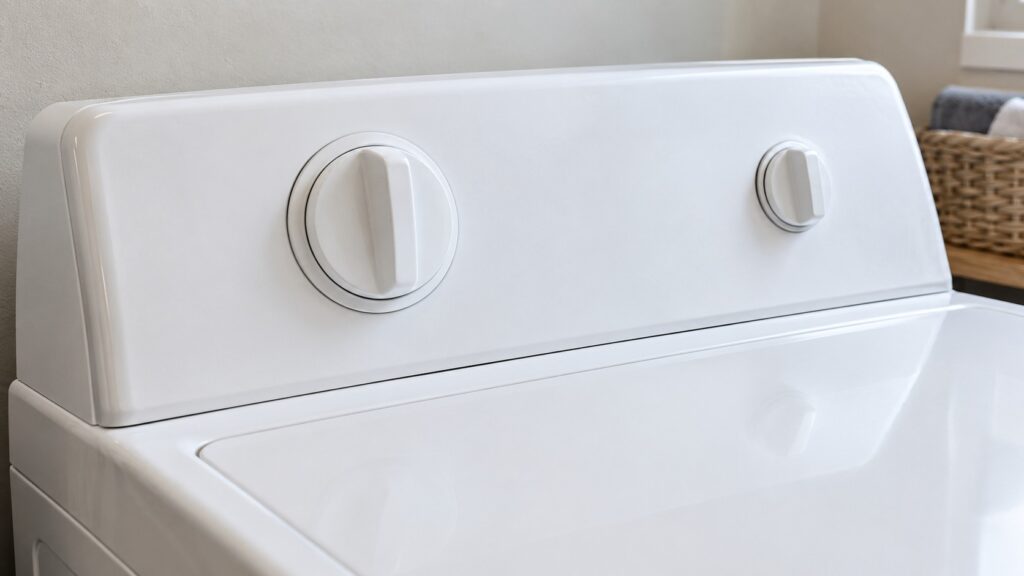
There are three honest reasons. First, they look the same: same white finish, same control style, and a dial layout you only learn once. Second, the capacities work together. A 4.3 cubic foot tub feeding a 7.0 cubic foot drum means you rarely have to split a washer load into two dryer loads. Third, both machines are on this site’s model list, so a visit for either one starts from the same reference pages and the same set of error-code explanations.
A pair is not automatically the best choice, though. If your laundry room is tight, measure the space for both machines, the door swing of the dryer and the gap behind them for hoses, the cord and the vent. If you want a front-load washer, a different dryer door or a stacked layout, this is the wrong pair. For a different top-load washer, see our Whirlpool WTW4816FW washer buying guide.
What should you check in the laundry room before you buy?
Do these four checks first, because a mismatch is a nuisance to fix after delivery:
- Floor space and height. Measure width, depth and the clear height above each machine. Top-load washers need room to open the lid, and the dryer needs room behind it for the vent.
- The dryer outlet. An electric dryer needs the electric dryer outlet. If you have a different outlet type or no outlet at all, ask an electrician what to install and do not use an adapter or an extension cord.
- The vent route. A short, straight metal duct to the outdoors dries faster and is safer than a long run with many bends. Clean the existing duct before connecting a new dryer.
- Water connections. You need hot and cold supply valves and a drain standpipe or laundry sink within reach of the washer hoses. Check them for leaks after the first cycle.
Whirlpool’s installation instructions in the box set the clearances and the exact electrical needs for each model, so follow those, not a rule of thumb. If anything about the outlet, the vent or a gas line is unclear, stop and book an electrician or one of our technicians before plugging the dryer in.
What goes wrong most often on this washer and dryer?
The model pages list the problems we see on these machines. On the washer side, the most common are F8E1 (water fill taking too long), F9E1 (water taking too long to drain), lid lock failures, off-balance and suds problems, and F7E1 (the motor not confirming the spin speed). Our Whirlpool washer F8E1 long fill guide and the will not drain guide take you through the two most common ones.
On the dryer side, the most common causes of poor drying are a lint-clogged vent first, not a part, followed by sensor failures and heat problems on electronic models. That is why every dryer should come with a habit: empty the lint screen after every load and clean the vent path on a schedule, as described in our dryer maintenance and vent cleaning guide. A blocked vent is also the most likely reason for long drying times. If you see water around the washer, a burning smell from the dryer or sparks anywhere, turn off the breaker for that machine while standing on a dry floor and call for service instead of continuing to run it.
Is the pair worth buying compared with a repair?
If you are replacing a washer or dryer that is old and failing, a new pair gives you a fresh start and a clean installation. If one machine of your current pair is fine and the other has a simple fault, a technician can tell you whether repairing the broken one is the better choice. A technician visit makes sense when the machine is otherwise in good shape and the fault is a single part, such as an inlet valve, a lid lock or a heating component. If you are unsure, our Whirlpool washer repair and dryer repair pages explain how a diagnostic visit works.