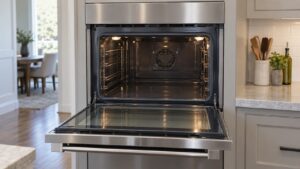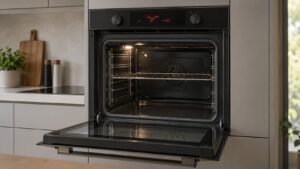
When you have a whirlpool oven not heating, the cause is almost always one of a handful of parts: a burned-out bake element on an electric model (WOS, WOES, WFE), a weak or open igniter on a gas model, a failed RTD temperature sensor, or a door switch that never confirms the door is closed. The good news is that most of these are testable with a multimeter and a few minutes of patience. This guide walks through the checks in the order a technician would, so you do not replace a part that was working fine.
Why a Whirlpool oven not heating happens
On electric wall ovens and ranges, the bake element sits at the bottom of the cavity. When it burns out it usually shows a visible break, blister, or scorch mark, and the oven simply blows warm air without ever climbing to temperature. On gas units, the bake igniter glows but weakens with age until it can no longer pull enough current to open the gas valve, so it glows without ever lighting the burner. A failed RTD bake sensor reads an impossible resistance and the control refuses to heat — sometimes throwing F3E0 (open sensor circuit). And a faulty door interlock switch can produce F9E0, where the control never sees a closed-door signal and locks out heating.
Steps to try yourself
- Confirm the symptom: run a short Bake cycle and feel for warmth at the element or burner. No warmth at all points to the element/igniter; partial heat that never reaches setpoint points to the sensor.
- Inspect the bake element for a visible break or blister. A good Whirlpool element typically reads continuity (roughly 15 to 40 ohms); an open reading (OL) means it is dead.
- On gas models, watch the igniter. If it glows for more than 90 seconds without lighting, it is weak and should be replaced even though it still glows.
- Test the RTD sensor at the back of the cavity — about 1080 to 1090 ohms at room temperature is healthy; OL means replace it.
- Press the door switch plunger by hand: the oven light should turn off. If it does not, the switch or door alignment is the suspect, and you may also see F9E0.
When to call a technician for a Whirlpool oven not heating
Replacing a bake element is usually a homeowner-friendly job, but a failed control board, a gas valve, or a heat-warped door latch is not. If your unit shows a control-board code such as F1E0 or a door-lock failure, our error-code reference for Whirlpool oven codes explains what each one means before you spend money on parts. If the diagnosis points to the gas valve, the control board, or anything behind the back panel involving 240V wiring, that is the point to bring in help. You can schedule a Whirlpool oven repair and an experienced technician will pin down the failed part rather than guessing. We use genuine OEM parts and back the labor with a 30-day labor warranty.
How to prevent it
Most no-heat failures are age-related, but you can extend element and igniter life by avoiding aluminum-foil lining on the oven floor (it traps heat and stresses the element), letting the oven cool before wiping spills off the element, and not slamming the door, which jars the interlock switch out of alignment over time. For model-specific specs and the owner manual for your exact unit, Whirlpool publishes them at whirlpool.com. If you would rather not open the appliance at all, that is completely reasonable — ovens carry both high voltage and, on gas units, an open flame, and a wrong move is not worth the savings.