A Whirlpool washer overheating almost always means the motor is working too hard, and the usual causes are an overloaded or unbalanced drum, a drain that is slow, or a motor and drive that are wearing out. The typical report is a washer cabinet that is hot to the touch, a warm or burning smell near the base, or a washer that stops mid-cycle and starts again after a rest. A burning smell is a stop sign: switch the washer off, unplug it and do not run it again until you know why. This guide separates the harmless causes from the ones that need a technician.
What does “overheating” mean on a Whirlpool washer?
People use the word for three different things, and the cause depends on which one you have. Some mean the washer motor or cabinet gets hot during a spin. Some mean the wash water comes out far hotter than the setting. Some mean a hot or burning smell. This guide focuses on the first and third, because those point at the motor and the drive. If the water temperature is the problem, that is a sensor issue, covered by the F3E1 temperature sensor page on this site, and not the subject here.
Why does the washer motor get hot?
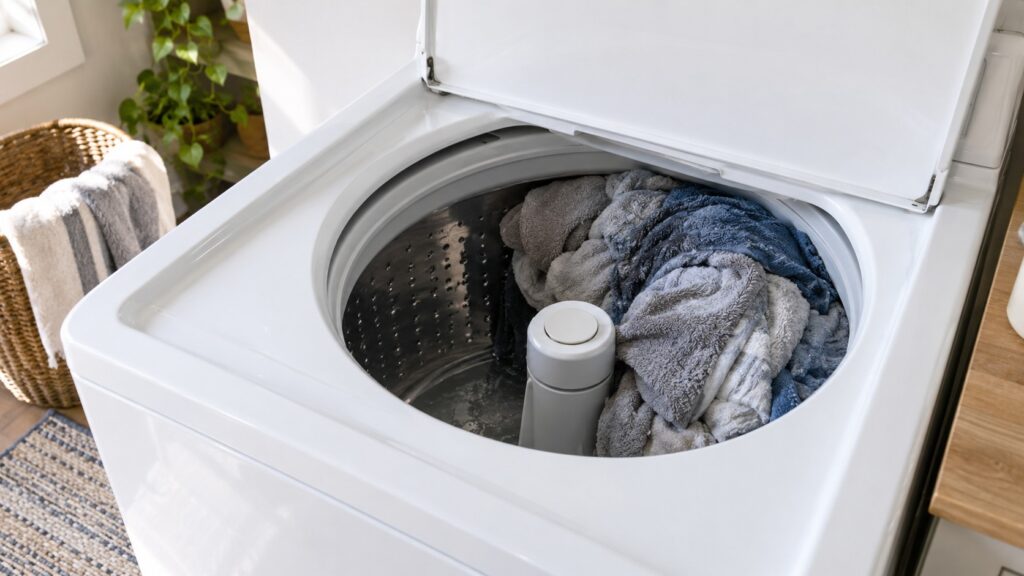
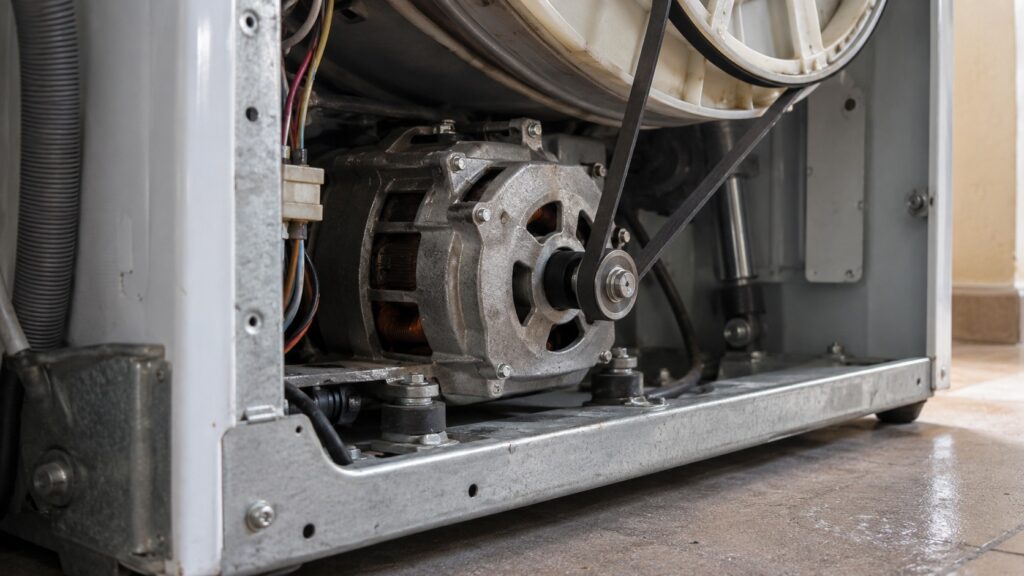
The motor in a washer does hard work every cycle: it turns a heavy, wet load in the tub and spins it to high speed. Anything that makes that job harder raises the heat in the motor. The most common cause is the load itself. A full tub of wet towels, a comforter that soaks up water, or a pile of jeans can weigh far more than the dry weight, and an off-balance load makes the drum fight itself on every turn. The second cause is a slow drain, because water left in the tub adds weight and drag during the spin. The third is wear: bearings, the drive coupling or the transmission can drag and ask more of the motor.
Many motors contain a thermal protector that cuts power when the motor gets too hot. If your washer stops, rests and then restarts, the protector is probably doing its job. The question is what made the motor hot, and that is what to look for next.
How do you rule out the easy causes first?
Run a smaller load and watch what happens. Split a bulky load into two, and put heavy items such as towels and jeans together with lighter pieces so the weight spreads. Do not wash a single large item alone, because it will bunch up and unbalance the drum. Check how much detergent you use. Too much detergent makes suds that slow the drum and strain the motor, and on a High-Efficiency model the suds can pause the cycle. Our unbalanced load guide explains how to load a drum evenly.
Then check the drain. If water stays in the tub at the end of the cycle, the motor has been spinning against water weight. Our Whirlpool washer will not drain guide walks through the pump filter and the hose.
What does a motor speed code mean?
On Whirlpool washers, an F7E1 means the motor control unit did not receive a valid speed signal and could not confirm that the drum was spinning at the speed it commanded, so the drum will not spin. The causes on this site include a failed speed sensor, worn motor bearings and a defective motor control board. A motor that is working too hard, or a sensor that has failed, can lead to the same code. The Whirlpool washer F7E1 page describes the code, and a technician runs a diagnostic spin and turns the drum by hand before condemning an expensive board. If your washer agitates but will not spin, our washer not spinning guide covers the other causes.
What are the warning signs that mean stop using the washer?
Stop and unplug the washer if you smell a burning or hot-electrical odor, if you see smoke, or if the cabinet is too hot to hold your hand against for more than a second or two. Also stop if you hear a loud grinding, a squeal that comes from the base, or a rubber smell. These point to a failing bearing, a slipping drive part or an electrical fault. Do not open the cabinet or touch the motor, because the washer carries line voltage and the parts can be hot. Leave the machine unplugged and book a visit.
A washer in a closed alcove with no air around it can also run hot, although this is less common. Pull it out, check that the vents are clear and make sure the power cord and outlet are not warm.
When is overheating a repair, and when is it a reason to replace?
A worn motor coupling, a failed speed sensor or a failed drain pump are part-level repairs on a washer that is otherwise sound. A failed motor or transmission on an old washer can tip the decision toward replacement, because the part is large and the machine has already given most of its life. The washer’s age and its other faults decide it. Our Whirlpool washer repair or replace guide sets out the factors, and the washer maintenance checklist helps you head off the load and drain problems that cause most overheating.
We are an independent repair company, not the manufacturer. Our Whirlpool washer repair service can test the motor, the speed sensor and the drain pump, and you can book a visit online.