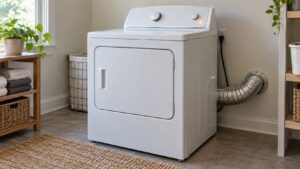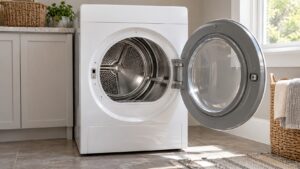
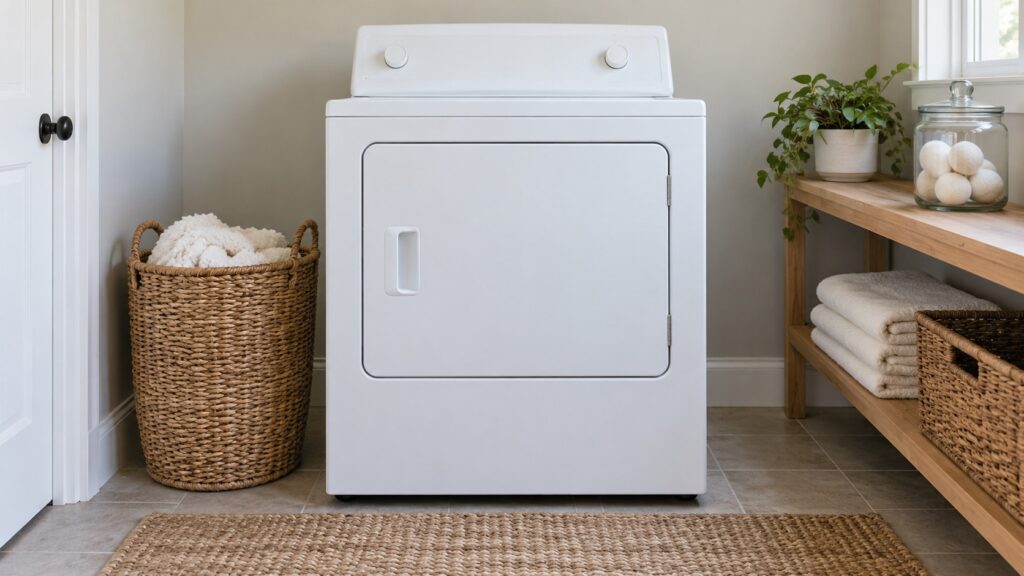
A Whirlpool gas dryer burner works as the heat source for the whole machine: when the control calls for heat, an igniter glows, a gas valve opens and a small flame lights inside a burner assembly under the drum, while the blower pulls room air across that flame and through the clothes. When the load is warm enough, or the dryer reaches its limit, the valve closes and the flame goes out. The nine WGD gas dryers listed on this site follow this pattern, and the part that fails most often is not the burner itself but the igniter or valve that lights it.
How does a Whirlpool gas dryer make heat?
An electric Whirlpool dryer heats air with a coil element. A gas dryer heats it with a flame. Our Whirlpool dryer how it works guide explains the overall air path, and the gas model uses the same path with a burner in place of the element: air enters the cabinet, passes the burner assembly, goes through the tumbling clothes, then through the lint screen and out the vent. The model pages describe WGD dryers as vented gas dryers, in 7.0 and 7.4 cubic foot drum sizes on the models that state it, and they call out the AutoDry Drying System and a Wrinkle Shield option as common features.
The blower is what makes the burner safe and useful. It moves air continuously during the cycle, so the flame is always surrounded by moving air and the heat carries into the drum. A gas burner running in an air stream that is blocked or restricted gets too hot, which is why the safety limits and the vent matter as much as the flame.
What happens in order when the dryer starts heating?
Exact details differ by model, and the parts diagram for your dryer is the final word, but the sequence is the same on most gas dryers:
- You start a cycle and the drum begins to turn. The control decides the dryer needs heat.
- The igniter, a small element near the burner, receives power and starts to glow.
- Once the igniter is hot enough, the gas valve is allowed to open and gas flows to the burner tube.
- The gas reaches the glowing igniter and lights. A flame spreads along the burner.
- Sensors watch the air temperature, and the control opens and closes the valve to keep the heat in range for the cycle you chose.
- At the end of the cycle the valve closes and the blower keeps running briefly while the drum cools.
You may hear the burner click on and off several times during a cycle. That is normal: the control cycles the flame to hold the temperature. A burner that never lights, or that lights for a few seconds and goes out, is the symptom a technician investigates.
Which parts make up the burner assembly?
The assembly under the drum has four basic pieces. The burner tube carries the gas and the flame. The igniter sits beside it and lights the gas. The gas valve controls the flow and has small coils that open it. A sensing and safety layer, which differs between models, makes sure the valve closes if the flame does not light or the dryer overheats. The site’s own gas oven explainer describes the same logic in an oven: the igniter has to draw enough current before the gas valve will open, so a weak igniter can glow without lighting anything. Our Whirlpool gas oven igniter guide shows that principle step by step, and a dryer igniter follows it in spirit, though the part and its location are different.
This guide names the parts so you can describe a problem accurately. It is not a repair procedure. Reaching the burner assembly means removing panels, and it sits next to the gas connection, so that job belongs to a technician.
What does a failing gas dryer burner look like?
Gas dryers that do not heat usually show one of a few patterns:
- The drum turns and the clothes stay cold. The burner is not lighting. The igniter may be weak, the valve may not be opening or the control may not be calling for heat.
- Heat comes and goes, and drying takes too long. The flame lights, then shuts off early. A restricted vent that trips a safety limit often causes this.
- Warm but not hot. A partly clogged vent, a full lint screen or a small flame.
- A code on an electronic model. The model pages list sensor failures and heat problems on electronic dryers. Read the code page for your model before you assume a part.
Before you call for service, empty the lint screen and look at the outside vent hood to see that its flap opens when the dryer runs. Our Whirlpool dryer not heating guide and the dryer maintenance and vent cleaning guide walk through the owner-level checks.
What gas and vent safety rules matter most?
Gas appliances deserve a short list of firm rules:
- If you smell gas, do not touch anything. Do not switch lights or the dryer on or off, do not use a phone in the room and do not try to light anything. Leave the house, then call your gas utility or 911 from outside.
- Do not test for leaks yourself. Gas connections are checked by a qualified person with the right equipment.
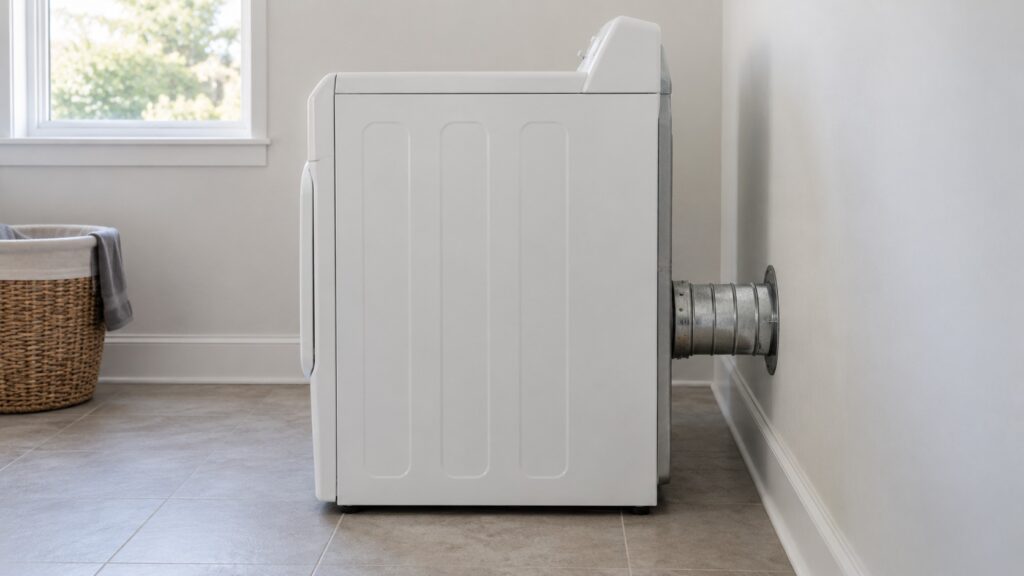
- Keep the vent clear and routed outdoors. A gas dryer’s exhaust carries combustion gases as well as moist air, so a blocked or disconnected vent is a safety problem, not just a drying problem. If the dryer exhaust is not reaching the outdoors, stop using the dryer and have the vent checked.
- Do not open the cabinet to look at the burner. If you need power off for any reason, switch the dryer’s breaker off while standing on a dry floor, and leave panels on.
- Follow your manual for the shutoff valve. It tells you where the gas valve for the dryer is and how to close it.
If the dryer smells of burning, shows a flame outside the burner area or makes any popping or booming noise when it lights, stop using it and call for service.
Is a gas burner repair worth it?
That depends on the dryer. A technician can test the burner circuit and the venting and tell you which part is at fault, and then you can weigh the repair against the age and condition of the machine. If the dryer is old, has had multiple repairs or needs several parts at once, our Whirlpool dryer repair or replace guide helps you weigh it. To have a technician test the burner and the venting, see Whirlpool dryer repair.