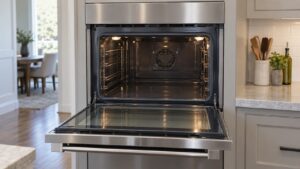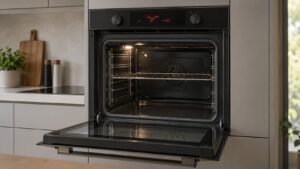
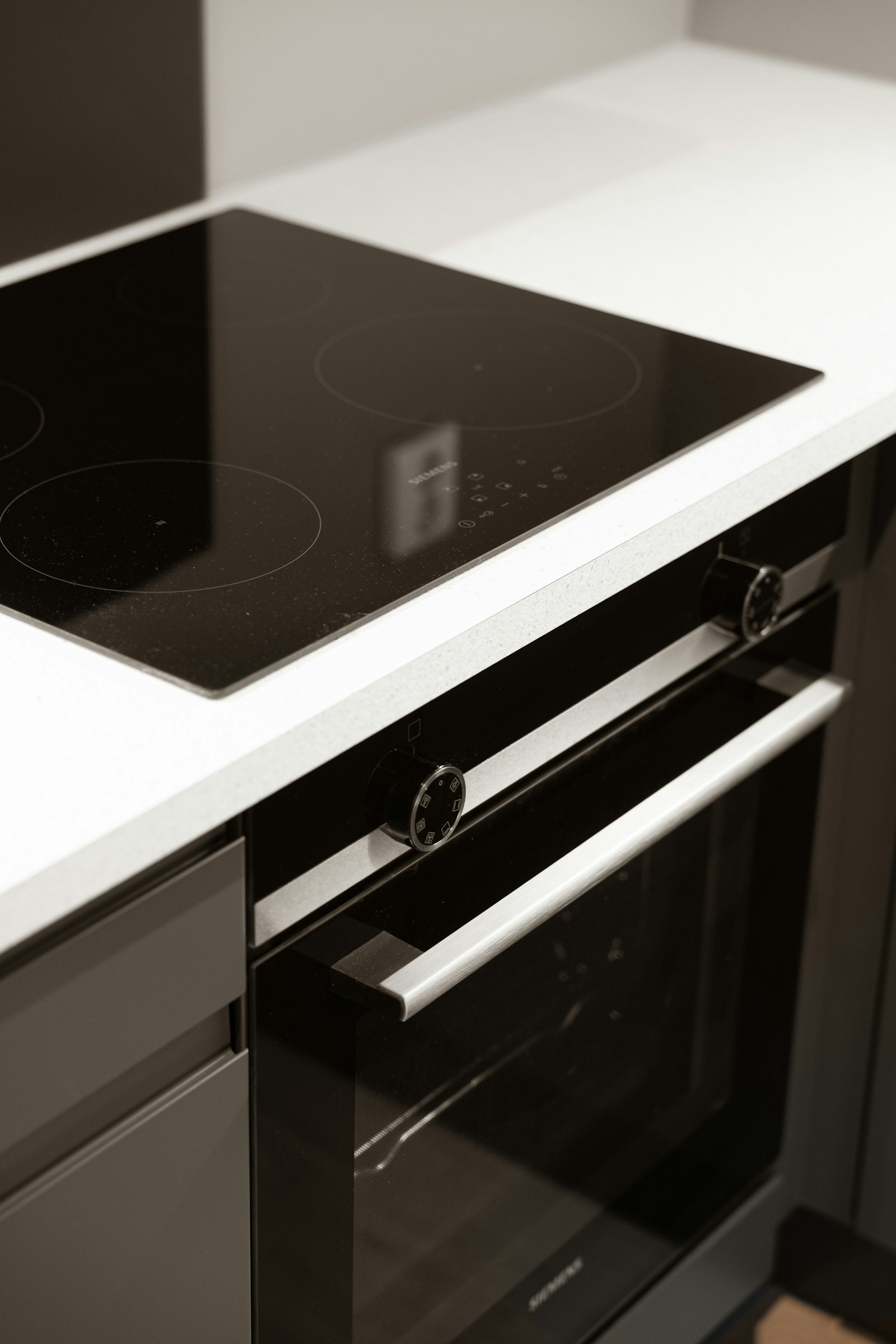
Running whirlpool oven self clean the right way keeps the cavity spotless without stressing the parts that high heat tends to damage — the door latch, the temperature sensor, and the gasket. Whirlpool ships two very different cleaning systems, and using the wrong technique for yours is the most common way owners turn a clean cycle into a repair. This guide explains both and the maintenance routine that keeps the system reliable.
Whirlpool oven self clean versus AquaLift
Traditional pyrolytic self-clean heats the cavity to roughly 800F to 900F, locks the door, and burns soils to ash. It cleans deeply but the extreme heat is hard on the latch motor and can blow a thermal fuse or warp the latch — which is why latch failures like F5E0 (will not lock) and F5E1 (will not unlock) cluster around self-clean cycles. AquaLift, by contrast, is a low-temperature steam system: you pour about a cup or two of water into the cavity floor, run the cycle at around 200F to 250F, and then wipe the loosened soil by hand. AquaLift is gentler on components but needs a quick manual wipe afterward and does not vaporize heavy baked-on grease in one pass.
How to run it safely
- Identify your system: if the control offers a water-fill steam clean, you have AquaLift — never run it bone dry, and never substitute oven cleaner for water.
- Remove racks before a high-heat self-clean (the heat discolors them), but AquaLift is gentle enough that most racks can stay.
- Wipe out loose crumbs and big spills first so the cycle is not overwhelmed.
- Ensure the kitchen is ventilated during high-heat self-clean — the smoke and odor are normal but should be vented.
- Let the oven fully cool before forcing the door; a latch that hums but will not release usually just needs the cool-down to finish.
Maintenance that protects the Whirlpool oven self clean system
Between cycles, wipe spills as they happen so neither system has to work hard, and keep the door gasket clean so it seats and the latch engages squarely. If a clean cycle ever ends with the door stuck locked, our guide to Whirlpool oven latch and lock codes walks through the F5E1 recovery steps. Should the latch motor itself fail, you can book a Whirlpool oven repair and a technician will replace it with a genuine OEM part, covered by a 30-day labor warranty. For the exact cleaning instructions and water amount for your model, Whirlpool lists them at whirlpool.com.
Common self-clean mistakes to avoid
A few habits turn a routine clean into a service call. Never spray commercial oven cleaner into a cavity that has a high-heat self-clean coating or an AquaLift surface — the chemicals can damage the porcelain and are not needed, since heat or steam does the work. Do not run a high-heat self-clean right before a holiday meal; the latch occasionally sticks during cool-down and you do not want to discover that with guests arriving. Leaving the racks in during a high-heat cycle discolors and dulls them, and on some models the rack guides can warp, so pull them first. With AquaLift, resist the urge to run it “extra long” by re-adding water and re-running back to back; the system is designed for one fill and a wipe, and overdoing it just leaves standing water. Finally, give the oven time to cool fully before forcing the door — a latch that hums but will not release almost always frees itself once the mechanism cools, and prying at it can break the latch.
How often to clean
For most households, a steam or self-clean cycle every two to three months is plenty; running high-heat self-clean too frequently just ages the latch faster. Spot-clean spills as they occur and you will rarely need the deep cycle at all.